Running a small dairy operation means making hundreds of decisions every week, most of them with limited time and limited margin for error. Feed costs, animal health, milk quality, and labour are all in constant tension with each other. And somewhere in the middle of all that, the milking process itself needs to happen reliably, twice a day, every day.
For small dairy operators who’ve been doing this manually or with fixed parlour equipment that doesn’t fit the scale of their operation, portable milking machines have become one of the more impactful changes they’ve made. Here’s why so many are switching, and what the shift actually looks like in practice.
The Problem With Traditional Milking Approaches at Small Scale
Large commercial dairy operations are built around fixed parlour systems. These are efficient at scale, but they carry an entry cost, installation requirement, and infrastructure demand that simply doesn’t make sense for operations with smaller herds.
Manual milking, on the other hand, is exhausting and time-consuming. It limits how many animals one person can manage, creates significant physical strain over time, and affects milk hygiene in ways that matter for quality and compliance.
Small dairy producers have historically been caught in an awkward middle ground: too small for commercial parlour investment, too large and time-constrained for practical hand milking. Portable milking equipment changes that equation directly.
What Portable Milking Machines Actually Offer
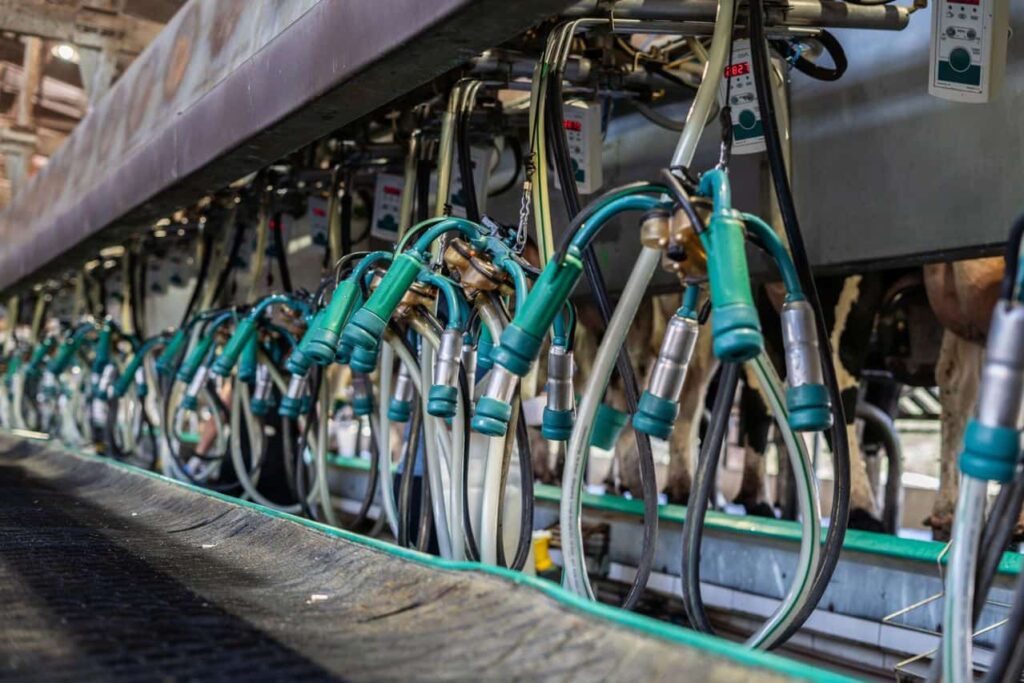
Portable units are exactly what the name suggests: self-contained, moveable milking systems that can be brought to the animal rather than requiring the animal to come to a fixed milking point. Modern units are compact, relatively lightweight, and designed to operate from a standard power supply.
The practical benefits are immediate:
- Flexibility across locations — animals can be milked in their normal environment without the stress of moving them to a parlour
- Scalability — units can be added as herd size grows without infrastructure investment
- Reduced labour time — mechanical milking is significantly faster than manual milking per animal
- Consistent milk extraction — consistent vacuum and pulsation settings produce more complete milking than hand techniques, supporting better milk production over time
- Lower barrier to entry — the capital investment is a fraction of fixed parlour installation
For smallholders moving from manual milking, the time saving alone typically justifies the investment within a single season.
Why Milk Quality Improves With Mechanical Milking
Milk quality for small producers is both a welfare issue and a commercial one. Customers buying directly from small farms, and processors accepting milk from smaller suppliers, have quality standards that affect pricing and continued relationships.
Portable milking machines address quality through several mechanisms. The closed system reduces exposure to environmental contaminants during milking. Consistent pulsation and vacuum settings reduce the risk of incomplete milking and associated mastitis development. And the ability to clean and sanitise the equipment properly between milkings maintains hygiene standards that are harder to achieve with manual approaches.
According to the USDA’s National Institute of Food and Agriculture dairy management guidance, mastitis remains the most costly production disease in dairy cattle, with poor milking practices being a primary contributing factor. Consistent mechanical milking with properly maintained equipment is one of the most effective preventive measures available to small operators.
For small operators comparing equipment options, reviewing a portable cow milking machine can be a practical starting point when assessing different herd and workflow needs.
Suppliers such as Farm and Ranch Depot provide equipment suited to a range of farm sizes, along with guidance on selecting systems that fit specific operational requirements.
The Labour Economics That Drive the Switch
Labour is the most constrained resource on most small dairy operations. The hours required for manual milking don’t scale linearly as herd size grows. Two people milking manually may manage a small number of animals adequately; the same two people with portable mechanical units can handle a significantly larger herd in the same time window.
This labour multiplication effect is particularly significant for sole operators and family farms where additional hired labour is economically impractical. The ability to maintain a larger productive herd without proportional labour increase changes the economic model of the operation.
The capital investment in portable milking equipment also pays back over a clearly definable period. When operators calculate the labour hours saved, multiplied by a realistic value for that time, against the equipment cost, payback periods of one to three seasons are common for operations of meaningful scale.
Practical Considerations Before Switching
A few factors worth working through before committing to portable milking equipment:
- Power supply at milking locations needs to be reliable and appropriately rated for the equipment
- Cleaning protocols need to be established and followed consistently; equipment hygiene is critical for milk quality and equipment longevity
- Animal training for cows that have been hand-milked may require a short transition period before the animals are comfortable with mechanical milking
- Maintenance schedule should be established from day one; regular replacement of liners and other wear components is essential for consistent performance
None of these are significant barriers, but addressing them before the equipment arrives produces a smoother transition.
Conclusion
The shift to portable milking equipment represents one of the clearest productivity improvements available to small dairy operators. Better milk quality, reduced labour demand, greater flexibility, and a sensible capital investment relative to the operational return make the case straightforward for most operators who’ve been relying on manual methods.
For small dairy businesses looking to grow their herd size, improve their milk quality, or simply reclaim time in their daily operations, portable milking equipment is often the single most impactful change they can make.