
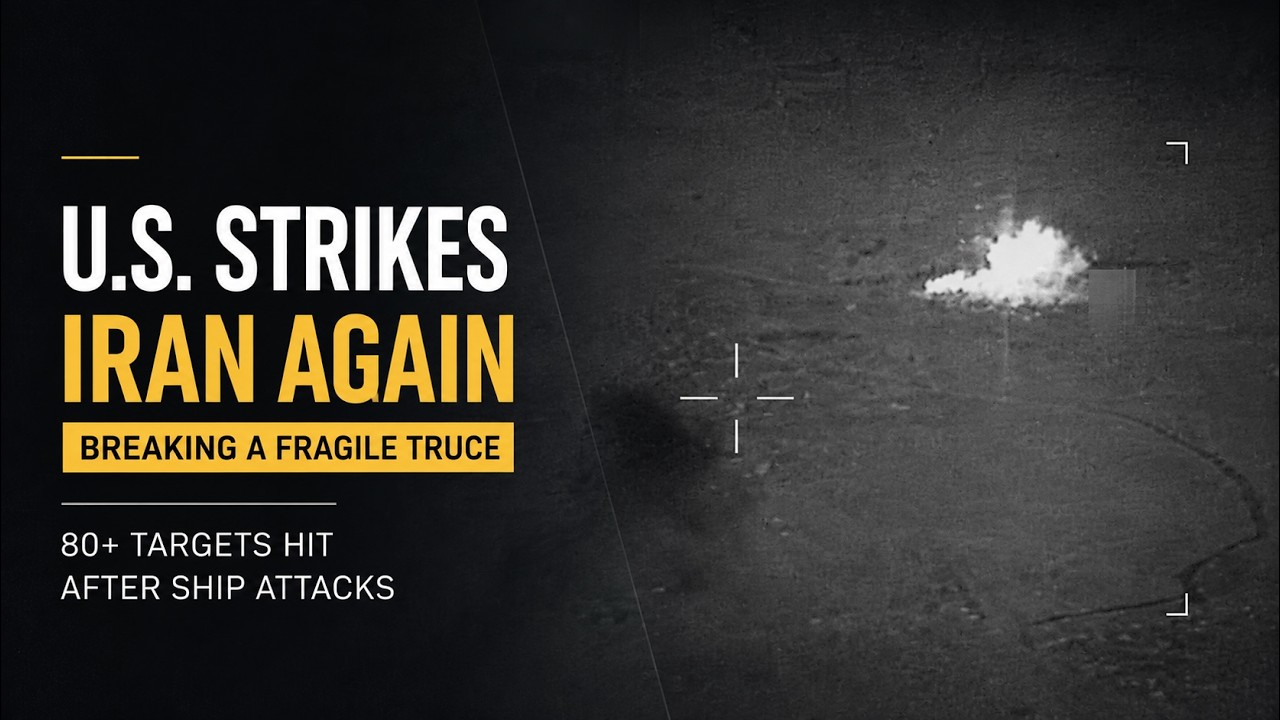
The Middle East has once again become the center of global attention after the United States launched a new round of military strikes against Iran, marking another escalation just weeks after both sides appeared to be moving toward a fragile ceasefire.
According to the U.S. Central Command, the operation targeted more than 80 Iranian military assets, including air defense systems, command and control facilities, coastal radar stations, anti ship missile launchers and dozens of Islamic Revolutionary Guard Corps boats operating near the Strait of Hormuz.
The strikes came after Iran allegedly attacked three commercial oil tankers passing through the Strait of Hormuz, one of the world’s most important maritime trade routes. Washington described the attacks as a violation of the ceasefire agreement and said the military response was necessary to protect international shipping and freedom of navigation. Iran has rejected the accusations and condemned the U.S. operation.
How Did This Happen?
Following months of military exchanges earlier this year, international pressure pushed both countries toward an uneasy ceasefire. While large scale attacks had stopped, tensions remained high across the region.
On July 7, Iran was accused of targeting three commercial vessels navigating through the Strait of Hormuz. The United States viewed these attacks as a direct breach of the ceasefire and responded within hours with coordinated precision strikes against Iranian military infrastructure.
Rather than targeting civilian facilities, the operation focused on military capabilities that the U.S. believes were involved in threatening commercial shipping.
Why the Strait of Hormuz Matters
The Strait of Hormuz is one of the most strategically important waterways on Earth.
Nearly one fifth of global oil consumption passes through this narrow shipping lane every day. It also carries significant volumes of liquefied natural gas and other critical commodities from Gulf nations to Asia, Europe and North America.
Any disruption in this corridor immediately raises concerns among governments, shipping companies, insurers and financial markets.
Why Did the U.S. Respond?
The United States says its objective was not to expand the conflict but to prevent further attacks on international shipping.
By targeting missile systems, radar installations and military boats, Washington aims to reduce Iran’s ability to threaten commercial vessels while signaling that violations of the ceasefire will face immediate consequences.
Whether this action restores deterrence or leads to further retaliation remains uncertain.
Business Impact Around the World
Although the conflict is regional, its economic consequences can quickly spread across global markets.
Higher Oil Prices
Oil traders closely monitor every military development around the Strait of Hormuz. Even the possibility of shipping disruptions often pushes crude oil prices higher, increasing fuel costs for businesses and consumers worldwide.
Rising Shipping Costs
Shipping companies may reroute vessels or increase security measures when regional tensions rise. Insurance premiums for cargo ships operating in the Gulf also increase, making international trade more expensive.
Pressure on Global Supply Chains
Higher transportation costs affect industries ranging from manufacturing and retail to electronics and food distribution. Companies that depend on imported raw materials may face longer delivery times and increased operating costs.
Market Volatility
Periods of geopolitical uncertainty typically increase volatility in stock markets. Investors often shift money toward safer assets such as gold, government bonds and the U.S. dollar while reducing exposure to riskier investments.
Impact on Airlines
Commercial airlines operating routes across the Middle East may adjust flight paths to avoid conflict zones. Longer routes mean higher fuel consumption and increased operating expenses.
What Businesses Should Watch
Companies involved in logistics, manufacturing, energy and international trade should closely monitor developments over the coming weeks.
Key indicators include:
- Oil price movements
- Shipping disruptions in the Strait of Hormuz
- New sanctions or diplomatic negotiations
- Further military responses from either side
- Changes in global financial markets
Looking Ahead
The latest U.S. strikes demonstrate how quickly a fragile ceasefire can unravel in one of the world’s most sensitive regions. While the immediate military objective was to respond to attacks on commercial shipping, the broader consequences could extend far beyond the Middle East.
For businesses, the greatest risks are not only military escalation but also higher energy costs, supply chain disruptions and increased market uncertainty. As governments assess their next moves, global markets will remain focused on whether diplomacy can prevent another prolonged regional conflict.