
Every marketing budget eventually faces the same question: where does this dollar actually work the hardest? Business owners weighing vehicle wraps against digital ads, print, or signage often discover that the math is more nuanced than a simple cost comparison.
A wrap is not a campaign that runs for a quarter and disappears. It is a physical asset attached to a vehicle the business already owns, generating exposure for years. This is a big deal, and enough to say yes, it is worth it. But before signing off on a quote, the decision worth thinking through.
Here is what actually matters before committing budget to this channel.
1. Understand What You Are Actually Paying For
The upfront cost of a wrap can look steep compared to a single month of digital ad spend, and that comparison alone causes a lot of business owners to dismiss the idea before running the real numbers. But what that price actually buys is years of exposure with no recurring spend.
According to data compiled by Grand View Research, a single wrapped vehicle can be seen by between 30,000 and 70,000 people daily, and a local delivery van wrap generates an estimated 16 million impressions annually. When evaluating commercial vehicle wraps against other advertising channels, that volume of exposure for a one-time cost is difficult to match anywhere else in the marketing mix. Providers such as RoadRunner Wraps frame this directly as turning a vehicle the business already owns into a continuously working asset, rather than an additional line item competing for monthly budget.
2. Material Quality Determines Whether the Investment Holds Up
Vehicle wraps typically last between three and five years on average, but that range depends heavily on the vinyl used and how well the wrap was installed in the first place. A wrap built with lower-grade film, or one installed without proper preparation of the vehicle surface, can start peeling, fading, or bubbling well before that window closes.
This is why it is worth asking specifically what materials a provider uses before signing a contract. A wrap that fails early does not just mean an unplanned reinvestment. It means months of degraded, unprofessional-looking branding on the road in the meantime, which works directly against the reason the wrap was purchased in the first place.
3. Design Has to Work at a Glance, Not Just Up Close
A wrap that looks impressive in a design mockup can underperform badly on the road if it was not built for how vehicles are actually seen. Most people encounter a wrapped vehicle for a few seconds, often while it is moving or from a distance in traffic. That means dense text, intricate detail, and overly busy layouts simply do not register the way they would on a printed brochure or a desktop screen.
Effective wrap design prioritizes a clear hierarchy: a recognizable logo, a short, legible message, and contact information that someone could actually read and remember without slowing down. In essence, the value of vehicle wraps only hold up when the design itself is built for fast recognition rather than detailed reading.
4. Installation Quality Is Not a Minor Detail
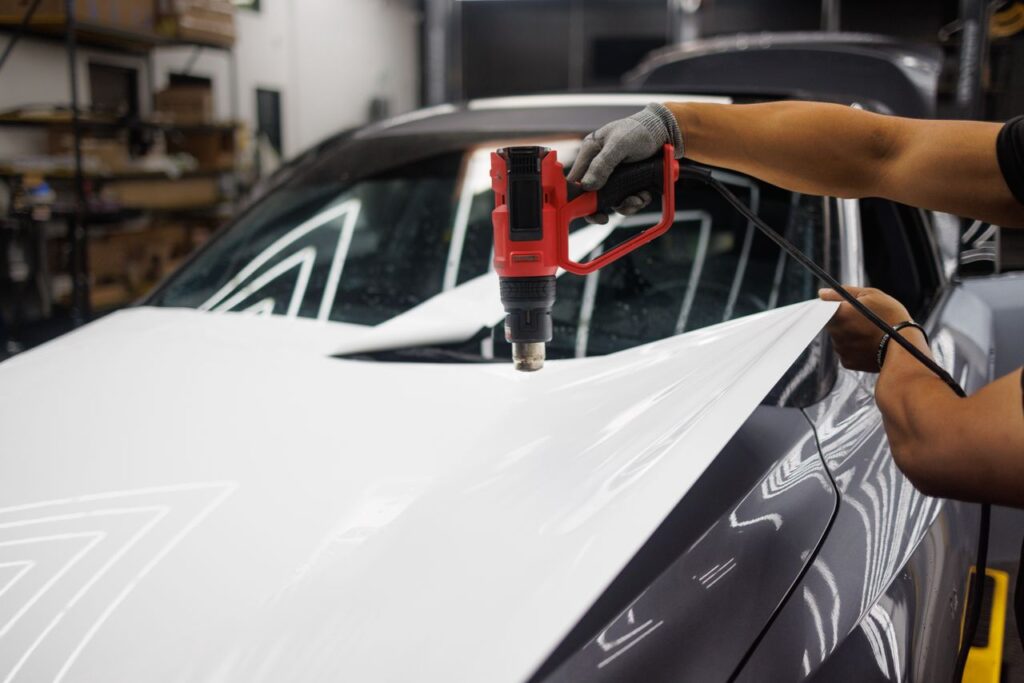
A wrap is only as good as the install behind it. Air bubbles, misaligned panels, and edges that begin lifting within months are almost always installation problems rather than material defects. Certified installation matters because the process involves precise surface preparation, heat application, and panel alignment that takes real skill to execute consistently across different vehicle shapes and panel curves.
In practice, businesses that prioritize a low quote over installer experience often end up paying for a second installation sooner. Companies that have completed tens of thousands of installations end to have encountered nearly every panel configuration and surface challenge a fleet vehicle can present. That accumulated experience shows up in how clean and long-lasting the final result actually is.
5. Think Past the First Vehicle
A single wrapped vehicle is a strong start, but the real value compounds when wraps extend across a fleet. Each additional vehicle multiplies the daily impressions without multiplying the marketing budget the way a paid ad campaign would. For businesses running delivery routes, service calls, or regional operations, a consistent fleet identity also builds a level of professional credibility that a single branded vehicle cannot achieve on its own.
Before committing to a single wrap, it is worth mapping out whether the business plans to expand its fleet, and whether the design being built now can scale cleanly across additional vehicles later without needing a full redesign.
Final Thoughts
The businesses that get real value from vehicle wraps are the ones that ask the right questions before signing anything: what vinyl is being used, who is doing the install, and whether the design will hold up at highway speed and not just on a screen.
Skip those questions and the upfront savings tend to disappear into an early reinstall. Ask them, and a wrap becomes one of the few marketing investments that keeps paying off long after the invoice is settled.