
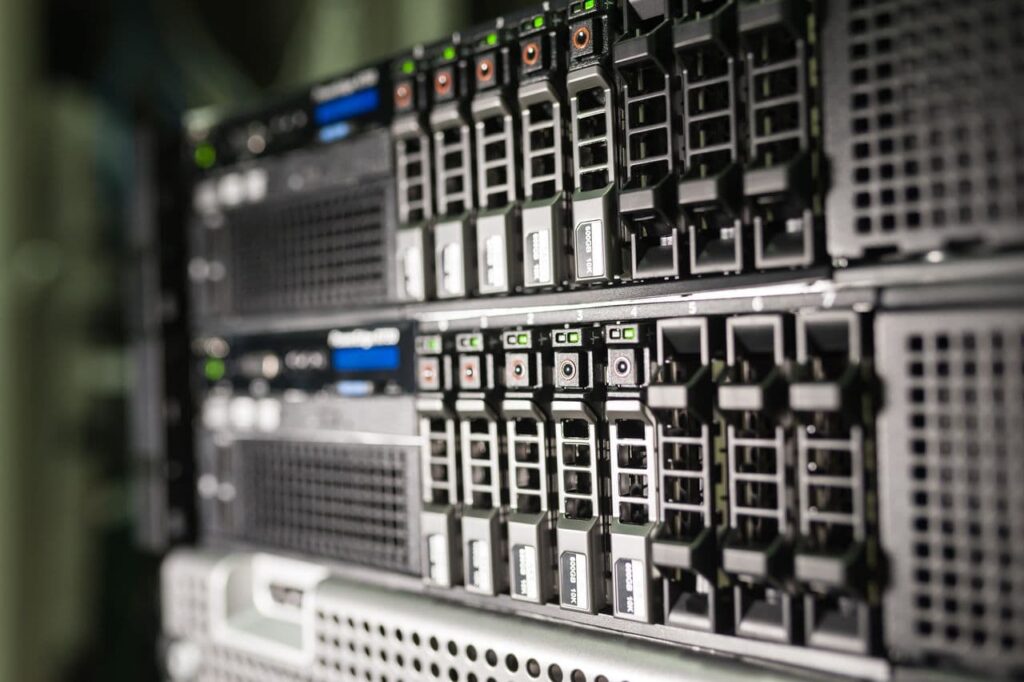
Artificial intelligence is changing how businesses operate, innovate, and compete. Behind every AI model, intelligent application, and data-driven service is a powerful physical foundation: the data center. As organisations increase their use of AI, cloud computing, automation, and advanced analytics, data centers are becoming more than facilities that store and process information. They are strategic business assets.
This transformation has elevated the role of data center leaders. Their responsibilities now extend beyond infrastructure management and operational efficiency. They are increasingly involved in business strategy, technology planning, sustainability, cybersecurity, capacity management, and long-term investment decisions. In an AI-driven world, effective data center leadership requires a clear understanding of both technology and business priorities.
AI workloads are fundamentally changing data center requirements. Traditional enterprise applications often relied on predictable computing patterns, while AI training and inference can demand significant processing power, memory, storage, and network capacity. Graphics processing units and other specialised accelerators require different infrastructure designs and create new challenges around power, cooling, space, and connectivity.
Data center leaders must therefore plan for changing workload requirements rather than simply maintaining existing capacity. They need to understand how AI adoption within an organisation could affect infrastructure demand over the next several years. This requires collaboration with technology teams, business leaders, cloud providers, equipment manufacturers, and energy partners.
Capacity planning has consequently become a strategic discipline. Leaders must determine how much computing power, storage, networking, and energy will be required while avoiding unnecessary infrastructure investment. Overbuilding can increase costs, while underbuilding can limit an organisation’s ability to adopt emerging technologies. The challenge is to create infrastructure that is scalable enough to support future growth while remaining financially responsible today.
Power has also become a central concern. AI-intensive environments can consume significantly more energy than traditional computing workloads. As demand for high-performance computing grows, data center leaders must consider not only whether sufficient electricity is available but also how efficiently that energy is used.
This places energy efficiency at the centre of data center strategy. Leaders are exploring advanced cooling technologies, efficient power systems, renewable energy sources, improved server utilisation, and intelligent infrastructure management. Metrics such as power usage effectiveness can help organisations understand and improve operational efficiency.
Sustainability is no longer simply an environmental initiative. It is becoming an important part of business resilience and long-term infrastructure planning. Data center leaders must balance growing computing requirements with corporate sustainability goals, regulatory expectations, energy availability, and operating costs. This requires practical strategies that connect environmental responsibility with business performance.
Another major responsibility is building resilient infrastructure. As businesses depend more heavily on digital services, data center disruptions can have significant operational and financial consequences. AI applications can make this dependency even stronger because many AI-enabled services require continuous access to computing resources and data.
Data center leaders must therefore develop strong resilience strategies covering power, cooling, networking, hardware, software, cybersecurity, and disaster recovery. Redundancy remains important, but modern resilience also depends on intelligent monitoring and rapid response. Predictive analytics can help identify equipment problems before they become major failures, allowing teams to take preventive action.
Cybersecurity has also become increasingly connected to data center leadership. Data centers contain critical systems and valuable information, making them attractive targets for cyber threats. At the same time, AI introduces new security considerations, including the protection of AI models, training data, application interfaces, and specialised computing infrastructure.
Data center leaders need to work closely with cybersecurity teams to establish secure architectures and access controls. Security must be considered from the design stage rather than added after infrastructure has been deployed. Continuous monitoring, strong identity management, network segmentation, physical security, and well-tested incident response plans are essential elements of a modern data center strategy.
The relationship between data centers and cloud computing is another area where strategic leadership is important. Organisations increasingly operate across on-premises infrastructure, private cloud, public cloud, and colocation environments. Data center leaders must understand which workloads should run in each environment and how these choices affect cost, performance, security, compliance, and scalability.
A hybrid approach can provide flexibility, but it also creates complexity. Effective leaders need clear infrastructure policies and strong visibility across environments. They must evaluate workloads based on business requirements rather than treating one infrastructure model as suitable for every situation.
Data center leaders are also becoming important contributors to technology investment decisions. Large infrastructure projects require significant capital and long-term planning. Decisions involving servers, accelerators, networking equipment, cooling systems, power infrastructure, and facility expansion can influence an organisation for years.
This means leaders need to communicate infrastructure requirements in business terms. Instead of focusing only on technical specifications, they must explain how infrastructure investments support revenue growth, operational efficiency, customer experience, innovation, and risk reduction. The ability to connect technical strategy with business outcomes has become a defining leadership capability.
People and talent are equally important. Modern data centers require professionals with expertise across facilities management, networking, cloud platforms, cybersecurity, automation, energy management, and advanced computing. The increasing complexity of AI infrastructure makes cross-functional knowledge particularly valuable.
Data center leaders must build teams that can adapt to technological change. Continuous learning, professional development, knowledge sharing, and collaboration can help employees remain prepared for new infrastructure technologies. Automation can also reduce repetitive operational work and allow teams to focus on higher-value activities.
Artificial intelligence itself can become a valuable tool for managing data centers. AI-powered systems can analyse operational data, predict equipment failures, optimise cooling, improve energy consumption, and identify unusual patterns. This creates a cycle in which data centers support AI while AI helps make data centers more intelligent.
The future will require leaders to think beyond individual facilities. Data center strategy is increasingly influenced by regional power availability, network connectivity, land availability, climate conditions, regulatory requirements, and proximity to users. Location decisions must therefore consider a broad range of technical, economic, and environmental factors.
Ultimately, the strategic role of data center leaders is expanding because digital infrastructure has become fundamental to modern business. Their work influences how quickly organisations can adopt AI, how reliably digital services operate, how efficiently resources are used, and how effectively companies prepare for future technology demands.
In an AI-driven world, the data center is no longer simply a technical facility operating behind the scenes. It is part of the organisation’s strategic foundation. Leaders who combine infrastructure expertise with business thinking can help their organisations build scalable, resilient, secure, and sustainable digital environments.
The next generation of data center leadership will therefore be defined not only by maintaining uptime, but by anticipating change, managing complexity, enabling innovation, and turning infrastructure into a source of long-term business value.