
The latest Ebola outbreak in the Democratic Republic of the Congo and Uganda is becoming an important development not only for public health authorities but also for businesses operating across Africa and international markets. While the risk to the American public and international travelers remains limited according to the U.S. Centers for Disease Control and Prevention, the speed at which the outbreak has expanded is drawing attention to the vulnerability of global travel, supply chains and cross border operations.
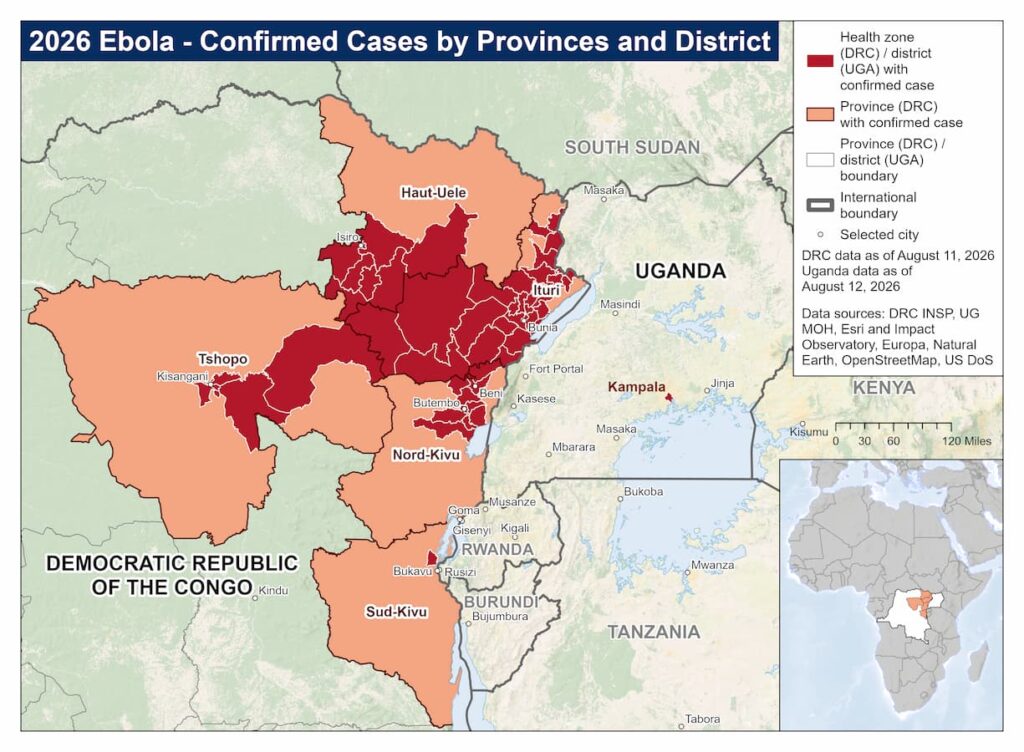
The outbreak is being caused by the Bundibugyo virus, a type of Ebola virus, and has affected several provinces in the Democratic Republic of the Congo as well as Uganda’s capital Kampala. The situation has developed at a significantly faster pace than previous outbreaks in the region.
For businesses, the immediate concern is not necessarily a widespread global health crisis. Instead, the outbreak highlights how quickly a regional emergency can create operational challenges for companies with employees, suppliers, customers or logistics routes connected to affected areas.
A Rapidly Developing Regional Crisis
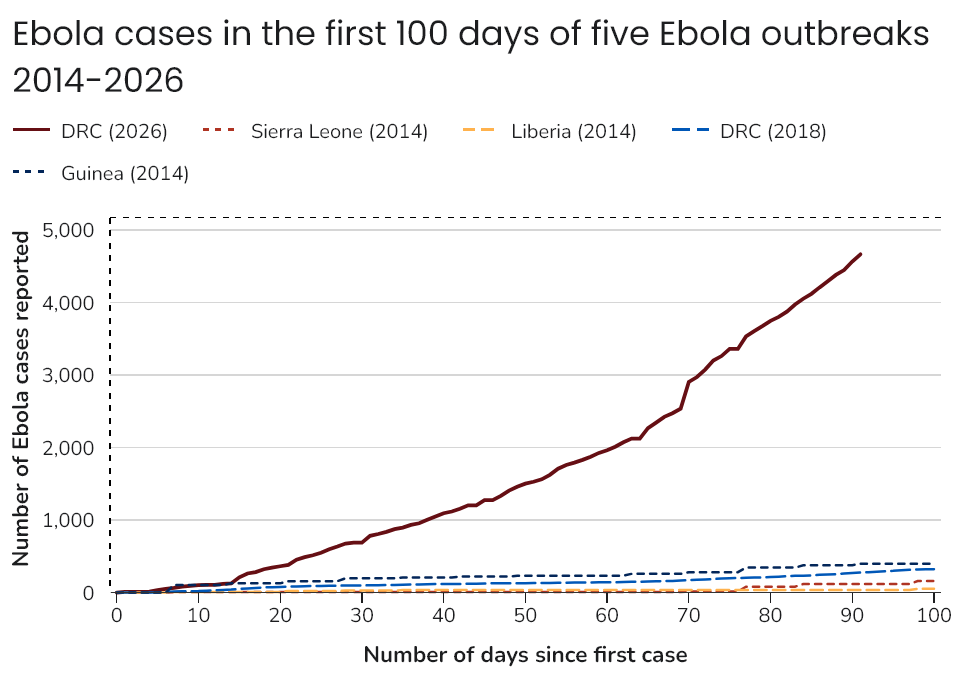
The scale and speed of the outbreak have made it particularly significant. In the Democratic Republic of the Congo, the outbreak crossed more than 1,000 confirmed cases within approximately 40 days of response activation. During the major 2018 Ebola outbreak in the country, it took roughly 235 days to reach a similar level.
Cases have been reported across Haut Uele, Ituri, North Kivu, South Kivu and Tshopo provinces. More than 100 deaths were reported during the first week of July, underlining the seriousness of the situation.
Uganda has so far reported cases in Kampala. Authorities have not reported community transmission there and the country’s latest reported case on June 21 was linked to travel from the Democratic Republic of the Congo.
South Kivu has reported no confirmed cases since May 29, providing some indication that containment efforts can have an impact when implemented effectively.
Why Businesses Should Pay Attention
For international businesses, health emergencies can quickly become operational issues.
Restrictions on movement can affect employee travel, supplier visits, project deployments and customer relationships. Transportation companies can face additional screening requirements and changing border procedures. Manufacturers and retailers may experience delays if suppliers or logistics partners operate in affected regions.
The impact can also extend beyond companies physically located in outbreak areas.
A business may have a supplier several steps down its supply chain that depends on a particular region. A logistics company may need to reroute cargo. A consulting or engineering firm may need to postpone employee deployments. Airlines and other travel related businesses can face additional screening and operational requirements.
This makes the Ebola outbreak another reminder that business continuity planning cannot focus only on financial or technological risks.
Travel Restrictions Could Affect International Operations
The United States has introduced temporary measures aimed at reducing the possibility of Ebola being imported through international travel.
Travelers who have been in the Democratic Republic of the Congo within 21 days of their flight to the United States are temporarily restricted from boarding commercial flights with U.S. destinations. U.S. citizens and nationals who have been in Uganda or South Sudan without having been in the Democratic Republic of the Congo are subject to enhanced screening at designated airports.
For companies with employees traveling internationally, such measures can create practical challenges.
Travel schedules may need to be reviewed more frequently. Employees working on projects in affected countries may require longer transition periods before returning to the United States. Companies may also need to consider alternative travel routes and contingency arrangements.
The lesson for global employers is straightforward. Travel policies need to be flexible enough to respond to rapidly changing public health conditions.
Supply Chains Face Another Resilience Test
The outbreak also arrives at a time when companies are already paying greater attention to supply chain resilience.
Businesses increasingly understand that relying heavily on a single supplier, region or transportation route can expose operations to unexpected disruption. Health emergencies add another layer of uncertainty because restrictions can change quickly as authorities respond to developments on the ground.
Companies connected to the Democratic Republic of the Congo and Uganda should therefore evaluate their exposure across procurement, transportation, warehousing and workforce operations.
This does not necessarily mean withdrawing from affected markets. Instead, companies should understand where their critical dependencies exist and determine how quickly they can shift operations if conditions deteriorate.
For logistics providers, this could involve preparing alternative routes and monitoring border requirements. For manufacturers, it could mean identifying secondary suppliers. For professional services companies, it could involve establishing remote working and alternative staffing arrangements.
Risk Remains Limited for Most International Businesses
Despite the seriousness of the outbreak, it is important to maintain perspective.
There are currently no Ebola cases associated with this outbreak reported in the United States. The likelihood of the disease spreading to the United States is considered very low and the risk of wider transmission within the country would also remain low because of established public health and infection control systems.
For businesses outside the affected regions, this means the situation should be approached through informed risk management rather than unnecessary alarm.
Companies should monitor official travel guidance, maintain communication with employees who may be traveling and review business continuity plans where exposure exists.
The Bigger Business Lesson
Every major regional crisis offers businesses a lesson about preparedness.
The Ebola outbreak demonstrates how developments that initially appear geographically limited can influence international movement, workforce planning and supply chain decisions. It also reinforces the value of having contingency plans before a disruption occurs.
The organizations best positioned to manage such events are not necessarily those that predict every crisis correctly. They are the ones capable of adapting when circumstances change.
For global businesses, that means knowing where critical suppliers are located, understanding employee travel exposure, maintaining alternative logistics options and keeping communication channels open during periods of uncertainty.
As health authorities continue their response in the Democratic Republic of the Congo and Uganda, businesses will be watching more than case numbers. They will also be watching travel restrictions, border controls, transportation conditions and the potential effect on regional commerce.
The immediate risk may remain limited for most international businesses. The strategic message, however, is broader. In an increasingly interconnected economy, resilience depends on being prepared for disruptions that can emerge far beyond a company’s own headquarters or primary market.
| ReportedPress command, modifier, or enter key to sort by Reported in descending order | CountPress command, modifier, or enter key to sort by Count in ascending order |
|---|---|
| DRC (as of Aug 12, 2026) | |
| Confirmed cases | 4665 |
| Confirmed deaths | 2184 |
| Probable cases | 0 |
| Probable deaths | 0 |
| Uganda (as of Aug 13, 2026) | |
| Confirmed cases | 20 |
| Confirmed deaths | 2 |
| Probable cases | 1 |
| Probable deaths | 1 |
| France (as of Aug 13, 2026) | |
| Confirmed cases | 1 |
| Confirmed deaths | 0 |
| Probable cases | 0 |
| Probable deaths | 0 |
| Totals | |
| Confirmed cases | 4686 |
| Confirmed deaths | 2186 |
| Probable cases | 1 |
| Probable deaths | 1 |