
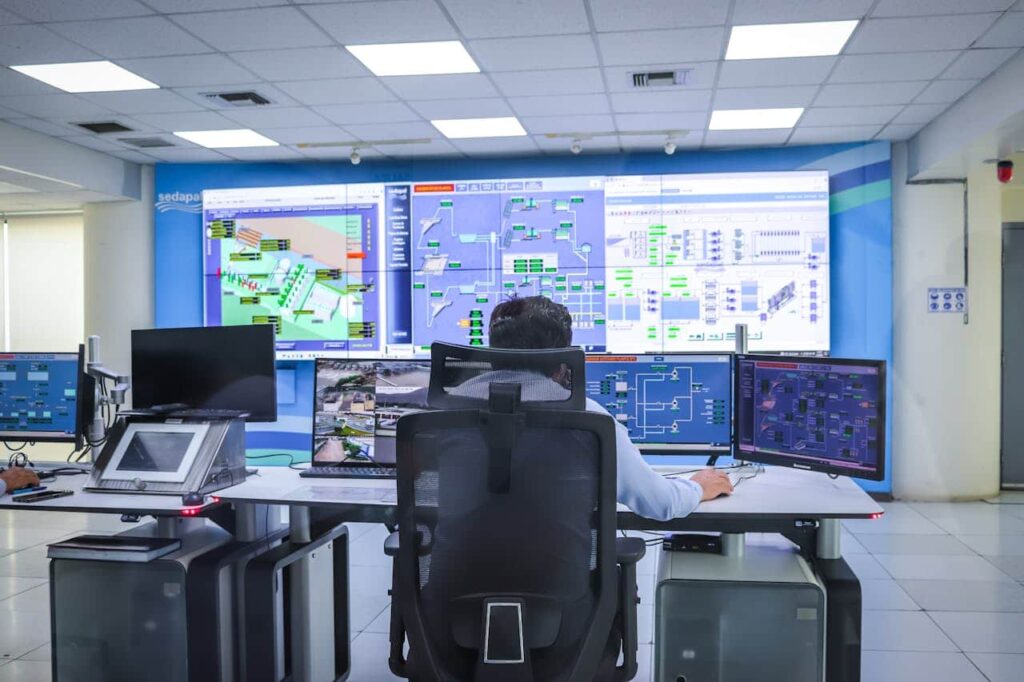
Industrial engineering has always focused on improving systems. It studies how people, machines, materials, information, and processes work together to create value. For many years, the field has helped businesses increase productivity, reduce waste, improve quality, and design better operations. Today, however, industrial engineering is entering a new phase. The future of the field depends on the strong connection between data, people, and intelligent systems.
Modern industries are becoming more complex. Manufacturing plants, logistics networks, healthcare systems, service operations, and supply chains now generate large amounts of data every day. Machines are connected, customers expect faster service, and businesses must respond quickly to market changes. In this environment, traditional methods alone are not enough. Industrial engineers must combine technical knowledge with digital intelligence and human understanding.
Data has become one of the most powerful tools in industrial engineering. It helps organizations see what is really happening inside their operations. Earlier, many decisions were based mainly on observation, experience, or periodic reports. Today, real-time data can show machine performance, production delays, quality issues, inventory levels, customer demand, energy use, and workforce productivity. This visibility allows companies to make faster and more accurate decisions.
However, data is useful only when it is properly understood. Collecting information is not the same as creating insight. Industrial engineers play an important role in turning raw data into meaningful action. They can identify patterns, study root causes, measure performance, and design solutions. For example, if production output is falling, data can help reveal whether the problem is linked to machine downtime, poor scheduling, material shortages, or process imbalance.
The future of industrial engineering will depend heavily on this ability to interpret data. Engineers will need to understand analytics, simulation, forecasting, and digital modeling. They will need to work with dashboards, sensors, automation systems, and artificial intelligence tools. But they must also remember that data does not replace judgment. It supports judgment. The best decisions come when data is combined with practical experience and human insight.
People remain central to industrial engineering. Every system is affected by human behavior, skill, communication, motivation, and decision-making. A process may look perfect on paper, but if it does not fit the people who use it, it will fail in practice. This is why human factors, ergonomics, training, leadership, and change management are becoming increasingly important in the field.
Industrial engineers must design systems that are not only efficient, but also usable and sustainable. A workstation should improve productivity without harming worker safety. A digital tool should make work easier, not more confusing. A new process should reduce waste without creating unnecessary stress. When engineers understand the human side of operations, they can build systems that perform better in real life.
The relationship between people and technology is especially important. Many businesses are adopting automation, robotics, artificial intelligence, and smart manufacturing systems. These technologies can transform operations by increasing speed, accuracy, and consistency. But technology must be integrated carefully. If workers are not trained properly, or if systems are introduced without clear communication, even the best technology can fail.
This is where industrial engineers have a critical role. They act as a bridge between technical systems and human users. They can help organizations decide what should be automated, what should remain human-led, and how both can work together. The goal is not to remove people from operations. The goal is to allow people to focus on higher-value work while intelligent systems handle repetitive, risky, or highly data-driven tasks.
Smart systems are changing the possibilities of industrial engineering. In a smart factory, machines can communicate with each other, sensors can detect problems early, and software can adjust production schedules based on demand. In logistics, intelligent systems can optimize routes, track shipments, and reduce delays. In healthcare, data-driven systems can improve patient flow, resource allocation, and service quality. These examples show how industrial engineering is expanding beyond traditional factory settings.
The rise of intelligent systems also increases the need for systems thinking. Industrial engineers must understand how one change affects the entire operation. For example, increasing machine speed may improve output, but it may also create bottlenecks in packaging, inspection, or delivery. Reducing inventory may lower costs, but it may increase risk if suppliers are unreliable. A smart system must be designed with the whole value chain in mind.
This ability to see the bigger picture is one of the strongest qualities of industrial engineering. The field does not focus only on one machine, one department, or one task. It studies the complete system. In the future, this systems-based approach will become even more valuable because businesses will need to manage complexity across departments, technologies, suppliers, and markets.
Another important area is continuous improvement. Industrial engineering has long been connected with Lean, Six Sigma, Kaizen, and other improvement methods. These approaches will continue to matter, but they will become more powerful when combined with digital tools. Instead of waiting for problems to appear in monthly reports, companies can use real-time data to identify issues immediately. Instead of relying only on manual analysis, teams can use predictive models to prevent failures before they happen.
Still, continuous improvement must remain people-driven. A dashboard can show a problem, but people must solve it. A system can suggest an improvement, but teams must test, refine, and sustain it. The future will require engineers who can work with both algorithms and employees. They must be comfortable in technical discussions and equally comfortable leading workshops, listening to operators, and building consensus.
Sustainability is also reshaping industrial engineering. Companies are under pressure to reduce waste, lower emissions, use resources responsibly, and build resilient operations. Industrial engineers can contribute by improving energy efficiency, optimizing material use, reducing defects, and designing circular processes. Data and intelligent systems can support these goals by tracking resource consumption and identifying opportunities for improvement.
But sustainability is not only environmental. It also includes economic and social sustainability. A process should be cost-effective, but it should also support safe working conditions and long-term organizational health. Industrial engineers of the future will need to balance productivity with responsibility. They will need to design systems that are efficient, ethical, and adaptable.
Education and skill development will also need to evolve. Future industrial engineers must learn more than traditional process design and operations research. They must understand data analytics, automation, artificial intelligence, digital transformation, and sustainability. At the same time, they must develop communication, leadership, and problem-solving skills. The most successful professionals will be those who can connect technical knowledge with human understanding.
The future of industrial engineering will not be defined by technology alone. It will be defined by how well technology is used to improve systems and support people. Data will provide visibility. Intelligent systems will provide speed and capability. People will provide creativity, judgment, ethics, and adaptability. When these three forces work together, organizations can achieve transformation that is both powerful and sustainable.
Businesses that understand this connection will be better prepared for the future. They will not see industrial engineering only as a cost-saving function. They will see it as a strategic driver of innovation, resilience, and growth. Industrial engineers will help companies design smarter operations, stronger teams, and more responsive systems.
In a world shaped by uncertainty and rapid change, the value of industrial engineering will continue to grow. Its future depends on the ability to bring data, people, and intelligent systems into one connected framework. This is where real progress will happen. Not in technology alone, and not in human effort alone, but in the thoughtful integration of both.
The next era of industrial engineering will belong to professionals and organizations that can build systems that are intelligent, human-centered, and ready for change.