
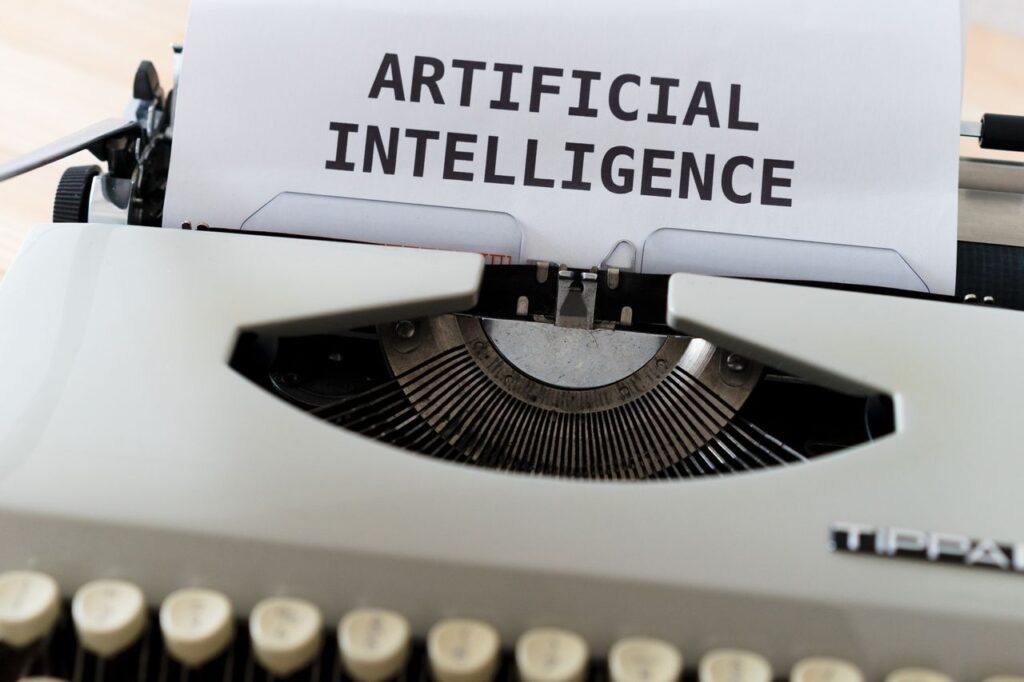
Artificial Intelligence (AI) has emerged as one of the most transformative technologies of the modern era. Once viewed as a futuristic concept, AI is now a practical reality that is reshaping industries, redefining business strategies, and creating new opportunities for growth. From automating routine processes and enhancing customer experiences to driving innovation and improving decision-making, AI has become a major force shaping the future of business.
Organizations around the world are increasingly adopting AI technologies to remain competitive in a rapidly changing marketplace. Businesses recognize that AI is no longer an optional investment but a strategic necessity. Companies that successfully integrate AI into their operations are gaining advantages in efficiency, productivity, and customer engagement, while those that delay adoption risk falling behind.
One of the most significant impacts of AI is its ability to process and analyze vast amounts of data. Modern businesses generate enormous volumes of information every day through customer interactions, transactions, supply chains, and digital platforms. AI systems can analyze this data at a speed and scale that would be impossible for humans alone. By identifying patterns, trends, and insights, AI enables organizations to make more informed decisions and respond more quickly to changing market conditions.
Data-driven decision-making has become a cornerstone of successful business operations. AI helps leaders move beyond intuition by providing valuable insights based on real-time information. Whether forecasting demand, identifying customer preferences, or assessing business risks, AI allows organizations to make smarter and more accurate decisions. This capability is helping companies improve performance while reducing uncertainty.
Customer experience is another area where AI is creating substantial change. Today’s consumers expect fast, personalized, and seamless interactions. AI-powered tools such as virtual assistants, chatbots, recommendation engines, and predictive analytics enable businesses to better understand customer needs and deliver customized experiences. By analyzing customer behavior and preferences, organizations can provide relevant products, services, and support, ultimately strengthening customer satisfaction and loyalty.
The rise of AI is also transforming workplace productivity. Many repetitive and time-consuming tasks can now be automated, allowing employees to focus on more strategic and creative responsibilities. Administrative processes, data entry, scheduling, inventory management, and customer support functions can be handled more efficiently through AI-driven systems. As a result, businesses can reduce operational costs while increasing overall productivity.
Automation does not necessarily mean replacing human workers. Instead, it often enables employees to focus on higher-value activities that require critical thinking, creativity, collaboration, and problem-solving. The future workplace is increasingly characterized by collaboration between humans and intelligent technologies. Businesses that successfully combine human expertise with AI capabilities are likely to achieve stronger results than either could accomplish independently.
Innovation is another powerful outcome of AI adoption. Organizations are using AI to develop new products, improve existing services, and discover opportunities that may otherwise remain hidden. AI accelerates research and development by analyzing complex datasets, identifying emerging trends, and generating insights that support innovation. Industries such as healthcare, manufacturing, finance, retail, and transportation are already experiencing breakthroughs driven by AI technologies.
In healthcare, AI is supporting faster diagnoses, personalized treatment plans, and medical research. In finance, it is improving fraud detection, risk management, and investment analysis. In manufacturing, AI enhances production efficiency, predictive maintenance, and quality control. In retail, it enables personalized shopping experiences and optimized inventory management. These examples demonstrate how AI is becoming deeply integrated into nearly every sector of the economy.
Another important area where AI is shaping the future of business is supply chain management. Global supply chains are becoming increasingly complex, requiring businesses to manage inventory, logistics, and demand fluctuations efficiently. AI-powered forecasting and predictive analytics help organizations anticipate disruptions, optimize inventory levels, and improve operational planning. This leads to greater resilience and agility in an increasingly unpredictable business environment.
The competitive landscape is also evolving because of AI. Companies that effectively leverage AI can respond more quickly to market changes, identify emerging opportunities, and improve customer engagement. This creates a significant competitive advantage. As AI capabilities continue to advance, organizations will need to invest not only in technology but also in the skills and talent required to maximize its potential.
Workforce development has therefore become a critical priority. The growing influence of AI is changing the skills required for future success. While technical expertise remains important, businesses increasingly value adaptability, creativity, communication, and emotional intelligence. Employees must learn to work alongside AI systems, using technology as a tool to enhance performance rather than viewing it as a replacement. Continuous learning and professional development will play a crucial role in preparing workers for an AI-driven future.
Despite its many benefits, AI also presents challenges that businesses must address responsibly. Concerns related to data privacy, cybersecurity, algorithmic bias, and ethical decision-making have become increasingly important. Organizations must ensure that AI systems are transparent, fair, and aligned with ethical standards. Building trust among customers, employees, and stakeholders will be essential for the successful implementation of AI technologies.
Leadership plays a critical role in navigating these challenges. Business leaders must develop clear strategies for AI adoption while maintaining a strong focus on human values. Technology should serve organizational goals and improve human outcomes rather than simply pursuing automation for its own sake. Leaders who balance innovation with responsibility will be better positioned to create sustainable long-term success.
The future of business will not be defined solely by technology but by how organizations choose to use it. AI offers extraordinary opportunities, but its true value lies in its ability to enhance human capabilities. Businesses that combine advanced technology with creativity, empathy, ethical leadership, and strategic vision will be best equipped to thrive in the years ahead.
Looking forward, AI will continue to influence every aspect of business operations. New applications, more sophisticated systems, and greater accessibility will accelerate its adoption across industries. Companies that embrace AI thoughtfully and strategically will unlock new levels of efficiency, innovation, and growth. Those that fail to adapt may struggle to remain competitive in an increasingly digital economy.
Artificial Intelligence is more than a technological trend. It is a major force reshaping how businesses operate, compete, and create value. As organizations navigate the opportunities and challenges of the digital age, AI will remain at the center of business transformation. The future belongs to companies that can successfully harness its power while maintaining a strong focus on people, purpose, and long-term impact.