
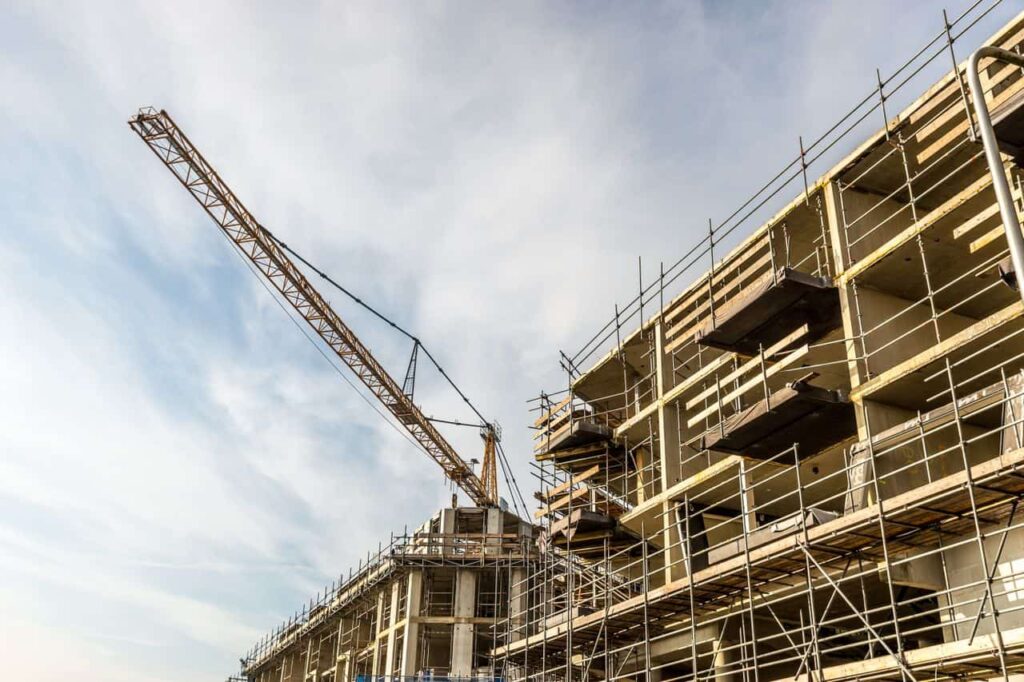
Ask any project manager where the money goes on a construction job and you’ll hear the same list: materials that cost more than they did last quarter, trades that are hard to book, site facilities that sit on the budget for months, and delays that turn a tidy schedule into an expensive one. Every week a project runs over is a week of crane hire, site supervision, and finance costs that nobody planned for.
That’s why demountable buildings have moved from a niche solution to a mainstream tool on Australian job sites and beyond. Site offices, crib rooms, amenities blocks, classrooms, clinics, and even permanent accommodation are increasingly being delivered as modular units that arrive ready to use, and the savings show up in more places than the purchase price. Here’s how demountables help keep project costs under control.
Construction Costs Are Climbing, and Speed Matters More
The pressure on budgets is not imaginary. According to the Australian Bureau of Statistics, house construction output prices rose 2.0% in the June quarter of 2026, the largest quarterly increase since September 2022, with builders passing on higher material transport costs and continuing to struggle with shortages of skilled labour.
When every month of construction costs more than the last, anything that shortens the build or reduces the labour required on site has a direct effect on the bottom line. That’s the core advantage demountable buildings offer.
Faster Delivery Means Fewer Weeks on the Clock
A conventional site office or amenities block needs slab, framing, cladding, roofing, fit-out, electrical, and plumbing, each requiring a different trade at a different time. A demountable arrives complete, is craned into position, connected to services, and is usable the same day.
The time saved compounds:
- No waiting for foundations to cure before work can begin
- No coordinating multiple trades for a building that isn’t the actual project
- No weather delays on a structure that was built under cover
- Site teams have somewhere to work from day one
On large projects, that can mean weeks of preliminaries saved before the main works even start.
Factory Construction Cuts Waste and Labour Costs
Building in a controlled factory environment is fundamentally more efficient than building on site. Materials are ordered to exact quantities, offcuts are reused, and work isn’t interrupted by rain or access problems. Labour is used more productively too, because crews work on repeatable tasks in a fixed location rather than travelling to and setting up on a new site each time.
For the project, that translates to a lower unit cost for the building itself and far less waste to dispose of on site, which is a saving in skip hire and tipping fees that often gets overlooked.
Hire, Buy, or Relocate: Flexibility Is a Cost Control Tool
One of the biggest financial advantages of demountables is that you don’t have to commit to permanent infrastructure for a temporary need. According to the team at Aussie Demountables, most site buildings are used for a fraction of their working life on any single project, which is why hiring, buying second-hand, and relocating units between jobs are all common strategies for keeping costs down.
A site office that serves a two-year build in one location can be lifted, transported, and reused on the next project without the cost of building from scratch again. For contractors running multiple sites, that reusability turns a recurring expense into a one-off asset.
The options typically include:
- Short-term hire for projects with a defined end date
- Purchase for contractors who will reuse units across future jobs
- Refurbished units that deliver the same function at a lower price
- Relocation services to move existing buildings between sites
Matching the arrangement to the project’s real duration avoids paying for more than you need.
Reduced Site Preparation and Foundation Costs
Permanent buildings need engineered footings, excavation, and often significant earthworks. Demountables usually sit on adjustable steel stumps or simple pier foundations, which require minimal ground preparation and can be installed on sloping or uneven sites without major civil works.
That’s a saving in excavation, concrete, and engineering fees, and it also means the site can be returned to its original condition at the end of the project with little remediation.
Predictable Pricing and Fewer Variations
Anyone who has managed a traditional build knows that variations are where budgets unravel. Unforeseen ground conditions, material substitutions, and design changes on site all add cost. A demountable building is a finished product with a known price. What you order is what arrives, and the scope for surprises is much smaller.
For estimators and quantity surveyors, that predictability makes the preliminaries budget easier to lock in and defend.
Lower Ongoing Running Costs
Modern demountables are built with insulation, efficient lighting, and split-system air conditioning as standard, which keeps energy costs manageable over long projects. Maintenance is simpler too, because units are built to standard specifications with readily available components.
When a project ends, the building can be resold or redeployed, recovering part of the original outlay rather than being demolished.
Where Demountables Deliver the Most Value
They’re not the right answer for every structure, but they’re hard to beat for:
- Site offices, meeting rooms, and first aid rooms
- Lunch rooms and amenities blocks
- Temporary classrooms and clinics during renovations
- Workforce accommodation on remote projects
- Storage and secure tool sheds
- Sales offices and display suites for property developments
In each case, the alternative is either a slower, costlier permanent build or an inadequate makeshift solution.
Conclusion
Demountable buildings reduce construction project costs by attacking the expenses that quietly inflate budgets: time on site, labour coordination, material waste, foundation works, and the risk of variations. Because they’re built off-site and delivered ready to use, they let projects start faster and run leaner, and because they can be hired, reused, and relocated, they turn a recurring cost into a flexible asset.
In a market where construction prices keep climbing, that combination of speed, predictability, and reusability is one of the simplest ways for contractors and developers to protect their margins.