
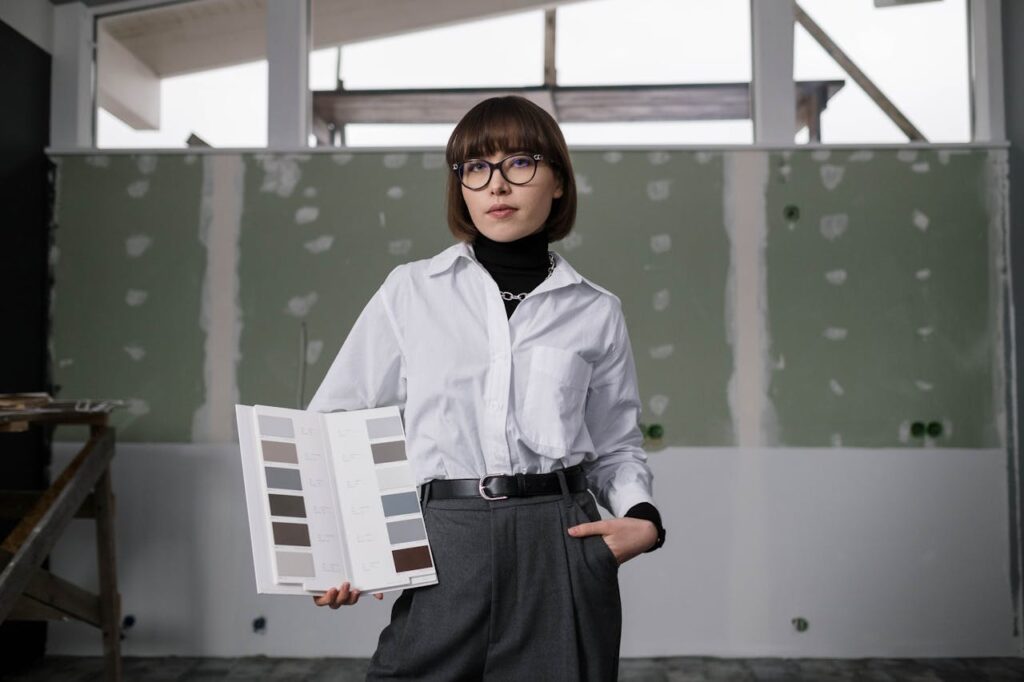
Women in architecture have long been present, yet their contributions have often remained underrecognized or understated. Today, that narrative is steadily changing. Across the world, women are not only shaping the built environment but also redefining what architecture stands for – expanding it beyond structures into a discipline that engages with society, sustainability, culture, and human experience.
Historically, architecture was perceived as a male-dominated profession, shaped by institutional barriers and limited access to education and leadership opportunities. Many women who entered the field had to navigate systemic biases, often working behind the scenes or within constrained roles. Despite these challenges, they contributed significantly to design, planning, and innovation, even if their work was not always formally acknowledged. Their persistence laid the foundation for the growing presence of women in architecture today.
In contemporary practice, women architects are influencing the discipline across multiple dimensions. They are leading firms, directing large-scale projects, and contributing to academic research. More importantly, they are bringing new perspectives that emphasize inclusivity, context, and responsibility. Rather than viewing architecture purely as an object, many women approach it as a process – one that considers the social, cultural, and environmental impact of design decisions.
One of the most significant shifts brought by women in architecture is the focus on human-centered design. This approach prioritizes how spaces are experienced by people, taking into account accessibility, comfort, and emotional well-being. It moves beyond aesthetics and functionality to consider how architecture can support communities and improve quality of life. Whether designing homes, public spaces, or urban systems, this perspective is helping to create environments that are more responsive and inclusive.
Sustainability is another area where women architects are making a strong impact. As the built environment contributes significantly to global carbon emissions, there is an increasing need for responsible design practices. Many women in the field are actively engaging with sustainable materials, energy-efficient systems, and climate-responsive architecture. Their work reflects a growing awareness that architecture must operate within ecological limits while still meeting human needs.
Collaboration and interdisciplinary thinking have also become defining characteristics of women-led architectural practices. Instead of working in isolation, many women architects engage with experts from other fields such as engineering, sociology, environmental science, and technology. This integrated approach allows for more holistic solutions, addressing complex challenges that cannot be solved through design alone.
Despite this progress, challenges remain. Women in architecture continue to face disparities in representation, particularly in leadership roles and large-scale projects. Issues such as unequal pay, limited visibility, and work-life balance still affect many professionals in the field. However, there is a growing movement within the industry to address these gaps, supported by networks, mentorship programs, and policy changes aimed at creating more equitable opportunities.
Education is playing a key role in this transformation. Increasing numbers of women are enrolling in architecture programs, bringing diverse perspectives into academic and professional spaces. This shift is gradually changing the culture of the industry, encouraging more inclusive practices and redefining traditional notions of leadership and success.
The influence of women in architecture is also evident in how the profession is engaging with broader societal issues. From affordable housing and urban resilience to cultural preservation and community development, women architects are actively contributing to solutions that extend beyond individual projects. Their work reflects a deeper understanding of architecture as a tool for positive change.
What makes this moment particularly significant is not just the growing number of women in architecture, but the nature of their impact. They are challenging conventional boundaries, questioning established norms, and introducing new ways of thinking about space and design. Their contributions are not limited to specific styles or typologies – they are reshaping the discipline itself.
As architecture continues to evolve, the role of women will remain central to its future. Their perspectives, experiences, and approaches are helping to create a more balanced and thoughtful profession. By addressing both the opportunities and challenges within the field, women in architecture are not only building structures but also shaping a more inclusive and sustainable vision for the built environment.
The story of women in architecture is still unfolding. It is a story of resilience, innovation, and transformation – one that continues to redefine what architecture can achieve and who it is for.