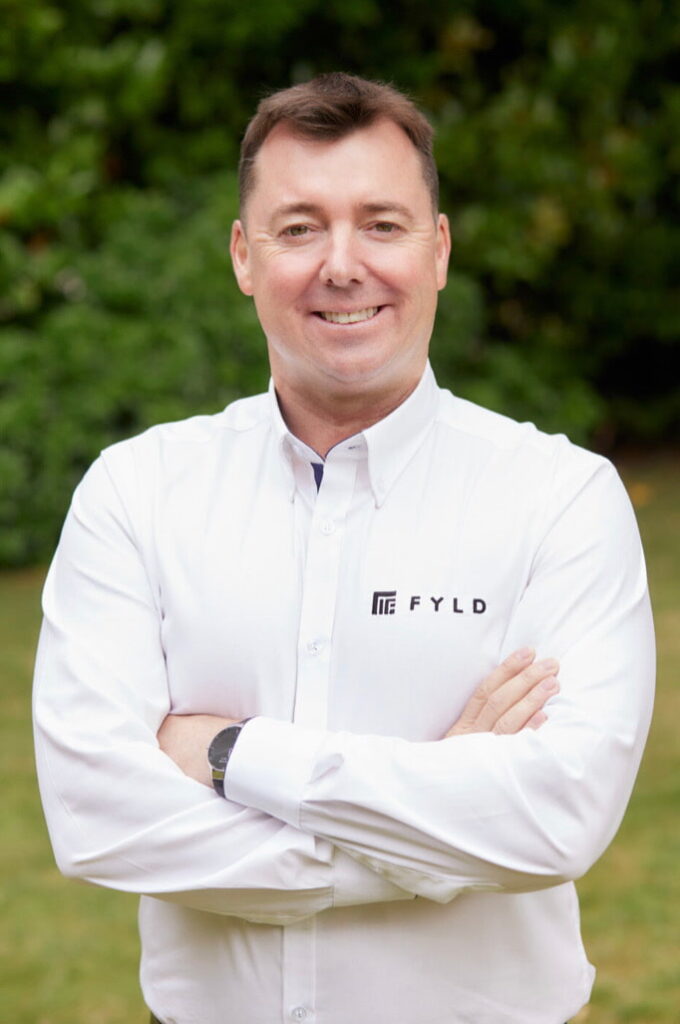
Karl Simons is a forward-thinking leader in innovation and technology, currently serving as the Co-Founder and Chief Futurist at the artificial intelligence organisation FYLD. With a career spanning 38 years, he brings a wealth of domestic and international experience across industries such as defence, oil and gas, construction, rail, highways, mining and utilities.
Karl Simons | Co-Founder and Chief Futurist | FYLD
Alongside his role at FYLD, he also serves as a long-term advisor to the British Government, contributing to critical areas including safety, mental health and artificial intelligence. His professional journey reflects a strong commitment to integrating advanced technology into complex operational environments while ensuring it is implemented responsibly and ethically. At EliteX, we are proud to have Karl Simons as part of the edition: Visionary Leaders in Innovation & Technology, 2026.
Throughout his career, Karl has held senior roles in engineering, digital transformation, safety, health and security. He has worked closely with governments, global corporations and professional bodies to deliver large-scale physical and digital infrastructure programmes. His work today focuses on helping organisations understand how emerging technologies, particularly artificial intelligence, can be used to improve overall business outcomes while maintaining a strong foundation of safety and integrity.
Real innovation begins with solving problems, not chasing technology
Karl’s entry into the world of technology and innovation was driven by a desire to solve real challenges within the organisations he led. While working in major corporations, he consistently turned to innovation as a way to improve processes and outcomes. However, his decision to step into the start-up space as a co-founder marked a defining moment in his journey. The opportunity to develop AI technology capable of preventing harm on a much larger scale was both meaningful and transformative. Over time, he recognised that technologies such as artificial intelligence, data analytics and intelligent automation have the power to significantly improve productivity, safety and quality across all industries and regions.
His leadership style is grounded, adaptive and collaborative, which is essential in a fast-changing technology environment. Karl believes in drawing strength from the people around him, many of whom have been part of his journey for years. By working closely with his teams, learning from their perspectives and encouraging collaboration, he maintains both focus and momentum in a dynamic and often demanding start-up ecosystem. His ability to balance multiple roles while staying purposeful has been a key factor in his continued success.
One of the major challenges Karl has faced is bridging the gap between emerging technologies and traditional organisational thinking. While many businesses recognise the potential of artificial intelligence, they often struggle to take the first step towards implementation. Karl has addressed this challenge by simplifying complex ideas and building trust through transparency and integrity. By clearly communicating the value of technology and demonstrating its practical impact, he has helped organisations move from hesitation to action. Early adopters who placed their trust in this approach are now seeing meaningful results, reinforcing the importance of forward-thinking leadership.
Karl strongly believes that creativity thrives in environments where people feel safe to express their ideas. He has consistently worked to create a culture where individuals are encouraged to challenge assumptions and share their perspectives openly. He understands that fear-based environments limit innovation, while trust-based cultures enable teams to grow, collaborate and contribute more effectively. By prioritising psychological safety, he ensures that innovation becomes a natural outcome rather than a forced process.
Looking ahead, Karl sees artificial intelligence as a key driver of transformation over the next five years, especially when combined with advanced data analytics and automation. He believes that the organisations that succeed will be those that adopt these technologies responsibly, with strong governance, ethical oversight and meaningful employee engagement. For him, the future is not just about adopting technology, but about integrating it in a way that aligns with human values and organisational goals.
To stay updated in a rapidly evolving landscape, Karl actively engages with a global network of experts, industry leaders and research communities. He values continuous learning and regularly participates in conferences, professional forums and discussions. However, what he finds most valuable are real-world conversations with individuals who are implementing technology in operational environments, as these experiences provide practical insights that go beyond theory.
The future of AI depends on trust, responsibility, and human-centered leadership
Karl approaches risk with a balanced mindset, understanding that innovation naturally involves uncertainty. Rather than avoiding risk, he advocates for managing it intelligently through controlled implementation, strong governance and clear evaluation metrics. This approach allows organisations to explore new opportunities while maintaining confidence in their decisions.
For young professionals aspiring to build a career in technology and innovation, Karl emphasises the importance of understanding real-world problems before focusing on solutions. He believes that the most impactful innovators are those who combine technical knowledge with curiosity about people, organisations and society. Skills such as critical thinking, adaptability and ethical awareness are just as important as technical expertise in today’s evolving landscape.
As the industry moves towards 2026 and beyond, Karl sees artificial intelligence becoming deeply embedded within organisational systems rather than functioning as standalone tools. The focus will shift towards governance, trust and responsible deployment. Leaders who can understand both the technical and human aspects of innovation will play a crucial role in shaping the future.
Karl’s long-term vision is centred on helping organisations integrate intelligent systems that enhance both performance and human wellbeing. He aims to ensure that artificial intelligence supports better decision-making, improves safety, increases productivity and maintains transparency and ethical responsibility. His leadership journey reflects a clear and consistent purpose – dedicating his career to the preservation of life through the prevention of harm.
Preventing harm through intelligent technology is the true purpose of innovation