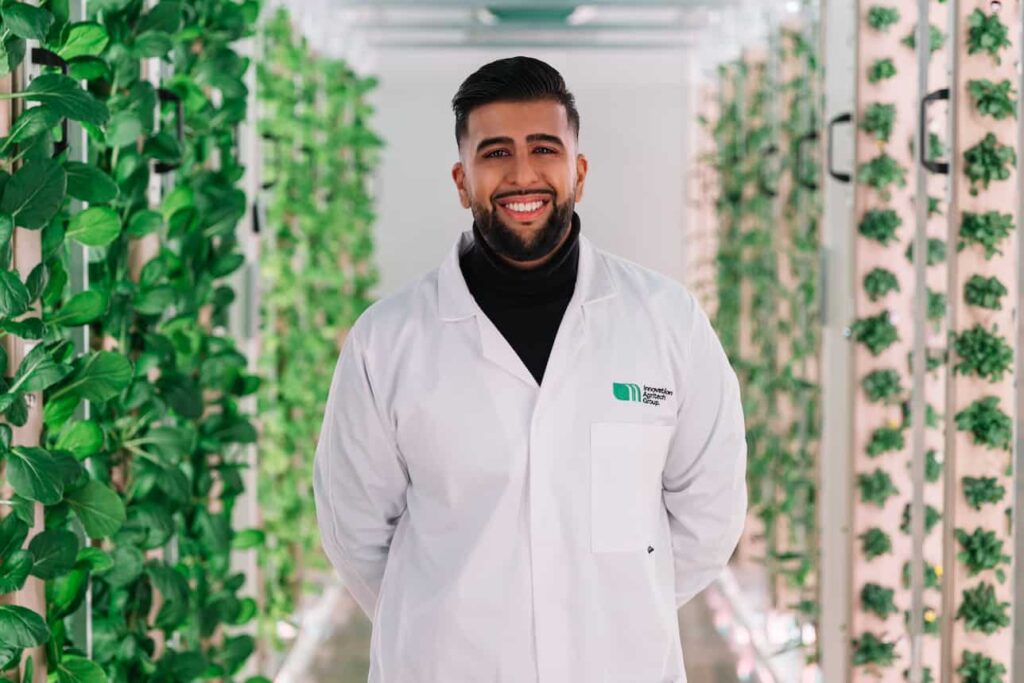
Jaz Singh | Founder and CEO | Innovation Agritech Group (IAG)
Agriculture has always been at the heart of human progress, but today’s world faces challenges that require new approaches to food production. Climate change, water scarcity, population growth, and shrinking arable land are placing unprecedented pressure on global agriculture. Leading the effort to address these challenges through innovation is Jaz Singh, Founder and CEO of Innovation Agritech Group (IAG). Through his vision, leadership, and commitment to sustainable food production, he has become one of the influential voices in the rapidly evolving field of digital agriculture. At EliteX, we are proud to have Jaz Singh as Cover Story of the edition: Visionary Leaders Transforming Digital Agriculture, 2026.
Jaz Singh’s journey into agriculture began long before he entered the world of technology and business. Growing up in a family with farming roots in Punjab, India, he witnessed many of the challenges that traditional farmers face every day. He saw the impact of changing weather patterns, declining soil quality, increasing production costs, and the growing dependence on chemicals. These experiences gave him a deep understanding of the realities of farming and sparked a desire to find better solutions for the future.

The future of farming lies in precision, sustainability, and adaptability.
As he explored developments in agricultural science and technology, he became increasingly interested in controlled environment agriculture (CEA). This innovative approach allows crops to be grown in carefully managed environments where factors such as temperature, humidity, lighting, and nutrients can be precisely controlled. He recognized the potential of these technologies to create more sustainable, resilient, and efficient food production systems that could help address many of the challenges facing global agriculture.
Driven by this vision, Jaz Singh founded Innovation Agritech Group in 2017. His goal was clear – to build advanced agricultural technologies capable of supporting food security while reducing environmental impact. From its earliest days, IAG focused on developing solutions that combined automation, engineering, plant science, and data-driven technologies to improve how food is grown.
This interest in technology-enabled agriculture naturally extended to the digital systems that underpin modern CEA operations. At the core is a digital control system that automates environmental management through integrated control systems, with a Human-Machine Interface (HMI) enabling real-time visibility, remote operation, and precision adjustment of growing conditions, delivering consistency, repeatability, and data-led cultivation. By integrating these advanced tools into CEA environments, growers can make more informed decisions, optimize resource use, and maintain consistent crop performance at scale.
Building a successful agritech company was not without challenges. As with many emerging technologies, gaining trust and demonstrating commercial viability required patience, research, and continuous improvement. Rather than rushing into large-scale expansion, Singh focused on building strong foundations. The company invested heavily in research and development, working closely with scientists, engineers, and controlled environment agriculture specialists to refine its technologies.
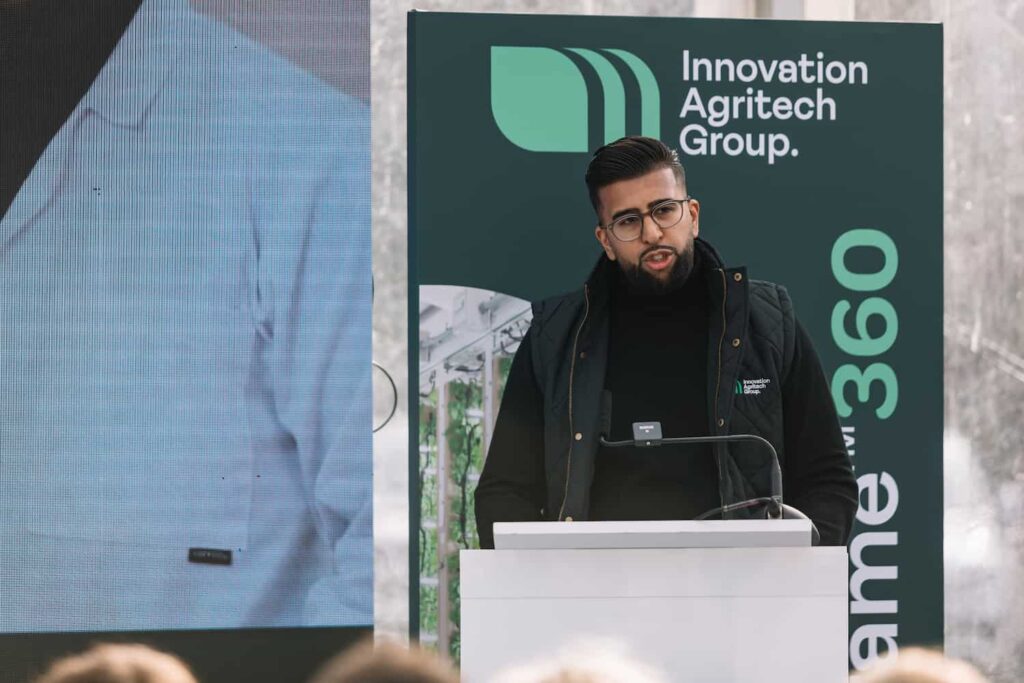
This commitment to innovation and scientific validation became one of the defining strengths of IAG. Alongside its research partnerships, the company has built a strong digital foundation within its controlled environment agriculture systems, integrating automated control systems, Human-Machine Interface (HMI) technology, remote monitoring and management capabilities. These technologies enable growers to monitor and optimize growing conditions with greater precision, consistency, and efficiency while providing valuable operational insights. The company established partnerships with universities, research institutions, and educational organizations to test, improve, and validate its systems in real-world environments. These collaborations allowed IAG to bridge the gap between academic research and commercial application, creating practical solutions that could deliver measurable results while laying the groundwork for future AI-driven and predictive cultivation capabilities.
Today, IAG has grown into an internationally recognized agritech company with installations, collaborations, and expansion activities across the United Kingdom, Europe, and the Middle East. Under Singh’s leadership, the company continues to play an important role in advancing modern agricultural practices while supporting sustainable food production initiatives around the world.
Resilient food systems are built through innovation and collaboration.
By embracing CEA technology, growers can significantly reduce water consumption, eliminate pesticide use, improve crop consistency, and dramatically increase production efficiency. In some cases, the technology can support up to seventeen harvest cycles per year, depending on the crop being grown. This level of productivity offers important opportunities for improving food availability while using fewer natural resources.
Importantly, Singh does not view controlled environment agriculture as a replacement for traditional farming. Instead, he sees it as a complementary solution that strengthens the overall agricultural ecosystem. Traditional farming will always remain essential, but controlled environment agriculture can provide additional resilience, particularly for high-value crops, urban farming, research applications, and regions facing environmental challenges.
As agriculture enters a new era of digital transformation, Singh believes several technologies are reshaping the industry. Artificial intelligence, machine learning, automation, robotics, IoT sensors, predictive analytics, and advanced LED technologies are all contributing to more efficient and sustainable farming practices.
Among these innovations, artificial intelligence is becoming particularly important. AI systems can analyze large amounts of data to identify patterns, predict outcomes, and optimize growing conditions. This allows growers to make more informed decisions while reducing waste and improving operational efficiency.
At IAG, artificial intelligence is being integrated into crop intelligence systems designed specifically for controlled environment agriculture. Through advanced camera systems and real-time monitoring tools, the platform continuously gathers biological and environmental data from growing environments. This information provides valuable insights into plant health, growth patterns, and overall performance.
By using AI-powered analytics, growers can respond more quickly to changes, identify potential issues before they become serious problems, and maintain consistent production standards. These capabilities not only improve productivity but also support more sustainable resource management.
The challenges facing agriculture today are complex and interconnected. Climate change continues to create unpredictable growing conditions, while water shortages, labor constraints, soil degradation, and supply chain disruptions add further pressure. Singh believes that technology has a vital role to play in helping farmers overcome these obstacles.
Controlled environment agriculture offers protection from many external environmental factors. By creating stable growing conditions independent of weather fluctuations, growers can maintain reliable production throughout the year. Automation reduces dependence on manual labor, while data-driven systems optimize the use of water, nutrients, and energy.
These innovations also contribute to more localized food production. Producing food closer to consumers reduces transportation requirements, shortens supply chains, and improves food security. In an increasingly uncertain world, these advantages are becoming more valuable than ever.
Technology empowers farmers to grow more with less.
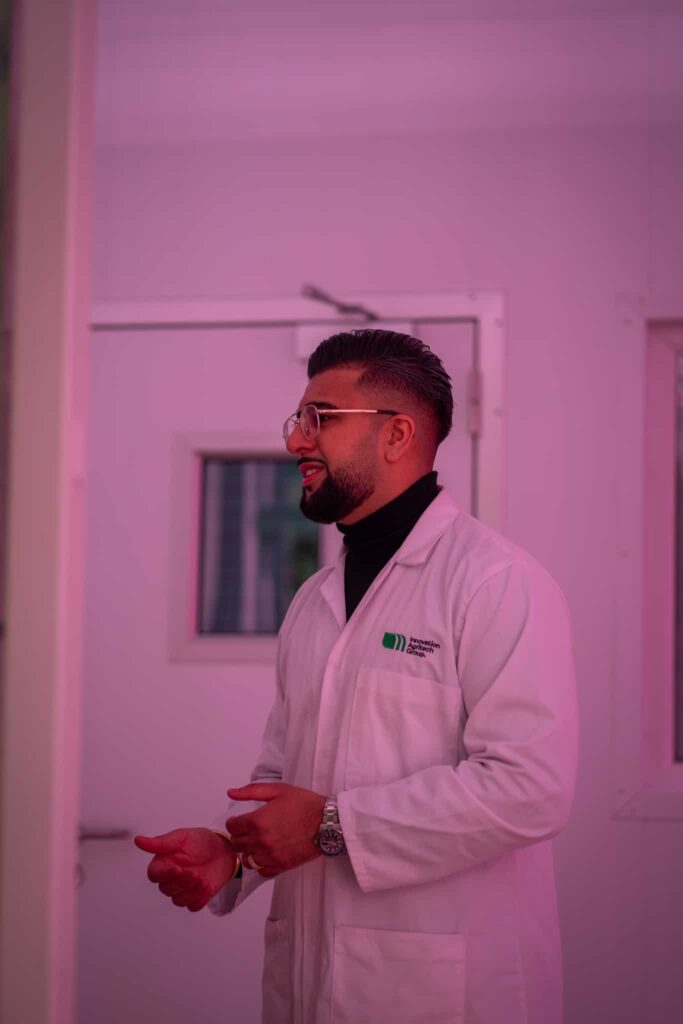
Among Singh’s many achievements, the adoption of IAG’s technology by leading academic institutions stands as a particularly meaningful endorsement of the company’s innovation and vision. The company worked with the University of Essex to install the United Kingdom’s first commercial-standard vertical farming system within a university setting and partnered with Sparsholt College Group to deliver controlled environment agriculture installations that support research, education and industry development.
For institutions dedicated to advancing scientific knowledge, the technologies they choose to invest in carry significant weight. Universities and colleges operate at the forefront of research and discovery, evaluating solutions not only for their current capabilities but also for their long-term relevance and potential. Their decision to adopt IAG’s systems reflects confidence in the company’s technology, recognising its role in shaping the future of sustainable food production.
These installations provide researchers and students with access to commercial-grade growing environments where they can explore crop optimisation, resource efficiency, food security and next-generation agricultural practices. At the same time, they help bridge the gap between academic research and real-world application, ensuring that future scientists, growers and agritech leaders gain experience with the technologies that are transforming modern agriculture.
For Singh, sustainability is not simply a business objective. It is a core principle that guides every aspect of IAG’s operations. As the global population continues to grow, agriculture must find ways to increase production while reducing environmental impact. Achieving this balance will be essential for ensuring long-term food security.
Local food production further contributes to sustainability by reducing transportation emissions and minimizing food waste. These benefits align closely with global efforts to create more environmentally responsible food systems.
Climate change remains one of the most powerful drivers of agricultural innovation. Rising temperatures, changing rainfall patterns, droughts, and extreme weather events are forcing the industry to adapt. Singh recognizes that future food production systems must be capable of operating successfully under increasingly challenging conditions.
Controlled environment agriculture provides a climate-resilient solution by allowing crops to be grown independently of external weather conditions. This capability is particularly valuable in regions facing severe environmental constraints. In areas such as the Middle East, where water scarcity presents major agricultural challenges, investment in innovative food production technologies continues to grow rapidly.
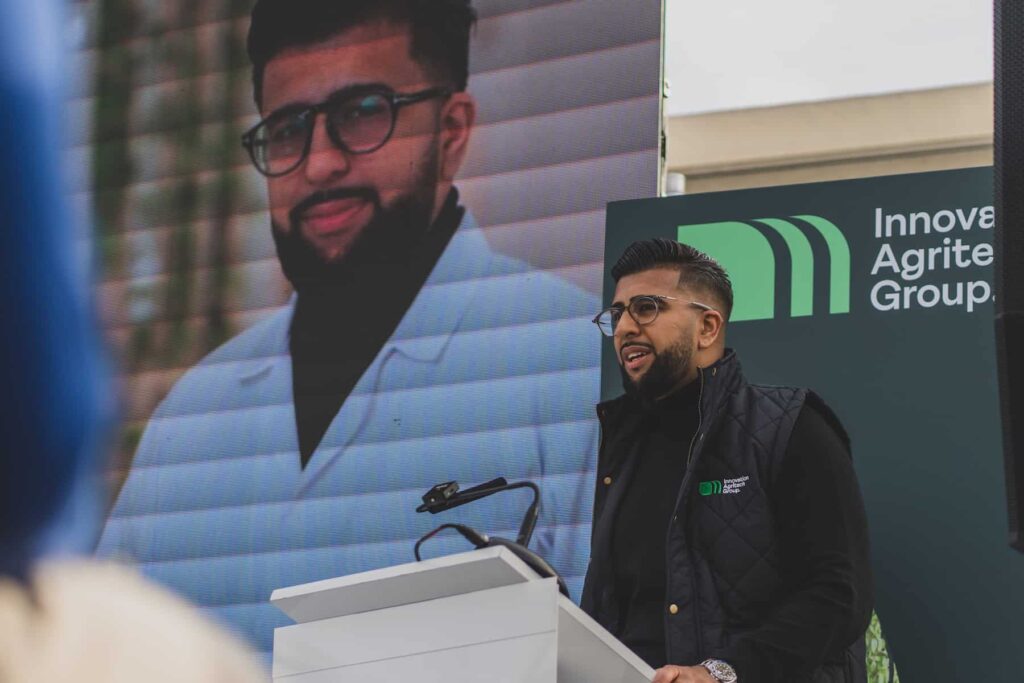
Beyond technology, Singh places great importance on accessibility and education. He understands that successful adoption depends on making advanced systems practical and understandable for growers of different sizes and backgrounds. Through consultancy services, training programs, and ongoing support, IAG helps customers integrate new technologies effectively into their operations.
The company’s modular approach allows systems to be adapted to different scales, making innovation more accessible to a wider range of users. This focus on usability helps bridge the gap between technological advancement and practical implementation.
Innovation is the key to securing the future of food.
As a leader, Singh believes that vision, resilience, adaptability, and collaboration are essential qualities for driving transformation. Agriculture is evolving quickly, and leaders must be willing to embrace change while remaining focused on long-term goals. At the same time, meaningful progress requires cooperation between scientists, engineers, businesses, governments, and growers.
Within IAG, Singh fosters a culture of innovation by encouraging open collaboration and continuous learning. Team members are encouraged to share ideas, challenge assumptions, and explore new approaches to problem-solving. The company maintains close relationships with universities and research institutions, ensuring that employees remain connected to the latest developments in agricultural science and technology.
Professional growth is also a priority. Through research partnerships, industry events, and development opportunities, team members are empowered to expand their knowledge and contribute to the company’s ongoing success.
Looking ahead, Singh sees tremendous potential for the future of digital agriculture. He expects artificial intelligence, automation, robotics, and predictive growing systems to become increasingly important over the next five years. Controlled environment agriculture is also likely to expand significantly as governments and businesses invest in food security and sustainability initiatives.
The integration of agriculture with energy systems and smart infrastructure will create new opportunities for efficiency and resilience. Environmental, social, and governance considerations will continue to influence investment decisions and operational strategies across the agricultural sector.
Most importantly, agriculture is moving away from traditional dependence on weather and geography. New technologies are making it possible to produce food closer to consumers, under controlled conditions, and with greater efficiency than ever before. This transformation has the potential to reshape global food systems and improve access to fresh, nutritious food around the world.
For aspiring entrepreneurs entering the agritech industry, Singh offers straightforward advice. He encourages them to focus on solving real-world problems and developing solutions that are practical, scalable, and commercially viable. Success requires patience, persistence, and a willingness to learn from challenges. Building strong partnerships and surrounding oneself with talented people are equally important ingredients for long-term growth.
Being recognized among Visionary Leaders Transforming Digital Agriculture is a meaningful achievement for Singh. However, he views the recognition not as a personal accomplishment alone but as a reflection of the dedication and innovation demonstrated by the entire IAG team. It represents validation of a mission centered on creating more sustainable, resilient, and technologically advanced food production systems.
Sustainable agriculture begins with smarter growing systems.
As global agriculture faces one of the most important periods of transformation in its history, Jaz Singh continues to demonstrate how innovation, collaboration, and purposeful leadership can drive meaningful change. Through Innovation Agritech Group, he is helping shape a future where technology and sustainability work together to strengthen food security, support communities, and create lasting value for generations to come.