
David Kessler is the founder and CEO of Starfish, a branding and creative communications firm he started in 2002. Before launching Starfish, he spent 20 years at major New York advertising agencies, where he worked on global brands such as Sony, AT&T, and Verizon. Many of those accounts included B2B divisions, and this experience shaped the direction his own company would eventually take.
David Kessler | Founder and CEO | Starfish
When he started Starfish, his goal was to help companies align their brands across every interaction, both physical and digital. It soon became clear that this approach appealed most strongly to B2B organizations, since their internal structures and sales cycles are far more complex than those of typical consumer brands, and a consistent brand experience connects directly to their most important business outcomes.
EliteX proudly features David Kessler in this edition, celebrating their achievements, leadership, and valuable impact.
What has stayed the same since day one is a simple belief that guides all of his work: brands succeed or fail based on whether they actually behave like the brand they claim to be. Over more than two decades, this idea has grown from a small studio in New York into a firm with offices in New York, France, and Florida, serving clients across many industries.
Find something you love. After 25 years in this business, I still love what I do.
Kessler’s path into B2B marketing was shaped by both his personality and his background. He describes himself as someone who loves solving complex problems and considers himself a student of business models, a trait he connects to his engineering background. Over the years, he found that he and his team were particularly skilled at understanding complicated businesses, breaking down brand architecture, and identifying exactly where brand problems were coming from. Early in his advertising career, his work was almost entirely focused on consumer brands, but a handful of B2B accounts were assigned to him, including Sony Business, AT&T Business, and 3Com. He quickly discovered that he enjoyed working on these accounts, likely because he was good at it. After he started Starfish, some of those same brands asked him to take on portions of their business. From there, the direction of the company took shape naturally, and today approximately 70 percent of Starfish’s clients are B2B brands.
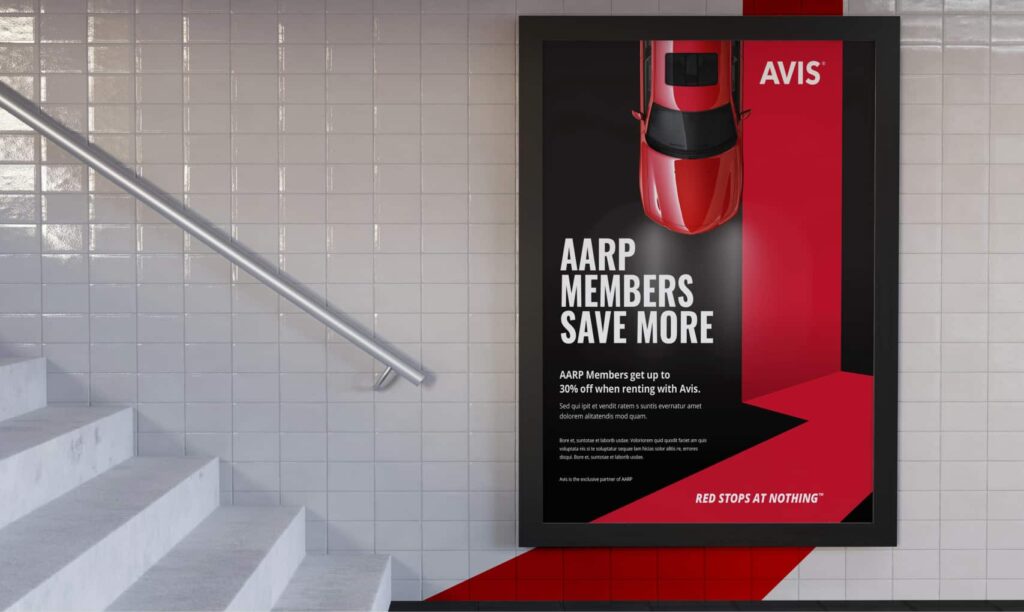

When asked about the biggest challenges facing B2B marketers today, Kessler is careful to point out that there is no single, simple answer, since every company’s situation is different. That said, he sees one problem come up more often than any other: brand architecture. Many companies experience extreme fragmentation across their products and services, which creates confusion in the market among both current and prospective clients. He also describes a deeper challenge that goes beyond channels or budgets, one he calls a coherence problem. This is the gap between a company’s declared brand, meaning what it says about itself, and its implied brand, meaning what its actual behavior, product experience, and touchpoints communicate. That gap is where trust breaks down. In the past, this inconsistency was more forgivable, since a prospect’s main encounter with a brand was often just a sales deck. Today, buyers experience a brand across dozens of touchpoints, including websites, sales conversations, the product itself, customer support, and increasingly, AI-generated summaries and answers. Because of this, any inconsistency is noticed almost immediately.
Kessler founded Starfish 24 years ago on the understanding that the most successful companies deliver their brand consistently across the entire customer journey. Over the years, his team has developed a range of proprietary frameworks to guide the marketing strategies and programs built for their clients. Central to this work is what Starfish calls its Brand Experience Operating System, or BXOS. Rather than designing campaigns channel by channel, BXOS gives marketing teams a single, governed source of truth for positioning, voice, and proof points, so that every program, from early content to lifecycle and expansion campaigns, expresses the same brand consistently wherever a business customer encounters it. In the acquisition stage, BXOS-informed programs speak to defined buyer personas with one coherent story across content, paid media, events, and outbound efforts, building the kind of trust that shortens B2B buying cycles. After the sale, the same system shapes onboarding, lifecycle, and retention programs, ensuring that the promise made during acquisition is reinforced afterward. This is what drives genuine customer satisfaction and stronger loyalty metrics, rather than isolated moments of good experience.
A brand is now experienced across physical, digital, and AI surfaces all at once.
Artificial intelligence and new technology are changing B2B marketing in many ways, according to Kessler. He points to research from Gartner showing that around 80 percent of B2B chief marketing officers believe they need to evolve their brands to address the impact AI is having on their companies. AI is affecting nearly every industry, which is pushing companies to rethink their go-to-market strategies as well as their products and services. This, in turn, has a direct effect on brand strategy, messaging, and marketing programs. Looking specifically at the marketing function, Kessler notes that several core areas have already been reshaped. One of the most significant changes, reported widely by firms like McKinsey, BCG, and PwC, is that buyer behavior has fundamentally shifted. B2B buyers now do most of their research on potential providers through AI tools, forming their impressions long before they ever visit a company’s website. By the time they build a shortlist and check out those websites, they are simply verifying and validating opinions they have already formed. This shift has given rise to an entire new area of digital marketing known as AEO, or answer engine optimization. AI has also transformed the production of creative assets. Work that once required a full team of designers and weeks of effort can now be completed in minutes, such as resizing digital ads for different platforms, a task that could once mean producing hundreds of individual assets by hand and can now be handled by a well-designed AI agent. Still, Kessler believes one area remains resistant to full automation: emotionally resonant creativity. While AI is useful for expanding on an existing idea, he believes it lacks the emotional depth needed to generate original ideas that truly resonate with people.



When it comes to building strong relationships with clients, Kessler starts with a simple premise: listen carefully. He believes that clients want to work with people who take the time to genuinely understand their business, their strategic challenges, their needs, and their brand. Because of this, the first thing he always does is ask questions, then listen closely, including to what is said between the lines. He has found that the specific answers to his questions are often less revealing than the tone and manner in which they are given, which frequently provides a wealth of useful information.
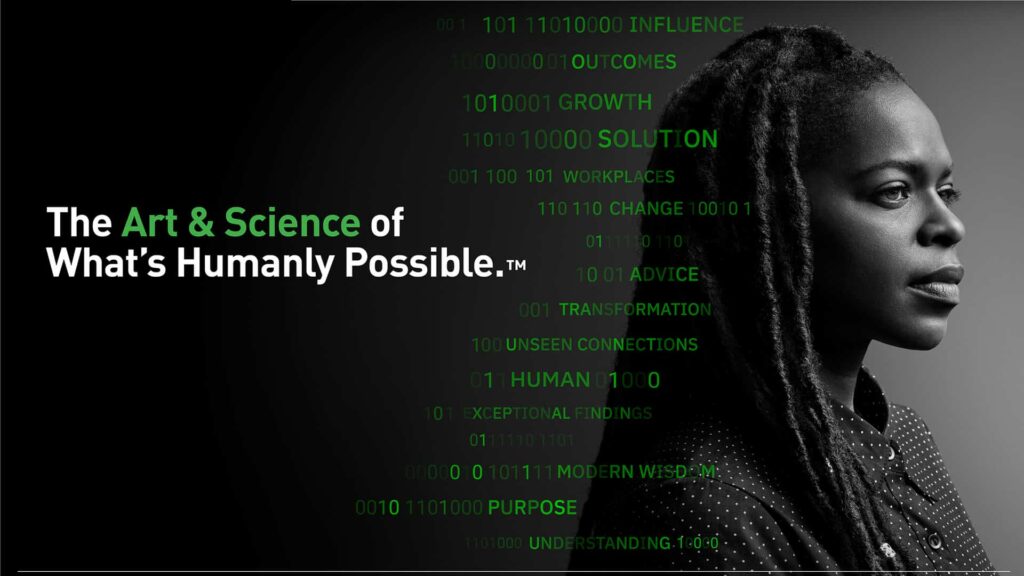
Among the achievements Kessler is most proud of is a rebranding project his firm completed for Gallup. The challenge was that although Gallup was widely recognized as an authority on human behavior, the company’s fame for its World Poll had overshadowed the depth and impact of its workplace expertise. Starfish’s task was to broaden and elevate Gallup’s identity so that people would see beyond the polling and recognize the company’s full capabilities as a high-performance business transformation consultancy. The inspiration behind the rebrand came from the idea that Gallup truly consults for humankind, using its deep understanding of the human condition to help clients identify and realize people’s full potential, both in the world at large and within the workplace. This thinking led to the brand and campaign concept: The Art and Science of What’s Humanly Possible. The campaign went on to win a Gold Transform Award and remains a case study that Kessler and his team are proud to share.
The problem isn’t a channel or a budget problem, it’s a coherence problem.
As a leader, Kessler credits several qualities for his success in the marketing industry. He describes himself as someone who leads by example, and says he never asks anyone on his team to do something he would not be willing to do himself, whether it is the simplest task or the most complex and strategic one. He also makes a point of listening to everyone’s point of view, believing that this helps people feel valued and respected. Perhaps most important to him is making his passion for the business visible to those around him. He genuinely loves what he does, and he hopes his team feels the same way about their own work.
For young professionals entering B2B marketing, Kessler’s advice is simple: find something you love. He acknowledges that this may sound like a cliché, but after more than 25 years in the business, he still feels the same enthusiasm he started with, and he sees that as proof the advice holds up. He also points out that today’s marketing professionals have far more opportunities than he did when he started his career, since the discipline has expanded significantly, giving young people the chance to explore many different areas within the field.

Looking ahead, Kessler believes artificial intelligence will continue to shape the future of B2B marketing, but he encourages marketers to look past the obvious hype and consider the long-term implications. While the industry is still working to master the art of AEO, he believes the next major shift will be the creation of brand-infused AI agents. Many companies are building AI agents to function as supercharged chatbots or customer service representatives, but few are training them to act as true brand ambassadors. This leads Kessler to a broader idea: brand experience is no longer limited to physical and digital surfaces. Today, a brand is experienced across physical, digital, and AI surfaces all at once, and all of them need to communicate the same message and evoke the same emotional response. He believes this shift will require brands to be extremely disciplined about coherence, ensuring clarity and consistency across every surface, channel, and touchpoint. He also expects to see more organizations investing in brand governance as a discipline in its own right, rather than treating it as an afterthought during a rebrand. Measurement, too, will keep evolving, moving beyond simply tracking how a brand performs with human audiences to also understanding how consistently and accurately it is represented across AI systems.
Brands succeed or fail based on whether they actually behave like the brand they claim to be.