When a manufacturing project moves from design to production, choosing the right metal fabrication partner can influence everything from product quality to delivery schedules. A supplier that lacks the necessary equipment, technical expertise, or production capacity may create delays, increase total cost of ownership, and complicate operations.
For manufacturers, the decision is about more than finding someone who can shape metal. It is about building a working relationship that supports production requirements, consistency, and supply chain resilience. Understanding what to evaluate before selecting a fabrication partner can help companies make informed decisions, avoid unnecessary production challenges, and develop a dependable supply chain for projects of different sizes and complexities.
Choosing the right metal fabrication partner allows manufacturers to maintain consistent production standards while meeting changing industry requirements.
1. Evaluate the Range of Metal Fabrication Capabilities
A fabrication partner should have the equipment, expertise, and processes required to meet the project’s specifications. Depending on the product, manufacturing may involve several stages, including cutting, bending, machining, welding, and finishing.
Look for a provider that can handle relevant processes under one manufacturing setup or across integrated facilities. Key capabilities to assess include:
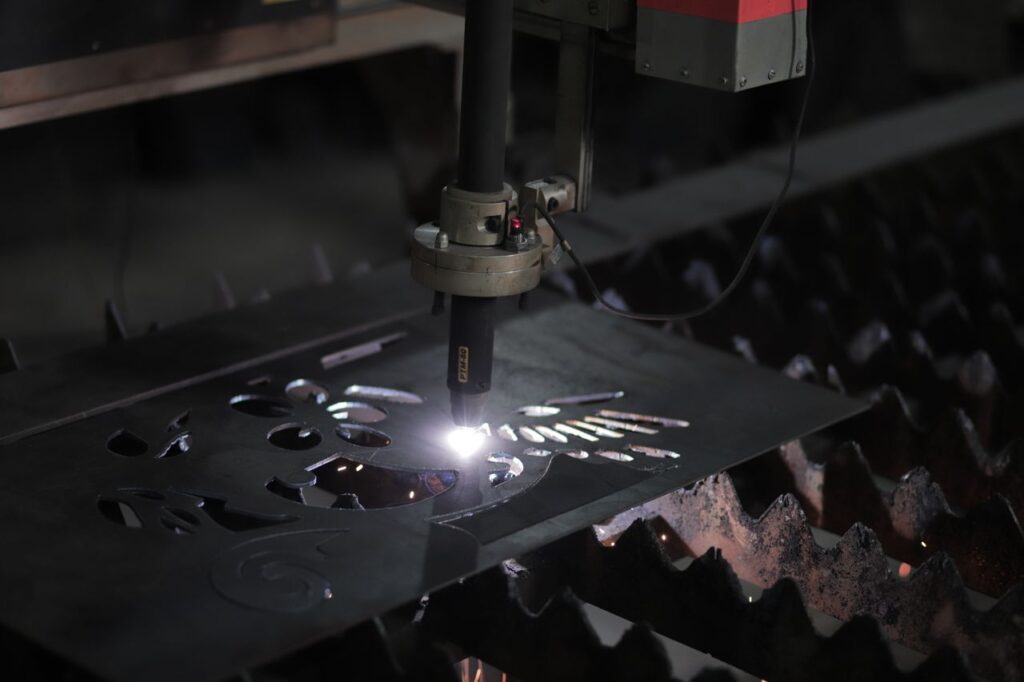
- Laser cutting: Producing accurately cut metal components based on design specifications.
- Metal forming: Bending and shaping sheets or components to meet dimensional requirements.
- CNC machining: Creating precise features, holes, surfaces, and components.
- Welding: Joining metal components using certified welding engineers and robotic welding systems for repeatable accuracy.
- Finishing: Applying powder coating or paint to improve appearance and protect surfaces.
A broader service range can simplify coordination between production stages, although the suitability of each process still depends on the specific project. Reviewing an established contract manufacturer’s custom metal fabrication capabilities here can help manufacturers understand the integrated processes involved in producing precision metal components.
A reliable metal fabrication partner should offer advanced equipment and skilled professionals to manage different manufacturing processes efficiently.
2. Assess Quality Standards and Inspection Processes
Quality should be a central consideration when selecting a metal fabrication supplier. Even minor dimensional errors, inconsistent welds, or inadequate surface preparation can affect how a component fits, functions, or performs over time.
Manufacturers should ask potential partners about their inspection processes, quality documentation, measurement equipment, and corrective-action procedures. Industry certifications, such as ISO 9001:2026, and recognized welding standards can provide useful evidence of established quality systems. However, businesses should also understand how these standards are applied to individual projects.
Consider asking:
- How are dimensions and tolerances verified?
- Are inspection records available when required?
- How are defects identified and corrected?
- Can quality requirements be maintained across repeat orders?
Clear answers help establish whether a supplier can consistently meet the project’s requirements.
Working with an experienced metal fabrication partner helps manufacturers maintain product consistency and meet required quality specifications.
3. Consider Material Expertise and Engineering Support
Material selection and fabrication methods can influence component durability, weight, cost, and functionality. A capable fabrication partner should understand how different metals behave during cutting, forming, welding, and finishing.
Manufacturers should discuss material specifications, thicknesses, tolerances, and design constraints before production begins. Engineering support can also help identify practical improvements, such as reducing unnecessary complexity, simplifying assembly, or making a component easier to manufacture.
Useful areas to discuss include:
- Material compatibility with the intended application.
- Design feasibility and manufacturing limitations.
- Potential modifications that simplify production.
- Prototype development before larger production runs.
Early collaboration can help identify issues before they become costly production problems.
4. Check Production Capacity and Scalability
A supplier that handles prototypes or small orders may not necessarily have the resources to support larger production volumes. Manufacturers should evaluate whether a fabrication partner can accommodate current requirements while responding to future demand.
Ask about equipment availability, workforce capacity, production planning, lead times, and the ability to handle repeat orders. It is also worth understanding how the supplier manages changing schedules or urgent requirements.
A partner with flexible manufacturing capabilities may be better positioned to support businesses as their production needs evolve, whether they require initial prototypes, limited batches, or larger manufacturing runs.
An experienced metal fabrication partner should have the flexibility to support both small production batches and large-scale manufacturing requirements.
5. Look Beyond Fabrication to Finishing and Assembly
Metal components often require additional work after fabrication. Finishing, painting, powder coating, assembly, packaging, and kitting can all influence the readiness of a product for its next production stage.
Working with a supplier that offers several of these services can reduce the need to coordinate multiple vendors. It may also simplify communication, logistics, and scheduling.
Before choosing a partner, determine whether it can support:
- Powder coating and painting to project specifications.
- Component assembly and kitting.
- Packaging and shipping requirements.
- Prototype and low-volume manufacturing.
These services can be particularly useful when manufacturers need finished components rather than individual fabricated parts.
6. Prioritize Communication, Safety, and Delivery Reliability
Manufacturing partnerships require clear communication and dependable processes. A supplier should be willing to discuss specifications, timelines, production updates, potential issues, and changes before they affect the project.
Safety also matters when evaluating manufacturing operations. Welding, cutting, and grinding involve hazards such as fumes, sparks, noise, and exposure to ultraviolet radiation. Businesses can refer to OSHA’s welding, cutting, and brazing safety guidance to understand some of the risks associated with these processes.
Manufacturers should consider how a potential partner manages workplace safety, production schedules, communication, and delivery commitments. These factors contribute to a more dependable supplier relationship.
The Bottom Line
Choosing a metal fabrication partner involves evaluating more than equipment or pricing. Manufacturing expertise, quality processes, engineering support, scalability, finishing capabilities, and communication all influence the partnership’s success. Manufacturers that carefully assess these factors can make better sourcing decisions, streamline production coordination, and establish relationships that support consistent product quality and long-term operational efficiency.
Frequently Asked Questions
What information should manufacturers provide when requesting a fabrication quote?
Provide drawings, material specifications, quantities, tolerances, finishing requirements, and expected delivery timelines. Complete information helps suppliers evaluate the project more accurately.
Should manufacturers compare multiple metal fabrication quotes?
Yes. Compare the scope of services, material assumptions, quality requirements, lead times, and overall costs rather than selecting a supplier based on price alone.
Why is long-term supplier collaboration important?
A consistent working relationship can improve communication, simplify repeat orders, support production planning, and help suppliers understand evolving manufacturing requirements.