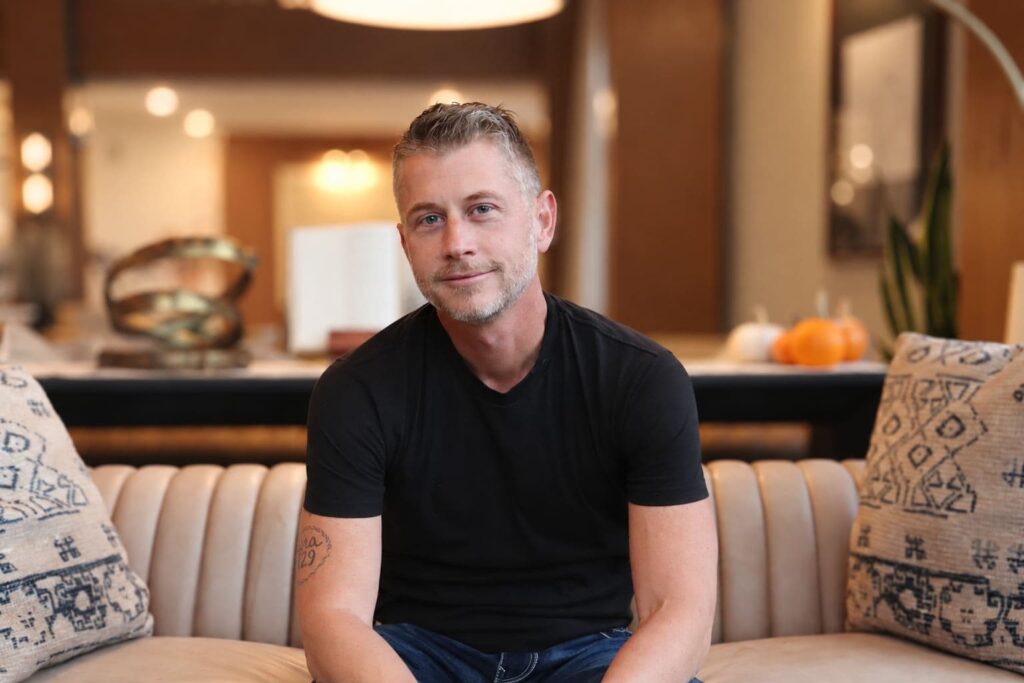
Paul McLellan
Paul McLellan, Software Designer, is a technologist, former business owner and father of nine who has spent more than 35 years bringing together the logical and creative sides of building things. After running a distribution and ecommerce business for three decades, he sold it two years ago and refreshed his career as a software designer for another company. Today he uses the lessons from a lifetime in technology, business and family life to show others why simple, well made things work best. His story proves that curiosity, humility and a steady focus on people can shape a career that matters far beyond the balance sheet.
EliteX proudly features Paul McLellan in this edition, recognizing a distinguished journey of leadership, innovation, and meaningful impact.
Paul’s path began in the late 1980s, when he was around nine years old and was introduced to home computing. He started with basic word processing, moved on to video games and then found bulletin board systems, which he describes as “the internet before the internet.” Something awakened in him. He was fascinated that a few changed lines of code could produce a result on the screen, even when the result was not the one he wanted. For Paul, that moment of cause and effect was the start of a lifelong love of creating.
Art was already part of his world. There were painters in his family several generations back, and he grew up sketching and drawing whenever he could. Between 1989 and 1993, he threw himself into computing and brought his love of art into the world of structure, syntax and instructions. The graphic design tools of that time were limited, so he pushed what was available as far as it would go. One of his side projects was building his own paint program so he could make better graphics for the video games he was developing.
Many people believe the brain is split into a logical left side and a creative right side. Paul sees this idea as more symbolic than scientific, but he understands its meaning. Most people lean toward one type of creation, either logic or art. He has moved between both worlds for more than 35 years and believes they fit together naturally. Having control over both the front end and the back end of his software gave him endless possibilities, and it taught him that every project needs a clear blueprint carried out with great care.
This thinking led to the design approach that still guides his work, which is the balance of form and function. Paul describes that “Form is how software looks and presents itself, while function is how well it does what the user expects.” Form draws on psychology and human behavior while staying visually pleasing. Function is the structure underneath, the flow that keeps everything stable. If one side is weak, the whole experience suffers. He believes this is one of the most misunderstood ideas in design, because most professionals are strong in only one of the two.
Form has its own rule for Paul, which is that “Every pixel matters.” Whether he was designing bulletin board systems, video games, ecommerce platforms or social networking websites, he chose every font, color, button and background with the end user in mind. He says a designer must set aside personal bias and think about what the user expects and will quietly benefit from. The hardest part is often restraint, because the natural human reaction is to keep adding more. In his view, minimalism and simplicity are the heart of good design.
Function matters just as much. When a person clicks a button, the software should respond with speed, efficiency and accuracy. Paul compares function to the blueprint of a building. If the software is poorly built, the result is bugs, errors, lost data, slow performance and, in the end, users who walk away. Nearly everyone uses software every day, on phones, computers and game consoles, and Paul believes the winners are those who respect both form and function. He also sees this as a way of thinking that applies well beyond software and into many areas of life.
Simplicity, he says, is far harder than complexity. The human brain is built to make quick decisions, and simplicity needs a level of self-control that does not come naturally. Paul recalls the late 1990s, when Google changed search by doing two things well. It looked clean, with little more than a logo and a search box, and it returned results that were truly useful. He also points to progressive disclosure, a design idea in which the most important functions are shown first and advanced options stay out of the way until needed. A poor designer puts everything on one page and overwhelms the user, much like scrolling through endless titles on a streaming service until giving up and going to bed.
Paul agrees with the view, made famous by Steve Jobs, that “Making something simple takes hard work and clear thinking.” He adds that “It often takes less effort to build messy, complicated software than to design an easy and natural experience.” In his words, “Simplicity needs deep mastery, because nobody can simplify a subject until they understand it completely.” People may be complex themselves, he notes, yet they still want simple experiences, and this is true in software, in business and in personal life.
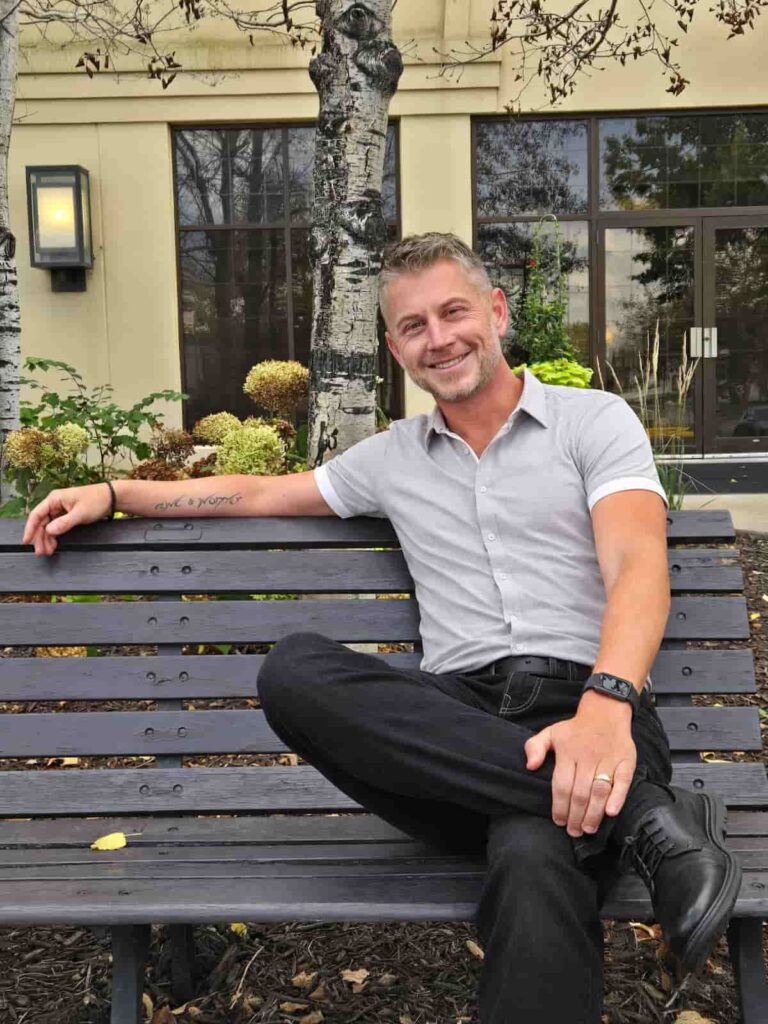
Understanding people is where all of this begins. For 35 years, Paul built and operated community networks, ecommerce platforms and social networking sites. He learned that a designer must know the core audience and how it thinks, then ask why people do what they do and whether their habits differ from his own. When they did, he put his own preferences aside. He paid close attention to repeated complaints from users. A single complaint might have merit, but a pattern of frustration at the same point told him something real needed fixing, and he treated it as a priority.
He brought the same habit into his own company. Several years ago, he gave his staff an anonymous review form, even though it made him feel exposed. He had always listened to his team, but he wanted honest and unfiltered feedback without any fear of consequences. He studied the answers the way he had studied customer feedback and looked for repeating themes. Many employees raised the same concerns about company policies, so he made changes and focused on job satisfaction. Paul calls this a win for everyone, and he believes the principle works with colleagues, partners, vendors and customers alike. Understanding the person in front of you is good for relationships and good for business.
Running a business also meant facing hard times. Paul led a large ecommerce distribution company through the Covid year of 2020, and over the years his team dealt with a credit card breach, workplace safety issues, sudden staff departures, server crashes and constant growing pains. He is open about the fact that he did not always get it right. His own poor decisions and failures taught him the most. He compares this to athletes who say they grow most in their hardest games, and he believes that winning is fun but losing is what creates change.
In difficult moments, Paul says, the toughest thing is to avoid emotional decisions. A cool head and clear logic matter most, especially when the problem is outside your control. His business depended on technology and on outside providers whose systems had to run day and night, so he focused on controlling what he could control. For him, that meant building backups into everything. His office had two internet links to the data center, one fiber line underground and one satellite link in the air. He also kept two firewalls, two virtual server clusters and two card payment processors, so that a second system would take over if the first failed.
Most customers never knew these backups existed, and that was the whole point. Paul believes some of the best design work happens behind the scenes, where it protects a smooth experience for the people who depend on it. He adds that leaders must also accept change as certain. Industries shift, human behavior shifts and the economy moves, so a good leader keeps what works while expecting the next change to arrive.
His biggest lesson came from his own early drive to win. Paul describes his 30 years in distribution and ecommerce as three decades with three goals. In the first, he wanted to be the biggest and to beat every competitor at any cost. In the second, he wanted to be the best, which meant focusing on cash flow, profit, a good workplace for his staff and world class service for customers. In the third, he wanted to be benevolent and use his success to help others, which led him to support many charities and to deliver much needed supplies to communities overseas.
Looking back, Paul sees the first decade as a young man’s race, fueled by adrenaline and pride. Falling behind a competitor ate at him, so he spent money on marketing campaigns that brought little or no profit, giving up real earnings for the empty title of number one. He later saw the problem clearly. Looking back, Paul realised that being number one meant little. As he puts it, “Nobody cares who is number one.” Customers, banks and even his family were not concerned about the title. It took several years to change course, but the lesson still shapes his decisions today, and he sums it up simply as quality over quantity, every time.
That change in thinking also shaped how he sees success. Paul points out that moving a dollar through a business does not mean keeping the dollar, and that profit is the true measure. Over time, he moved from chasing sales, to making money profitable, to using that money to do good in the world. He is proud of the companies he built and says they did well by any financial standard. Even so, what matters to him now is what he learned and what he was able to do with that success.
At home, Paul and his wife have raised nine children, now ranging in age from 4 to 25. They live on five acres in the country west of Minneapolis, with six children still at the house, ten barn cats and a long list of chores. His wife runs her own craft business, and between school, sports, animals and work, life is busy. Paul says a large family needs structure and thought. Everyone has clear tasks, from setting the table to mowing the lawn, and simple systems such as labeled food and organized storage make a big difference.
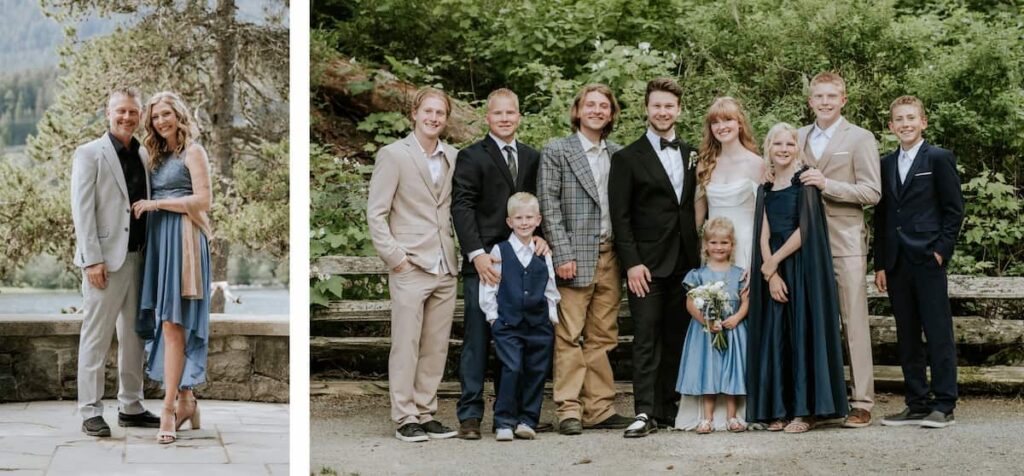
Paul and his wife have always tried to respect each child as an individual and never expected them to be someone they are not. Their children are artists, athletes, dancers, poets, comedians, musicians, world travelers, landscapers, kayak guides, travel agents and firefighters. At a daughter’s wedding this summer, the whole family gathered for a photo of all nine children and their new son-in-law. Paul says nothing matters more to him than his bond with his children, and he counts raising them as his greatest accomplishment. He believes his growth in business was shaped by fatherhood, which taught him to put others first, build processes that make complex systems run well and focus on what truly matters.
A friend once told Paul, “Children are the greatest teachers in life, and you have a whole classroom full of them.” Paul agrees completely. Family sat at the center of his growth, teaching him patience, listening and the value of personal connection at every stage. The same habits he built at home, such as clear roles, open communication and respect for each person’s strengths, later helped him lead teams at work. For Paul, the line between a good father and a good leader is thinner than most people think, and both roles reward those who put people first.
Today Paul enjoys the software design process as much as ever, but he especially likes helping others apply these ideas in their own work. He believes the principles are universal. Simple is better. Structure helps avoid friction and chaos. Minimalism leaves time for the things you love. They apply to software, to business and to the family dinner table alike.

Looking ahead, Paul hopes leaders and professionals will take one message from his journey, which is that quality matters. He often returns to a favorite saying of his: “Whatever you are, be a good one.” He wants to see more well engineered, beautiful software and business processes that serve a true purpose, and he notes that there has never been a better time to build them. If every leader thought carefully about why they do what they do, how they improve their processes and what they do with their success, he believes the results would be stunning.
What began as a boyhood fascination with making software both powerful and beautiful has grown into something much broader. Whether Paul is designing software, leading a business or raising nine children, his goal stays the same. He aims to simplify complexity, create something meaningful and never lose sight of the people he is doing it for.