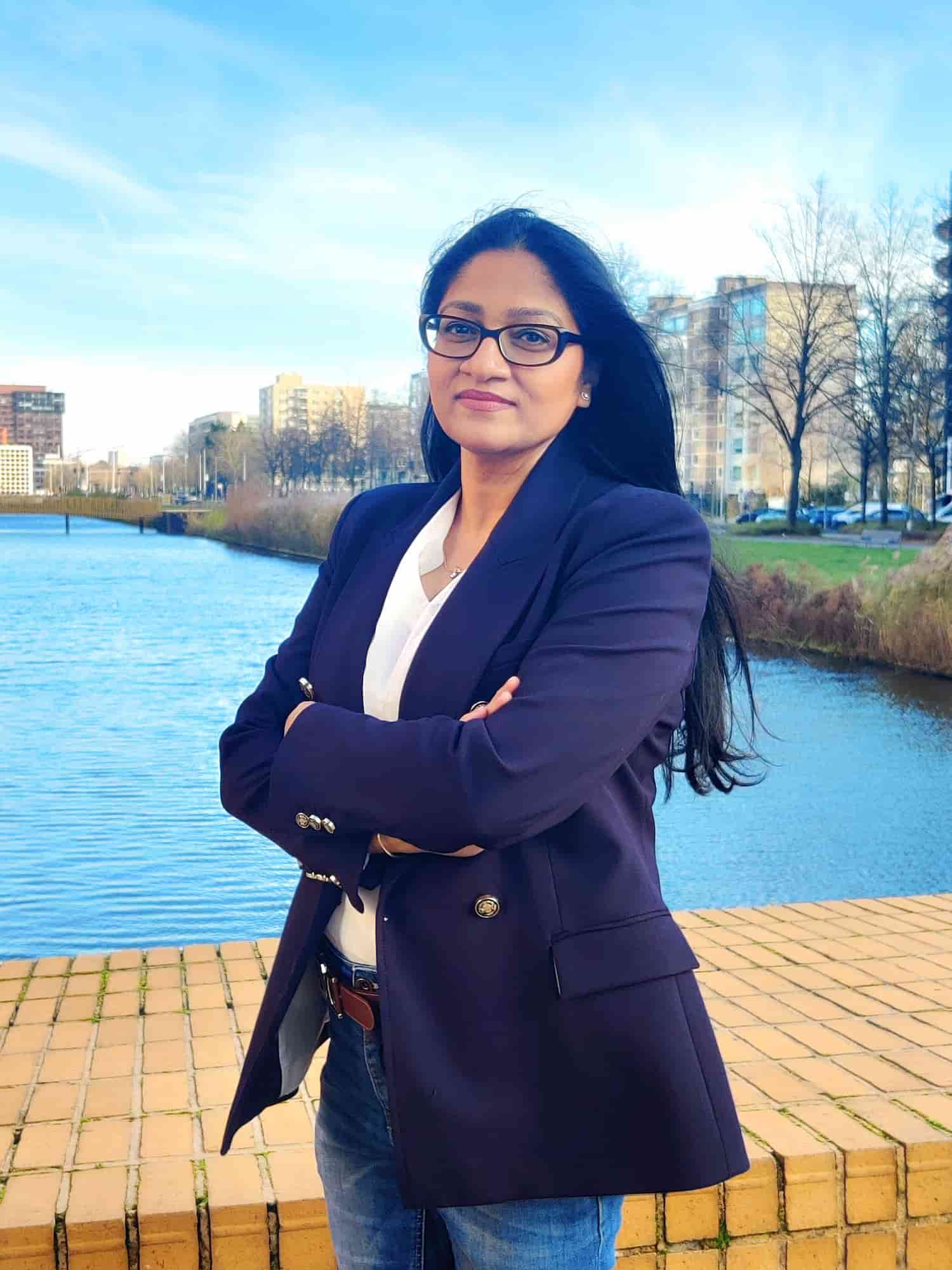
Sujata Dasgupta is a seasoned financial services and fintech leader with more than 26 years of experience across major financial hubs in the US, UK, Asia, and Europe. Based in Stockholm, Sweden, she currently serves as Global Head – Financial Crime Compliance Advisory & Transformation at Tata Consultancy Services Ltd. Her career reflects the changing relationship between financial services and technology, having evolved from banking to technology, consulting, and advisory roles.
Sujata Dasgupta | Global Head – Financial Crime Compliance Advisory & Transformation | Tata Consultancy Services
Today, her work focuses on the intersection of financial services, emerging technology, fraud and financial crime risks, and trust.
Dasgupta’s journey in fintech has been shaped by a simple but important understanding: money is deeply personal. Every payment, account opening, or financial transaction involves trust between customers, institutions, and technology. Her early experience in banking helped her understand the importance of risk management and trust in financial services. Her move into technology then showed her how innovation could transform these areas. Rather than focusing only on making financial services faster or more convenient, she became interested in a bigger question: whether technology could make financial services safer, more intelligent, and more resilient at the same time. This question continues to influence her professional approach today.
Curiosity turns change into opportunity.
In her current role, Dasgupta works with financial institutions around the world to address complex challenges involving fraud, financial crime, identity, risk, and digital transformation. She and her team bring together technology, processes, regulations, and data to create solutions that work as an interconnected ecosystem. Artificial intelligence and other advanced technologies, developed in-house or through collaboration with fintech partners, are used to build future-ready solutions that help protect bank customers from evolving threats such as fraud, cybercrime, and financial crime.
Her perspective is especially relevant as the European fintech sector continues to develop. She sees Europe as a strong environment for innovation because it combines a vibrant technology ecosystem with regulatory safeguards designed to protect consumers and financial stability. At the same time, the region faces a rapidly changing threat landscape. As fintech companies use artificial intelligence to improve their services, criminals are also using the same technology to make fraud, scams, identity theft, and financial crime more sophisticated and scalable. Europe’s market fragmentation across regulations, infrastructures, and customer behaviours can also make expansion more complex.
Dasgupta believes technology is fundamentally changing the way financial institutions create value, manage risk, and interact with customers. Financial services are gradually moving away from reactive and transaction-based models toward services that are more predictive, personalised, and real-time. Technology can help institutions understand customer context and behaviour, anticipate risks, and make faster and better-informed decisions. For her, one of the most important changes is the movement from simple automation toward greater intelligence, with AI increasingly supporting human decisions and, in some areas, coordinating entire processes.
Artificial intelligence is therefore an important part of Dasgupta’s approach to fintech, but she does not view AI as a solution on its own. Its real value comes from combining AI with data, processes, and regulatory intelligence to address difficult challenges in financial services. These capabilities can help institutions anticipate threats, strengthen controls, and protect customers. At the same time, she recognises that AI is a double-edged technology. Criminals can also use it to industrialise fraud and financial crime. This makes it important for financial institutions to build AI-enabled defences that can continuously learn, adapt, and respond to changing threats.
Innovation must never compromise trust.
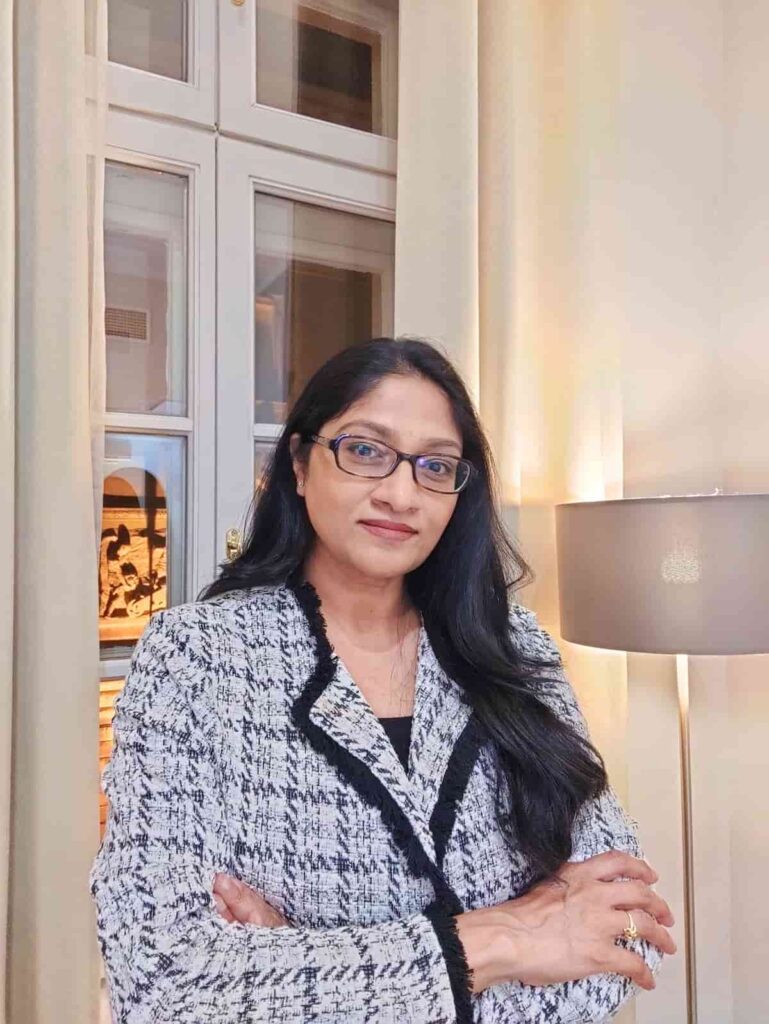
For Dasgupta, customer trust depends on achieving the right balance between security, privacy, and experience. She believes the future of security should involve less repeated verification from customers and more intelligent understanding of whether their behaviour makes sense. Technologies such as behavioural biometrics, contextual intelligence, network analytics, and AI can make security more continuous while reducing unnecessary friction. However, stronger security must not come at the cost of privacy. She emphasises the importance of respecting principles such as those established by GDPR and ensuring customers have confidence in how their personal data is collected and used.
Her leadership approach is centred on solving the right problem before choosing the technology. She encourages her teams to ask what problem they are trying to solve and whether AI is actually the appropriate solution. She also values continuous learning, experimentation, adaptability, and safe failure. In a rapidly changing technology environment, she believes teams cannot always have every answer, making the ability to challenge assumptions and learn continuously essential. At the same time, she believes innovation in financial services must remain responsible. Efficiency gains are not sustainable if they compromise privacy, security, or trust.
Curiosity, strategic thinking, and adaptability have been central to Dasgupta’s professional growth. Curiosity has encouraged her to continuously reinvent herself as financial services and technology have changed. Strategic thinking has helped her connect technology, data, financial services expertise, regulations, and emerging threats. Adaptability has enabled her to move across roles, industries, and continents while continuously developing new skills. Her leadership philosophy ultimately focuses on connecting the dots, challenging conventional thinking, and turning change into opportunity. Through this approach, Sujata Dasgupta continues to contribute to a fintech ecosystem that aims to be not only smarter and more efficient, but also safer, more resilient, and worthy of customer trust.

Technology should make finance safer and smarter.