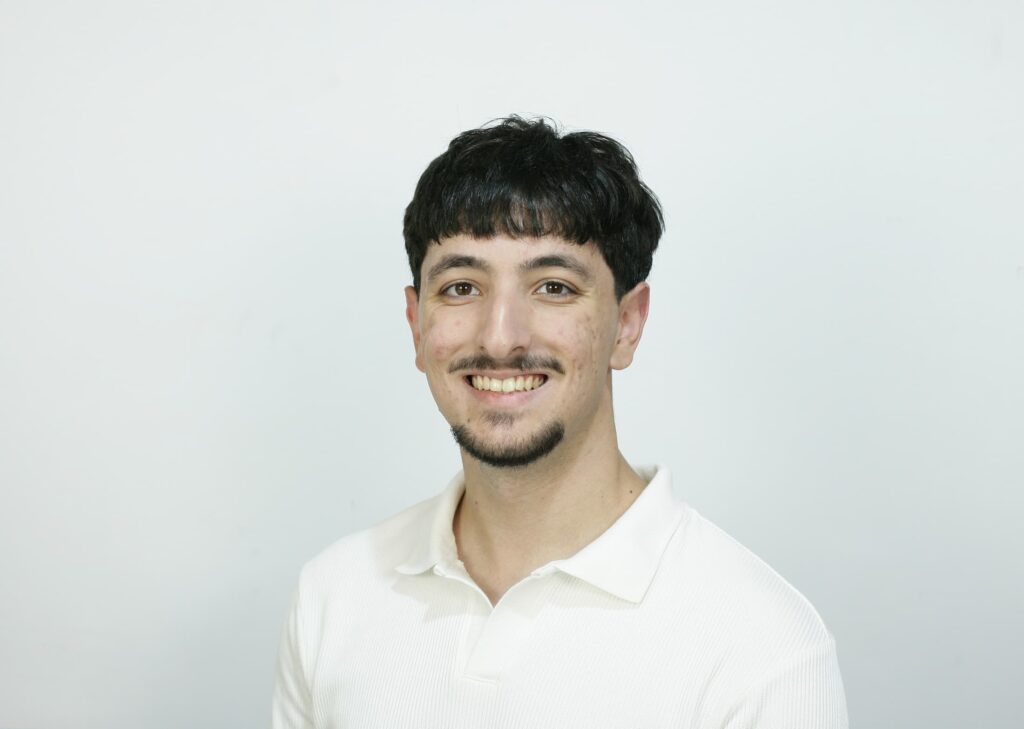
Konstantinos Chatzistavrou | Founder | THREAT-WATCH
Konstantinos Chatzistavrou is the founder of THREAT-WATCH, a boutique managed security service provider based in Thessaloniki, Greece. His journey in cybersecurity began long before he started a company. While still in secondary school, he started sharing technical breakdowns, security analysis, and threat research on LinkedIn. His work gradually attracted an audience of around 15,000 followers and helped him build a public track record based on practical cybersecurity knowledge. That experience later became the foundation for THREAT-WATCH, a security-focused MSSP created for mid-market industrial businesses that need strong protection without the cost and complexity of building a full internal security team. At EliteX, we are proud to have Konstantinos Chatzistavrou as part of the edition: Europe’s Visionary Cybersecurity Leaders to Watch, 2026.
Chatzistavrou was drawn to cybersecurity because of his interest in understanding how systems actually fail. He saw that security was often treated as a compliance requirement or a box that organizations needed to check. For him, effective cybersecurity needed to be much more practical. He wanted to create a business where the person doing the security work was also directly responsible for the outcome. This thinking became an important part of the THREAT-WATCH model. Rather than creating layers between clients and security professionals, he remains personally involved in every client relationship.
Credibility in cybersecurity comes from demonstrated work, not certifications alone.
As founder, Chatzistavrou manages client relationships from the first conversation through reporting and ongoing security discussions. His team works with trusted vendor partners to support monitoring, incident response, and technical delivery, while he remains the main point of contact for clients. Being available as the founder is not simply a business decision for him. It reflects his belief that a boutique security provider should offer direct involvement and accountability rather than passing clients between large account teams.
His work is particularly focused on the challenges faced by mid-market industrial companies. Many of these organizations deal with tool sprawl, limited visibility, poorly segmented IT and OT networks, and growing regulatory requirements. NIS2 has also created additional pressure, especially for businesses that do not have dedicated cybersecurity leadership or large security teams. Chatzistavrou points out that industrial breaches often begin in traditional IT environments before moving laterally toward operational technology. This makes visibility across both IT and OT environments increasingly important.
THREAT-WATCH addresses these challenges through a broad security offering that includes SOC monitoring, endpoint detection and response, OT and ICS visibility, cloud and identity threat detection, phishing simulations, and NIS2 compliance support. The goal is not simply to provide more security tools, but to bring these capabilities together into a practical security program. Chatzistavrou’s direct involvement allows recommendations to be based on the actual environment and business needs of each client.

He also takes a balanced view of artificial intelligence in cybersecurity. AI can significantly improve detection, alert triage, and the ability to process large amounts of security data. However, he believes that human judgment remains essential when alerts are unclear or require an understanding of the customer’s environment. While the industry often promotes the idea of fully autonomous AI security operations, Chatzistavrou sees AI as a powerful support system rather than a replacement for experienced security professionals. The technology can reduce noise, but people still need to make important decisions.
Building a strong security culture is another important part of his approach. At THREAT-WATCH, this starts internally with careful handling of client data and strong operational security. For customers, it includes practical security awareness programs, phishing simulations, and reporting written in clear language. He believes cybersecurity should be understandable to people without a technical background because employees and business leaders need to know what action to take when a security issue appears.
AI can reduce security noise, but human judgment remains essential when the risk is unclear.
One of his proudest achievements has been building the THREAT-WATCH security stack from the ground up while completing his computer science degree. He sourced and integrated monitoring, endpoint protection, OT visibility, and compliance technologies into one coherent offering before taking the business to market. For him, getting the foundation right was more important than simply moving quickly.
Chatzistavrou continues to stay informed by following resources such as CISA’s Known Exploited Vulnerabilities catalog, NVD CVE feeds, and security RSS sources. He has also built a personal tool that brings these feeds together, helping him track important developments without relying on a single source. This reflects one of the qualities he considers essential in cybersecurity: curiosity about how systems break.
He also believes that communication is as important as technical ability. Cybersecurity professionals must be comfortable with uncertainty, investigate problems carefully, and document findings clearly. Explaining a complex risk to a non-technical IT director in one simple sentence can be more difficult than identifying the technical problem itself.
For Chatzistavrou, security must always be connected to business reality. He believes recommendations should be based on actual business consequences rather than generic risk scores. If the cost of fixing a problem is greater than the exposure it addresses, he is willing to explain that openly. This practical approach helps build trust and allows organizations to make informed decisions.
His advice to businesses is straightforward: start with visibility. Organizations cannot protect systems they cannot see. Before buying more security tools, he recommends conducting a genuine external assessment using OSINT techniques to understand what is already exposed and unmonitored. For young cybersecurity professionals, his advice is equally practical: build something people can see. His own public research and analysis created credibility before he launched his company.
Looking ahead, Chatzistavrou expects regulation, identity-based attacks, cloud and SaaS threats, and ransomware targeting backups to shape the cybersecurity landscape. In Europe, he sees NIS2 as a major force for improving security standards among mid-market businesses. His vision is to help close the security gap in northern Greece, particularly among industrial and manufacturing companies that are attractive targets because they have historically been under-defended. Through THREAT-WATCH, he aims to make practical, accountable cybersecurity more accessible to the organizations that need it most.
Visibility is the starting point of every effective cybersecurity strategy.