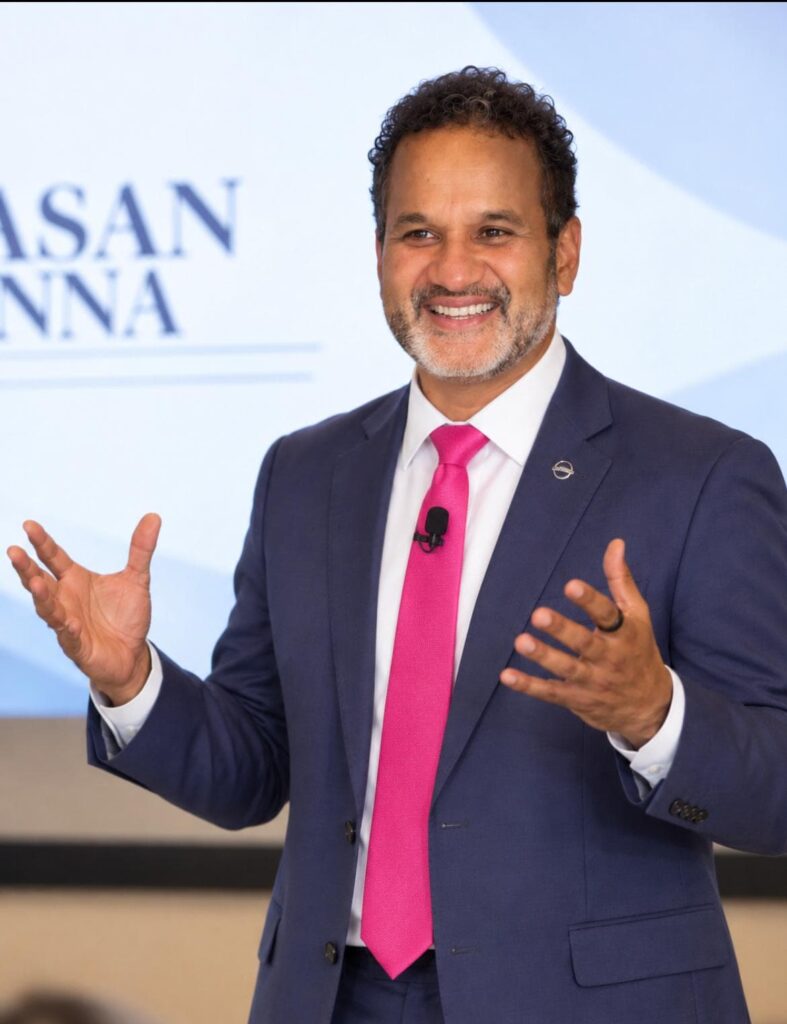
Srinivasan Prasanna did not learn supply chain management from a textbook. He learned it on the floor of warehouse operations, often at two in the morning during peak season, when nothing was going according to plan. That hands-on grounding shaped the next two decades of his career and eventually took him from delivery execution roles all the way to the position of CEO at iWMS, where he and his co-founders have built and scaled operations across four countries: the United States, Canada, South Africa, and India. Today, that experience shapes how iWMS works with its customers.
Srinivasan Prasanna | CEO | iWMS
The company brings together practical warehouse knowledge, deep WMS expertise, and technology consulting to help organizations design, implement, integrate, support, and continuously improve complex warehouse operations. Its expertise goes beyond the technology itself, extending to how warehouse systems must work alongside people, processes, automation, and wider enterprise platforms. This is what allows iWMS to help customers translate WMS capabilities into measurable operational improvements, from greater inventory visibility and higher throughput to improved service levels, stronger resilience, and a lower cost to serve. Alongside his corporate work, Prasanna also teaches Data Science and AI in university management programs, a role he says keeps him energized and honest about where the industry is truly headed. He values the connection between academia and industry, believing each side has something important to learn from the other.
EliteX proudly features Srinivasan Prasanna in this edition, celebrating their achievements, leadership, and valuable impact.
What drew him to supply chain in the first place was its tangibility. Prasanna was attracted to problems where the consequences of a decision could actually be seen, whether that meant a pick path on a warehouse floor, an inventory count, or a truck leaving on schedule. There was no ambiguity in the results, only clear cause and effect, and that clarity appealed to him from the start. Over twenty years, what has kept him inspired is a growing appreciation for how much invisible complexity and human effort sit behind something as ordinary as a package arriving at someone’s front door. Behind every simple delivery, he has come to see, lies a web of decisions, systems, and people working in coordination, often unnoticed by the customer who benefits from it. For Prasanna, that combination of real complexity and real impact has never lost its appeal.
Two in the morning. Peak season. Nothing going according to plan
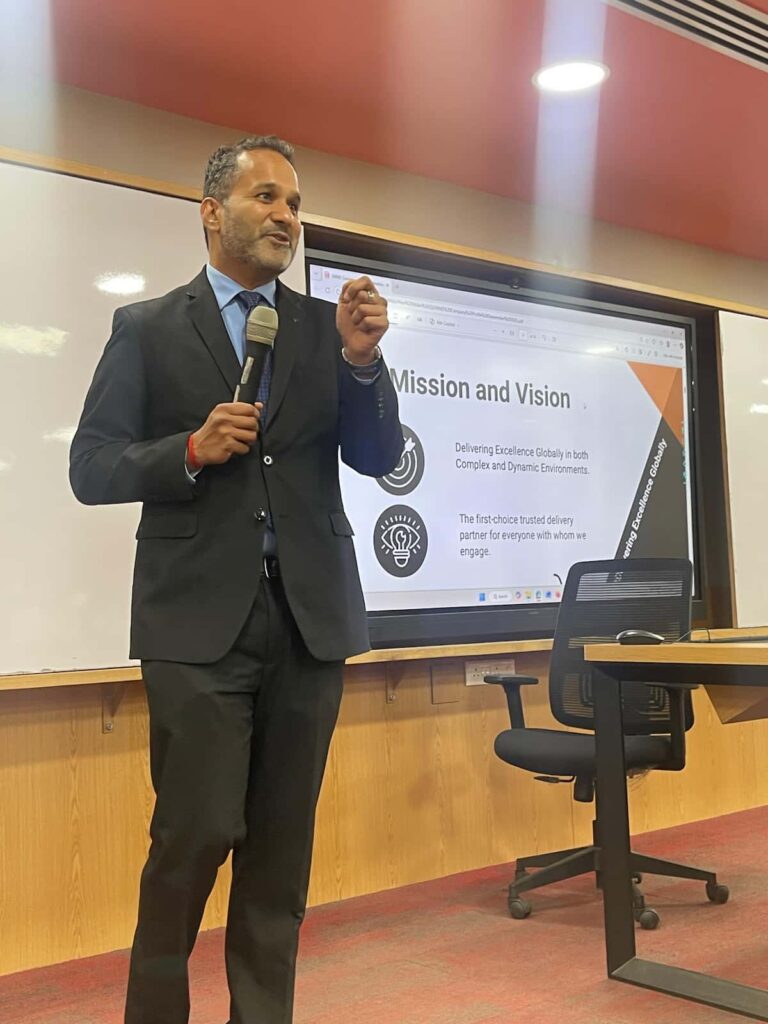
Asked about the biggest challenges facing supply chains today, Prasanna points to three in particular: unpredictable labor markets, the widening gap between AI hype and AI-ready infrastructure, and the need to relearn that resilience, not just efficiency, has to be designed into operations from the start. Labor markets, he notes, can shift quickly and unpredictably across regions, forcing operators to rethink staffing strategies on short notice. The gap between AI hype and AI-ready infrastructure is just as pressing, since many organizations are eager to adopt new tools without first building the systems and data foundations those tools require. And resilience, he argues, has often been treated as an afterthought, something companies scramble to build only after a disruption exposes the gap. He sees all three challenges as solvable, provided companies bring the right mix of technology and leadership to the table, rather than treating either one as a substitute for the other.
On the question of efficiency and cost management, Prasanna is clear that efficiency is not simply about doing the same work with fewer people. It is about improving how the entire operation performs. At iWMS, the starting point is understanding where operational friction exists: where time is being lost, where inventory visibility is limited, where decisions remain unnecessarily manual, where workflows create bottlenecks, and where the WMS is not being used to its full potential. From there, the company brings together warehouse expertise, process improvement, and technology to address those constraints, which may mean improving system configuration, refining workflows, strengthening integrations, increasing automation, or giving teams better access to the information they need to make faster decisions. The outcomes that matter to Prasanna are practical and measurable: increased throughput, improved order accuracy, stronger inventory visibility, more reliable service, greater operational resilience, and a reduced cost to serve. As he puts it, the goal is not merely to reduce cost in isolation, but to create an operation that can process more, respond faster, and serve customers more consistently, without costs rising at the same rate as growth.
Knowing the Rollback Point: When disruptions and unexpected challenges arise, Prasanna’s approach is to plan for the storm long before it arrives. Leaders need to know their rollback point and their point of no return before they are standing at either one, so that decisions in the moment are guided by preparation rather than panic. He stresses staying close to the floor, since the earliest warning signal is never found on a dashboard, but instead shows up in the small, early signs that only frontline teams notice first. Once a team passes the point of no return, the mindset has to shift from avoiding the problem to executing the recovery plan with full confidence. Hesitation at that stage, he says, costs far more than a wrong call made decisively. That calm, built through enough repetitions, becomes a genuine competitive advantage over time, distinguishing teams that merely survive disruption from those that come out of it stronger.

Technology and artificial intelligence have an enormous role to play in Prasanna’s view of the industry’s future, though he is careful to note that their value depends on how effectively they are applied to real operational problems. At iWMS, the team is exploring how generative and agentic AI can support areas such as order processing, workforce management, inventory replenishment, and operational decision-making, along with how robotics, automation, AI, and machine learning can work together to create more responsive distribution centers. For Prasanna, the industry needs to move beyond simply asking where AI can be used, and instead ask which operational problem is being solved and what measurable improvement the technology should deliver. AI should help warehouse teams identify issues sooner, interpret operational data faster, automate repetitive decisions, and respond more effectively to changing demand, with its value ultimately visible in outcomes such as better inventory availability, higher productivity, faster fulfilment, and greater resilience. What excites him most, though, is that AI does not remove the need for great people. Instead, it changes where their value appears, since technology can accelerate analysis and automate routine work, freeing experienced professionals to focus on judgment, complex problem-solving, relationships, and accountability. He believes the organizations that combine strong operational foundations, high-quality data, and human expertise will gain far more from AI than those simply chasing the technology.
Among his proudest achievements, Prasanna points to leading iWMS, alongside his co-founders, through a major transformation, moving the company from a traditional staff-augmentation model toward an AI-enabled, value-added services business, while continuing to support customers across four countries and four distinct labor markets without pausing operations.
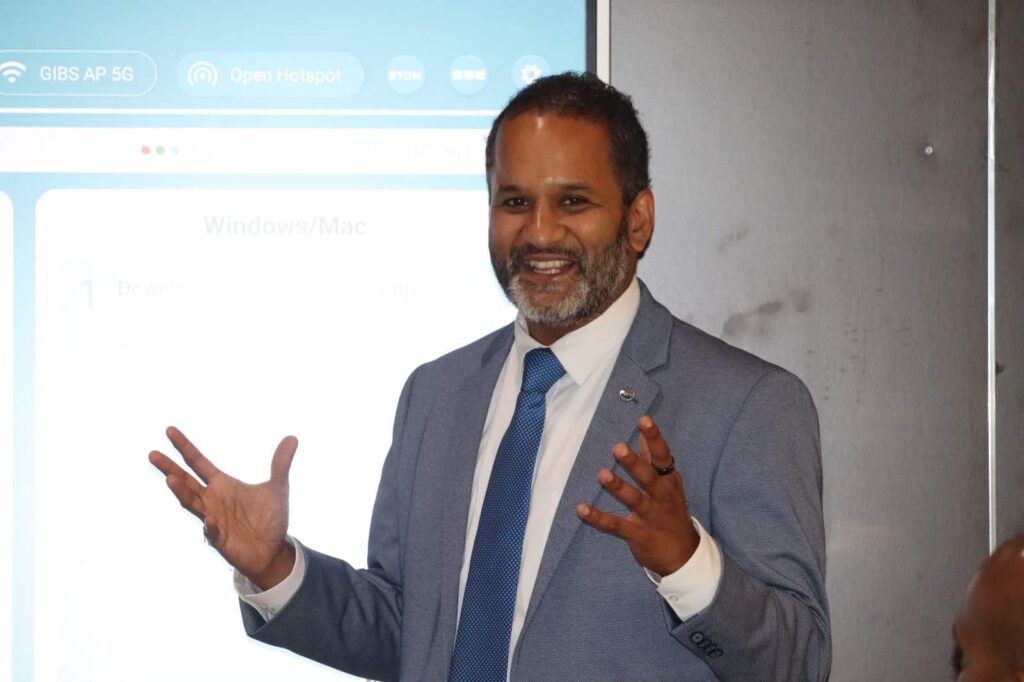
For Prasanna, this transformation is about far more than introducing new technology; it represents a fundamental shift in the value iWMS brings to its customers. Rather than measuring its contribution primarily through the number of resources or hours provided, the company is increasingly focused on the operational outcomes it helps customers achieve, bringing together experienced consultants, warehouse knowledge, WMS expertise, data, and AI-enabled tools to diagnose problems more effectively, accelerate decision-making, and deliver improvements that can be measured. For customers, this means gaining access not only to additional capacity, but to deeper insight and more proactive support, identifying risks earlier, resolving issues faster, improving the performance of their WMS investment, and continuously finding opportunities to strengthen throughput, visibility, service, and cost to serve. It changes the conversation, Prasanna says, from how many resources a customer needs to what business outcome they are trying to achieve, and how iWMS can help them achieve it. That, he believes, is the future being built at iWMS: a relationship in which expertise and technology directly contribute to stronger, more adaptable, and higher-performing warehouse operations.

AI does not remove the need for great people, it changes where their value shows up.
Prasanna credits several leadership qualities for his success in the industry. Adaptive leadership across cultures is central, since a style that works well in Johannesburg will not automatically work in Minneapolis. Leading operations in four countries has taught him to read local context carefully, adjusting his approach to fit each market rather than applying a single formula everywhere. He also treats every rollout as a people challenge first and a technology challenge second, believing that even the best system will fail if the people expected to use it are not brought along with care. And he makes a point of staying relentlessly close to execution, because the floor tells a leader things a slide deck never will.
For young professionals starting out in supply chain, Prasanna offers a handful of clear pieces of advice. Stay relentlessly curious, he says, calling it the single trait he would bet on above all others. Find your superpower and lean fully into it, rather than trying to be strong in every area at once. Get close to the floor early, since that grounding will serve a career for its entire span, giving young professionals an instinct for operations that no amount of later study can replace. Build relationships everywhere, because the industry runs on trust, and the people met early in a career often reappear at critical moments later on. And chase work that genuinely energizes you, since the pressure in this field is real, and only real passion carries people through it over the long term.
Looking ahead, Prasanna envisions a future in which organizations scale through greater operational intelligence rather than simply adding more resources. People will spend less time on repetitive activities and more time applying judgment, solving complex problems, building relationships, and taking accountability for outcomes, while technology gives them stronger visibility, earlier warning of operational risks, and better information on which to act. For iWMS, this means continuing to combine deep warehouse and WMS expertise with data, intelligent automation, and human judgment, with its role centered on helping customers translate technology into practical improvements such as greater throughput, more accurate inventory, dependable service, stronger resilience, and sustainable reductions in cost to serve. Prasanna also wants to see the wall between the classroom and the client come down completely, so that the next generation of supply chain professionals learns through real operational problems, real data, and emerging technologies, preparing them for what the industry genuinely needs. He believes resilience must become a permanent design principle, not a lesson relearned after every disruption. That, he says, is the industry iWMS is excited to help build: one in which technology serves clear operational outcomes and enables people and organizations to perform at their best.
Across two decades in supply chain, Srinivasan Prasanna’s story has been one of staying close to the ground while thinking far ahead. From warehouse floors to the CEO’s office at iWMS, and from classroom lecterns to boardrooms across four countries, he has carried the same conviction throughout: that technology should sharpen human judgment rather than replace it, that operational outcomes matter more than headcount or hours billed, and that resilience is not something a company reaches for during a crisis but something it builds in long before one arrives. As supply chains around the world continue to face labor uncertainty, rapid AI adoption, and rising expectations for speed, leaders like Prasanna, who pair deep warehouse and WMS expertise with a clear vision for measurable customer outcomes, are likely to shape how the industry finds its footing in the years ahead.
Resilience should be treated as a permanent design principle, not a lesson we relearn after every disruption.

Powering the Future of Supply Chain Success!
Your trusted partner to optimise your warehouse, logistics, and fulfilment operations.