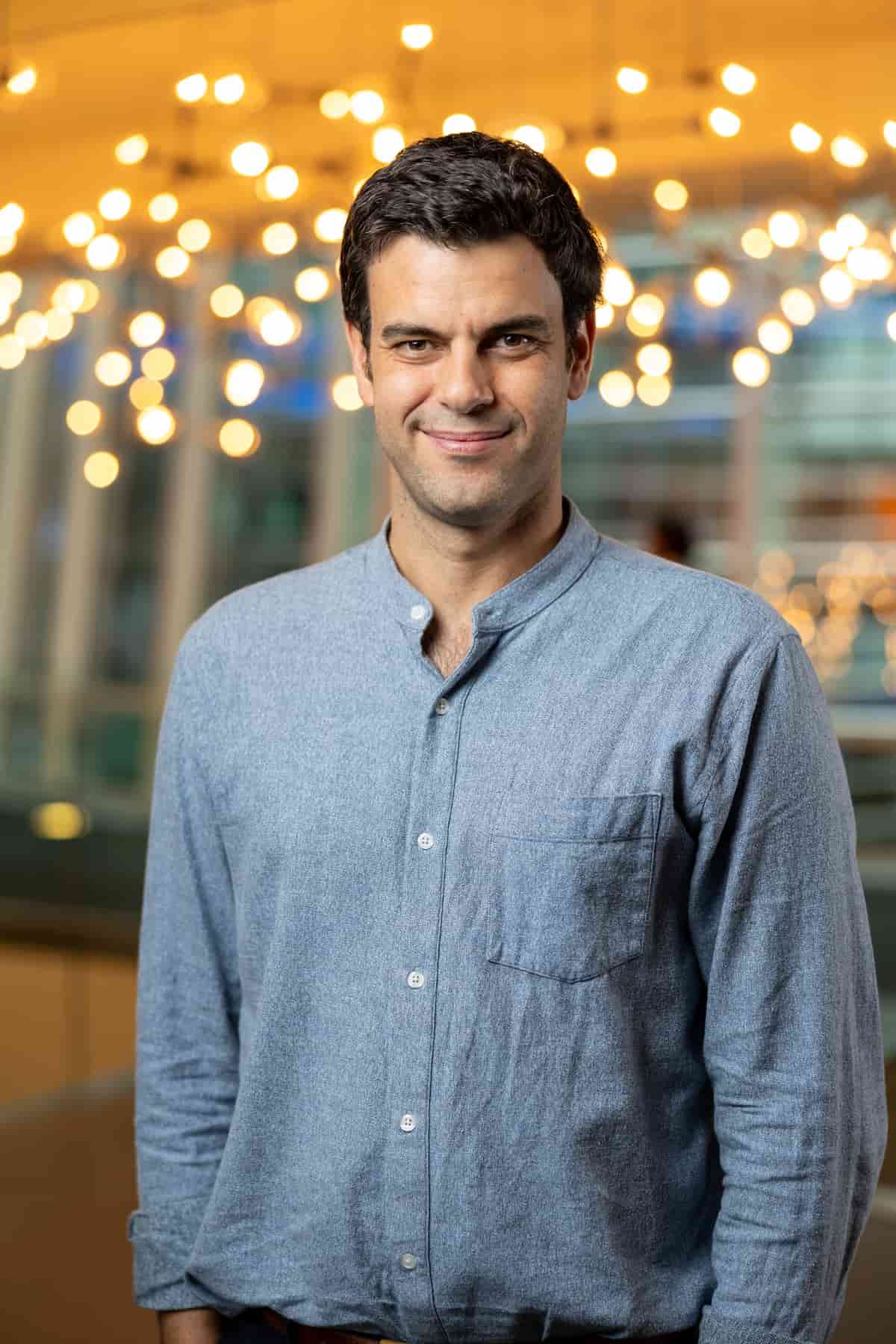
Rodrigo García González, co-founder and co-CEO of Notpla, is helping redefine the future of packaging by bringing together design, technology, business, and nature. With a background as a designer, architect, and inventor, González has built his career around understanding how materials influence the way people interact with the world. Today, his work focuses on turning ideas inspired by nature into practical solutions that can work at meaningful scale.
Rodrigo García González | Co-founder and Co-CEO | Notpla
González did not originally plan to build a career in the packaging industry. His journey began with a broader interest in design and materials and how they shape everyday experiences. Over time, one simple but important question changed the direction of his work: why should packaging that is used for only a few minutes remain in the environment for hundreds of years? This question became the foundation for Notpla and eventually led the company toward seaweed as an alternative source of packaging materials.
Real change happens when systems move together.
Notpla develops packaging made from seaweed and plants with the goal of replacing unnecessary single-use plastic. Its approach is different from simply creating another version of conventional plastic. Instead, the company looks to nature for inspiration and treats it as a design guide. The aim is to develop materials that perform their required function during use and can then naturally disappear instead of leaving behind a long-lasting waste problem.
For González, one of the major challenges facing packaging today is not only how products are manufactured but also what happens to them after use. Recycling remains important, but he believes it cannot be the only solution. Many packaging products are designed for very short periods of use, yet their materials can remain in the environment for decades or even centuries. This creates a need to rethink the materials themselves and ask whether long-lasting materials are appropriate for short-life applications.
This thinking has become increasingly relevant as businesses respond to changing customer expectations and growing attention toward sustainability. González has seen sustainability move from being viewed as a desirable extra to becoming an important business requirement. In response, Notpla has focused on moving its material innovations beyond laboratory experiments and into real-world commercial applications. Working with partners has been an important part of ensuring that the company’s solutions can deliver both environmental and commercial value.
Innovation is central to González’s leadership approach, but he does not believe innovation should exist simply for its own sake. For him, meaningful innovation begins by looking at a problem differently. At Notpla, experimentation, curiosity, and collaboration are encouraged across disciplines. Designers, scientists, engineers, and commercial teams are brought together because new ideas often emerge when people with different perspectives question established assumptions and work toward a common solution.
Sustainability is equally central to the company’s identity. It is not treated as a separate initiative but as the reason Notpla exists. The company develops natural materials from seaweed and plants while considering the end of a product’s life from the very beginning of the design process. The broader ambition is to create packaging that provides the necessary function without leaving an unnecessary environmental legacy.
The future of packaging begins with better materials.
One of the milestones González is most proud of is Notpla’s achievement of replacing more than 48 million single-use plastic items. For him, the number represents more than a business milestone. It demonstrates that natural materials can move beyond experimentation and become part of genuine commercial use. He also sees the achievement as a reflection of the people, technology, and systems that have made this level of scale possible. The company is now working toward replacing 100 million single-use plastic items, while maintaining a much larger ambition of making natural materials a normal part of the packaging landscape rather than simply an alternative.
Technology also plays an important role in this journey. González sees digital tools and automation as ways to speed up material development, manufacturing, testing, learning, optimization, and data analysis. However, he believes technology should remain a tool for solving meaningful problems rather than becoming the objective itself.
Looking toward the future, González expects the packaging industry to move beyond simply making existing products slightly less harmful. He believes companies will increasingly question which materials should be used in the first place. Natural materials, stronger regulation, and greater scrutiny of end-of-life claims are likely to accelerate this change.
For young professionals entering the industry, González encourages learning beyond packaging itself. Materials, biology, design, manufacturing, consumer behavior, and systems thinking can all provide valuable knowledge. He believes some of the strongest solutions emerge when ideas from different disciplines are connected.
His leadership philosophy is built on curiosity, persistence, and collaboration. González does not see himself as someone who needs to have every answer. Instead, he focuses on creating an environment where talented people can question assumptions, test ideas, learn quickly, and solve difficult problems together. He also recognizes that changing an industry cannot be achieved by one company alone.
Nature can inspire packaging without a lasting legacy.
Ultimately, González believes that changing materials also means changing systems. New materials need businesses willing to adopt them, infrastructure capable of supporting them, regulations that enable progress, and consumers who understand the change. As these different pieces increasingly come together, he sees an opportunity for packaging to move toward a future where natural materials are not unusual alternatives but an accepted part of everyday life.