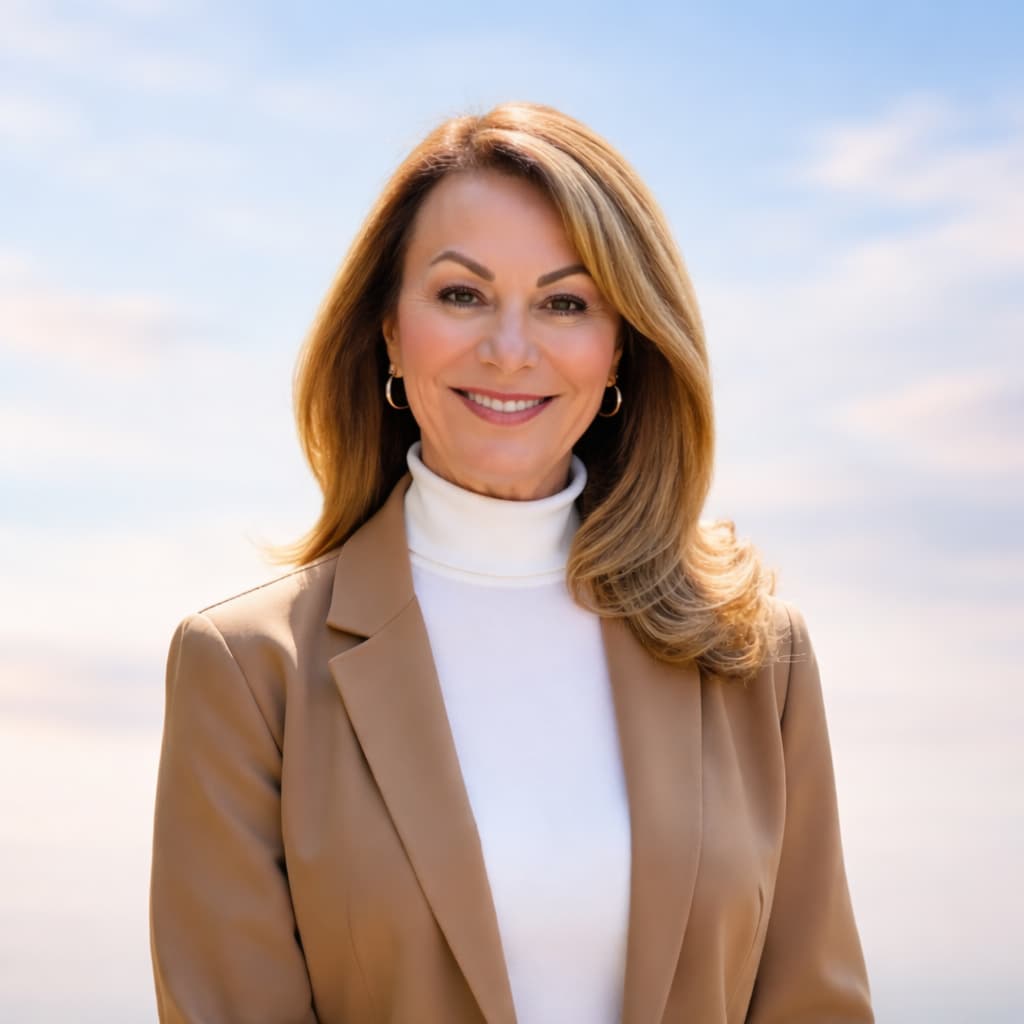
Julie Young, President of Julie Young Education, LLC, has spent her career challenging one of education’s biggest questions: how can every student receive a high-quality education regardless of where they live or what circumstances they face? As a pioneering leader in educational technology, she has dedicated decades to removing barriers that prevent students from reaching their full potential.
Julie Young | President | Julie Young Education, LLC
Through her leadership, innovation, and commitment to student-centered learning, she has helped transform the way education is delivered and experienced around the world. At EliteX, we are proud to have Julie Young as part of the edition: Visionary EdTech Leaders Shaping Education, 2026.
Her journey began with a simple but powerful belief that learning should adapt to students rather than forcing students to adapt to rigid educational systems. In the late 1990s, she was selected to lead an initiative funded by the Florida Department of Education to explore how technology could solve growing access challenges in schools. Many students were unable to enroll in important courses because of location, scheduling conflicts, or limited resources. Rural schools often struggled to provide advanced coursework, while students facing health issues or demanding personal commitments had few educational options available to them.
Technology creates impact when it strengthens learning and human connection.
Driven by a desire to create meaningful change, Julie helped establish Florida Virtual School (FLVS). What started with a modest grant and a small group of students eventually became one of the most influential virtual learning institutions in the world. Under her leadership, FLVS expanded to serve hundreds of thousands of learners across the United States and internationally. The success of the school demonstrated that quality education could be delivered beyond the traditional classroom while maintaining strong academic standards.
Throughout her career, Julie has remained focused on ensuring that students remain at the center of every educational decision. Her work has consistently emphasized flexibility, accessibility, and personalized learning experiences. She believes that every learner is unique and deserves an educational pathway that supports their individual needs, goals, and circumstances.
Her leadership style is built on optimism, trust, and purpose. She believes that people perform their best when they feel valued and connected to a meaningful mission. Rather than focusing on limitations, she encourages teams to explore possibilities and ask how innovative ideas can become reality. This mindset helped her guide organizations through periods of uncertainty and change while maintaining a strong commitment to student success.
Following her success at Florida Virtual School, Julie continued to push educational innovation forward through her work with Arizona State University. There, she helped develop ASU Prep Digital, a program designed to bridge the gap between K-12 education and higher education. The initiative allowed students to begin college-level coursework as soon as they were academically prepared, giving them opportunities to accelerate their learning journey and reduce future educational costs.
A key aspect of Julie’s philosophy is the belief that technology should not replace human relationships in education. Instead, technology should strengthen those connections by creating more opportunities for meaningful interaction between students, teachers, and families. Throughout her career, she has advocated for a “high-tech, high-touch” approach that combines digital innovation with personal support.
This philosophy has helped countless students thrive. Many learners who struggled in traditional educational environments found success through flexible learning models that allowed them to learn at their own pace while receiving individualized support. Students facing health challenges, bullying, scheduling conflicts, or unique personal circumstances were able to continue their education without sacrificing quality or opportunity.
True innovation in education begins by removing barriers to opportunity.

Julie also recognizes the growing importance of artificial intelligence and advanced digital tools in modern education. However, she approaches these technologies with thoughtful optimism. She believes that AI has the potential to personalize learning at a scale that was previously impossible. At the same time, she emphasizes that technology alone cannot solve educational challenges. Success depends on thoughtful design, strong educational practices, and a clear focus on student outcomes.
As the education landscape continues to evolve, Julie sees mastery-based learning as one of the most important trends shaping the future. She believes that educational systems should focus less on time spent in a classroom and more on demonstrated understanding and achievement. By allowing students to progress based on mastery rather than age or schedules, schools can create more meaningful and effective learning experiences.
Her impact extends far beyond institutions and programs. For Julie, the true measure of success is found in the lives of students. She takes pride in the stories of learners who regained confidence, discovered a love for learning, overcame personal obstacles, and achieved goals they once thought impossible. These individual transformations continue to inspire her work and reinforce her belief that education has the power to change lives.
Today, through consulting, advising, writing, and leadership development, Julie continues to influence educational systems around the world. Her mission remains unchanged: to expand access, increase opportunity, and create learning environments that empower every student to succeed.
Julie Young’s career stands as a testament to what is possible when innovation is guided by purpose. By combining technology, vision, and an unwavering commitment to students, she has helped redefine education for a new generation and continues to inspire educators and leaders to think differently about what learning can become.
Education succeeds when learning adapts to the needs of every student.