
Fredrick Benneh Frimpong | Founder and CEO | Farming In Africa (FIA)
Fredrick Benneh Frimpong is a visionary entrepreneur, agricultural innovator, and passionate advocate for sustainable livestock development in Africa. As the Founder and CEO of Farming In Africa (FIA), he has dedicated his career to transforming agriculture from a traditional subsistence activity into a modern, profitable, and technology-driven industry. Through his leadership, Farming In Africa has become a powerful platform that educates, empowers, and connects farmers across the continent while promoting innovation, sustainability, and youth involvement in agriculture. At EliteX, we are proud to have Fredrick Benneh Frimpong as part of the edition: Visionary Leaders Transforming Digital Agriculture, 2026.
His journey into agriculture began with a simple challenge. While searching for solutions to meet his school’s nutritional needs, he discovered the importance of agricultural knowledge and the opportunities that existed within livestock farming. What started as a search for information gradually developed into a lifelong passion for improving agricultural systems and creating lasting impact. As he gained experience, he realized that many of the problems facing African farmers could be addressed through education, innovation, and technology.
The future of agriculture belongs to innovators and lifelong learners.
This realization led him to establish Farming In Africa, an organization focused on providing practical solutions for livestock farmers. The company combines livestock production, agribusiness education, genetics, nutrition, infrastructure development, and digital communication to support farmers at different stages of their agricultural journey. Through these efforts, FIA has built a strong community that reaches more than one million followers globally and operates across multiple African countries.
Fredrick’s inspiration comes from the enormous potential within Africa’s agricultural sector. He believes agriculture remains one of the most important industries for economic growth, employment creation, and food security. Despite its importance, many farmers continue to face barriers such as limited access to information, poor infrastructure, low productivity, and insufficient technical support. He saw technology as a practical solution that could bridge these gaps and make agriculture more efficient and attractive, especially to younger generations.
Under his leadership, Farming In Africa has embraced digital innovation as a key tool for farmer development. The organization uses webinars, bootcamps, digital consultations, educational campaigns, documentaries, and social media platforms to deliver knowledge directly to farmers. These initiatives have enabled FIA to reach people from different countries, backgrounds, and farming systems. By simplifying technical agricultural concepts into practical and understandable lessons, the organization helps farmers apply modern techniques that improve productivity and profitability.
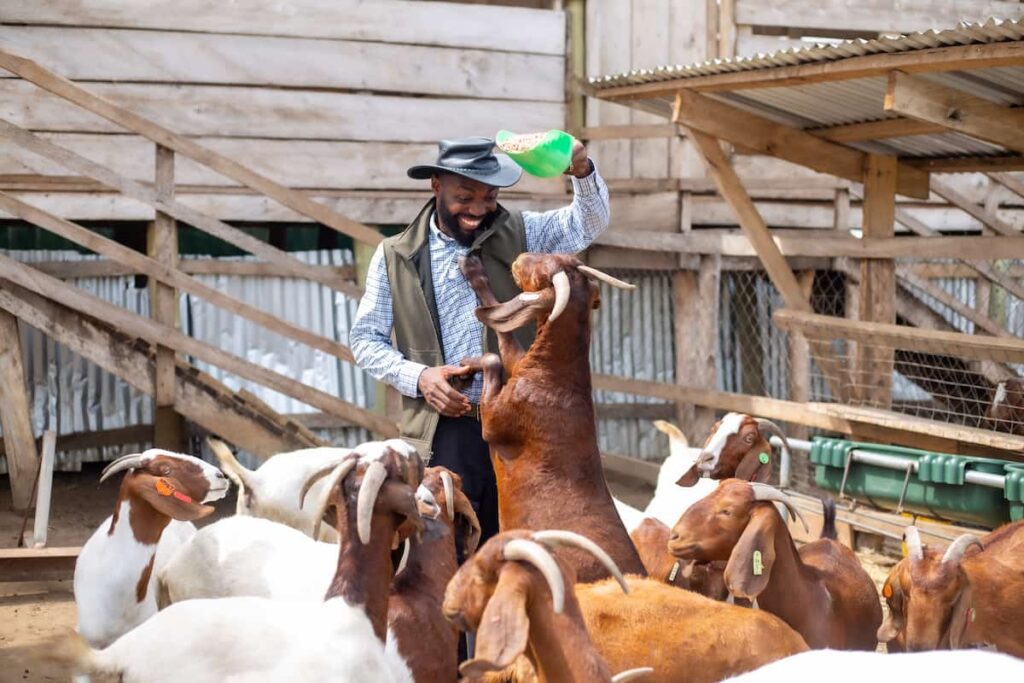
Fredrick believes that several emerging technologies are reshaping agriculture today. Innovations such as artificial insemination, precision farming tools, climate monitoring systems, smart feeding technologies, and digital learning platforms are helping farmers make better decisions and improve efficiency. In livestock production, advancements in genetics, nutrition, automated farm management, and digital veterinary support are creating opportunities for healthier animals and stronger farm performance. Mobile technology has also become an essential tool for accessing markets, training, and business opportunities.
Knowledge and technology empower farmers to build sustainable futures.
One of the greatest challenges facing farmers today is climate change. Unpredictable weather conditions, prolonged droughts, flooding, rising feed costs, disease outbreaks, and limited access to financing continue to affect agricultural productivity. Fredrick believes technology provides practical solutions to many of these problems. Through data analysis, climate-smart farming practices, digital education, and smart farm management systems, farmers can better prepare for risks and improve their resilience.
His commitment to innovation is reflected in several successful projects developed through Farming In Africa. Among the most impactful are the livestock bootcamps and farmer capacity-building programs that have trained and empowered more than one thousand participants across Africa and beyond during the past two years. These programs provide practical knowledge, mentorship, and business guidance, enabling many participants to establish successful livestock enterprises of their own.
FIA has also developed innovative feed solutions designed to address nutritional deficiencies within the livestock sector. Products such as Gold Coast Salt Lick, Semanhyia Pellet Feed, and the drought-resistant Semanhyia Grass have become valuable resources for livestock farmers. These solutions help improve animal nutrition while supporting farmers during challenging climatic conditions. The Semanhyia Grass, in particular, contributes to year-round feed availability, helping farmers maintain productivity even during periods of drought.
Another initiative that highlights Fredrick’s vision is the Youth Livestock Empowerment Initiative. Through partnerships with secondary schools and tertiary institutions, the program establishes model farms and introduces young people to modern livestock farming practices. The initiative seeks to change outdated perceptions about agriculture and demonstrate that farming can be a rewarding, innovative, and profitable career. By inspiring young people to enter the sector, Fredrick is helping build the next generation of agricultural leaders.
Sustainability remains at the center of his work. He believes modern agriculture must balance productivity with environmental responsibility. Digital agriculture supports this goal by improving resource efficiency, reducing waste, enhancing animal welfare, and promoting climate-smart practices. Through better management of land, water, energy, and feed resources, farmers can achieve long-term success while protecting the environment for future generations.

As a leader, Fredrick values vision, resilience, integrity, innovation, and the ability to inspire others. He understands that agriculture is filled with challenges and uncertainties, making adaptability and determination essential qualities for success. He also believes leadership involves investing in people, encouraging continuous learning, and creating opportunities that allow others to grow.
Within Farming In Africa, he promotes a culture of collaboration, creativity, and continuous improvement. Team members are encouraged to share ideas, solve problems proactively, and explore new approaches to serving farmers. This culture of innovation has enabled the organization to remain relevant in a rapidly changing agricultural landscape.
Innovation in agriculture transforms communities and strengthens economies.
Looking ahead, Fredrick expects artificial insemination, precision agriculture, climate-smart technologies, smart livestock management systems, and data-driven decision-making tools to play increasingly important roles in agriculture. He also anticipates greater youth participation, stronger digital education platforms, and wider use of social media as tools for agricultural learning and community building.
Being recognized among the Visionary Leaders Transforming Digital Agriculture, 2026 is a meaningful achievement for Fredrick Benneh Frimpong. He views the recognition not only as a personal milestone but also as a reflection of the collective efforts of the Farming In Africa team, their partners, and the many farmers they serve. For him, the recognition symbolizes the growing transformation of African agriculture and serves as motivation to continue driving innovation, education, and sustainable development across the continent.