Press Release
Official Press Release:
Date Release:
The European fintech regulatory landscape is entering one of the most transformative periods. Artificial intelligence governance, crypto regulation, and sweeping payment reforms are all converging at once – forcing financial institutions to rethink how compliance operates in practice.
For electronic money institutions (EMIs), compliance is no longer simply about meeting regulatory requirements. It is becoming a strategic function that shapes governance, technology, and long-term resilience.
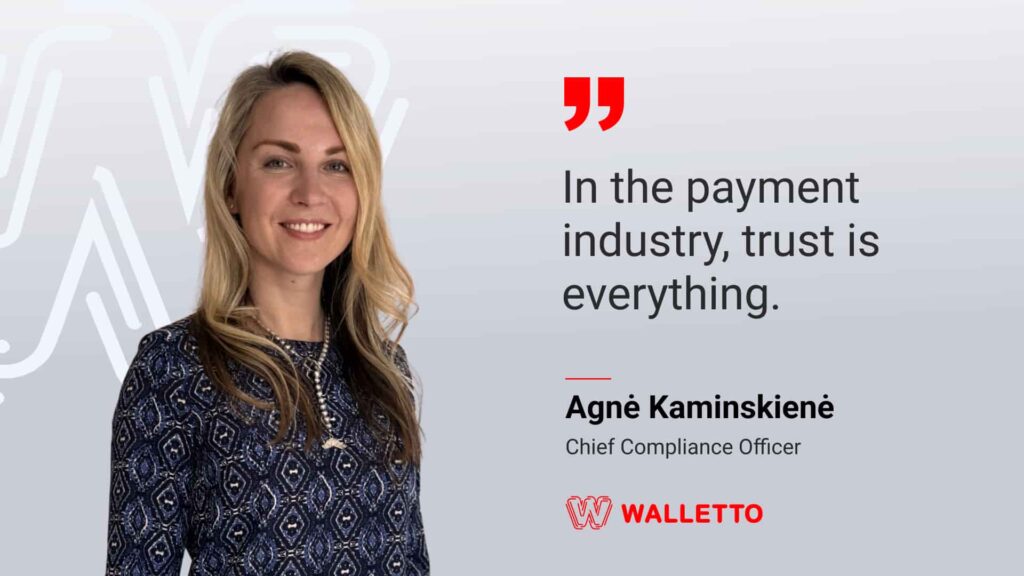
To better understand how these changes are affecting the industry, we spoke with Agne Kaminskiene, Chief Compliance Officer at WALLETTO, who shared her perspective on the regulatory shifts currently redefining fintech operations across Europe.
AI moves from innovation to regulated infrastructure
Artificial intelligence has quietly become part of everyday fintech operations. It helps verify identities, monitor transactions, detect suspicious behavior, and streamline onboarding processes.
But the EU AI Act is changing how companies approach these systems.
“AI has moved from being a futuristic concept to becoming a core regulatory area,” Agne explains.
The regulation introduces new requirements around transparency, explainability, and continuous oversight requirements for AI usage, setting up unified rules throughout the EU market. Within WALLETTO, the use of AI is in the spotlight and will gradually receive the same level of oversight as any other critical financial process.
The company is strengthening model documentation, improving data governance, and embedding human oversight into automated systems to ensure that technology supports compliance rather than creating new risks.
The shift is also influencing hiring needs.
“Compliance teams increasingly need professionals who understand both regulation and technology,” “AI literacy is becoming an important part of the compliance skill set.”
MiCA Is Redefining How Fintech Works with Crypto
Another major regulatory milestone is MiCA – the Markets in Crypto-Assets Regulation.
For the first time, Europe has a single, unified framework governing crypto-asset service.
While MiCA directly regulates crypto companies, its impact extends to financial institutions that interact with crypto providers. Agne explains that the regulation significantly raises expectations around partner governance and risk oversight.
“Any crypto-related provider must now meet MiCA’s licensing, transparency, and disclosure requirements,” she says.
To adapt to these changes, WALLETTO is strengthening onboarding procedures, enhancing ongoing due diligence, and aligning its internal processes with the requirements for the crypto service providers introduced under MiCA. While integrating new regulatory frameworks into existing partnerships can be complex, the Chief Compliance Officer of WALLETTO believes the result will ultimately strengthen the ecosystem.
“When both sides operate under clear regulatory standards, partnerships become more sustainable and transparent.”
PSD3 Could Be the Biggest Structural Change Yet
If MiCA and the AI Act reshape specific areas of fintech, PSD3 may transform the entire payments landscape. (PSD3, the third Payment Services Directive, is the European Union’s upcoming framework designed to modernize and strengthen the regulation of digital payments across the EU.)
The upcoming directive aims to harmonize authorization rules across Europe and remove the legal distinction between electronic money institutions (EMIs) and payment institutions (PIs).
“In practice, EMIs will need to be reauthorized as payment institutions under PSD3.”
This change significantly raises expectations around governance, operational resilience, and risk management.
Preparation for these changes has already begun at WALLETTO. The company is reviewing policies, strengthening second-line compliance and risk functions, and aligning ICT and fraud-risk management frameworks with future regulatory expectations.
Although the transition requires significant effort, WALLETTO sees it as an opportunity.
“A more unified regulatory framework can strengthen trust in the payments ecosystem and support long-term growth.”
Fraud Prevention Is Moving to the Center of Compliance
Fraud prevention is another area where PSD3 raises expectations significantly.
The new framework strengthens customer authentication rules, real-time monitoring requirements, and liability frameworks for payment providers. This means financial institutions must adopt more sophisticated fraud detection systems.
“Behavioral analytics and advanced monitoring tools are becoming essential,” Agne explains. “They allow institutions to identify suspicious patterns much earlier.”
PSD3 also promotes stronger cooperation between financial institutions, encouraging data sharing mechanisms that help identify fraud patterns across the ecosystem. Within the organization, fraud prevention is no longer viewed as the responsibility of a single team.
“It has to be integrated across operations, technology, and customer communication.”
Transparency and Trust Are Becoming Competitive Advantages
Beyond technology and operational changes, PSD3 also strengthens consumer protection. Institutions will be required to provide clearer information about fees, maintain stronger audit records, and participate in customer-focused dispute resolution frameworks.
While these requirements add operational complexity, Agne believes they reinforce a critical foundation of the financial industry.
“In payments, trust is everything,” she says.
For the team at WALLETTO, compliance goes beyond meeting regulatory expectations – it is about ensuring that customers and partners can rely on transparent and secure financial services.
As Europe’s fintech sector continues to evolve, compliance leaders like Agne Kaminskiene are playing an increasingly strategic role in guiding institutions through regulatory transformation.
In a fast-moving regulatory environment, the companies that succeed will not simply react to regulation – they will build compliance into the core of how they innovate, operate, and grow. For WALLETTO, this means continuously strengthening governance, investing in resilient systems, and ensuring that innovation develops alongside trust and regulatory responsibility.
About EliteX
EliteX is a global business media and recognition platform dedicated to spotlighting influential leaders, innovators, and changemakers across industries. Through curated editorial editions and feature stories, EliteX celebrates excellence, leadership, and impact that inspire audiences worldwide.
Media Contact:
Press Office
info@theelitex.com
www.theelitex.com