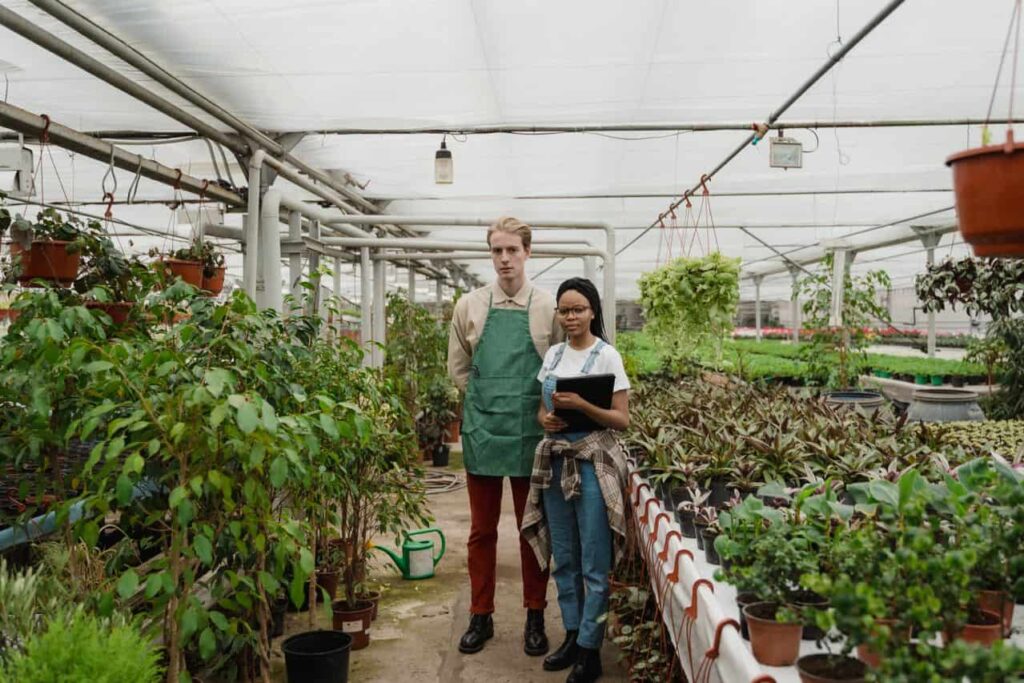
Agriculture has always evolved alongside human innovation. From hand tools to mechanized equipment, every technological advancement has helped farmers produce more food with greater efficiency. Today, the industry is entering a new chapter—one driven by intelligent technologies that are transforming how food is grown, managed, and delivered. Intelligent agriculture combines Artificial Intelligence (AI), the Internet of Things (IoT), robotics, drones, satellite imaging, and data analytics to make farming smarter, more productive, and more sustainable.
As global food demand rises and climate-related challenges become more frequent, farmers must produce higher yields using fewer resources. Intelligent agriculture offers practical solutions by enabling data-driven decisions, automating routine tasks, and providing real-time insights into crops, livestock, soil, and weather conditions. This technological shift is not replacing farmers—it is equipping them with powerful tools to make better decisions and build more resilient farming systems.
What Is Intelligent Agriculture?
Intelligent agriculture refers to the use of advanced digital technologies to improve every stage of farming. Unlike traditional methods that rely heavily on observation and experience, intelligent farming uses connected devices and AI-powered software to collect, analyze, and interpret data in real time.
Information gathered from sensors, drones, satellites, weather stations, and farm equipment is processed to help farmers make informed decisions. These insights can guide planting schedules, irrigation, fertilizer application, pest control, harvesting, and even market planning.
The goal is simple: increase productivity while reducing costs, minimizing waste, and protecting natural resources.
Artificial Intelligence Becomes the Farmer’s Assistant
Artificial Intelligence has become one of the most influential technologies in modern agriculture. AI systems can analyze enormous volumes of agricultural data far more quickly than humans, identifying trends and recommending the best course of action.
Farmers use AI to:
- Predict crop yields
- Detect plant diseases
- Monitor soil conditions
- Forecast weather changes
- Optimize irrigation
- Manage fertilizer use
Rather than reacting to problems after they occur, AI helps farmers anticipate challenges and act early, reducing both risks and losses.
Machine learning models also become more accurate over time as they process additional farming data, making future recommendations even more reliable.
Precision Farming Improves Every Acre
One of the defining features of intelligent agriculture is precision farming.
Every part of a field has different characteristics. Soil quality, moisture, nutrients, and crop growth often vary from one area to another. Precision farming uses GPS, AI, sensors, and mapping technologies to understand these differences.
Instead of applying the same amount of fertilizer or water across an entire farm, resources are distributed only where they are needed.
This targeted approach offers several benefits:
- Higher crop productivity
- Lower production costs
- Reduced chemical usage
- Better soil conservation
- Improved environmental sustainability
Precision agriculture ensures that every acre performs at its highest potential.
Smart Sensors Deliver Real-Time Insights
Modern farms increasingly rely on smart sensors placed throughout fields, greenhouses, and livestock facilities.
These sensors continuously monitor:
- Soil moisture
- Soil temperature
- Humidity
- Nutrient levels
- Air quality
- Crop growth
The collected information is transmitted to cloud-based platforms where AI analyzes conditions and alerts farmers whenever action is required.
Instead of routine inspections, farmers receive accurate updates directly on their smartphones or computers, allowing quicker and more informed decision-making.
Drones Revolutionize Crop Monitoring
Agricultural drones have become essential tools for intelligent farming.
Flying above fields, drones capture detailed aerial images that reveal crop conditions not easily visible from the ground.
AI analyzes these images to detect:
- Water stress
- Nutrient deficiencies
- Weed growth
- Pest infestations
- Plant diseases
Farmers can identify problems at an early stage, preventing small issues from becoming large-scale crop failures.
Some drones also perform precision spraying, reducing chemical use while increasing application accuracy.
Robotics Addresses Labor Challenges
Labor shortages continue to affect agriculture worldwide. Intelligent farming increasingly depends on robotics to automate repetitive and physically demanding tasks.
Agricultural robots can:
- Plant seeds
- Harvest fruits
- Pick vegetables
- Remove weeds
- Spray crops
- Sort harvested produce
Equipped with computer vision and AI, these robots identify crops accurately while avoiding damage during harvesting.
Automation improves efficiency while allowing farmers to focus on higher-value activities such as planning and farm management.
Smart Irrigation Conserves Water
Water is one of agriculture’s most valuable resources.
Traditional irrigation often leads to unnecessary water consumption. Intelligent irrigation systems solve this problem by combining soil sensors, weather forecasts, and AI-powered decision-making.
Instead of watering on fixed schedules, systems irrigate only when crops actually need moisture.
Benefits include:
- Reduced water waste
- Lower energy costs
- Stronger crop growth
- Better drought resilience
- Increased sustainability
Smart irrigation supports both agricultural productivity and responsible resource management.
Climate Intelligence Helps Farmers Adapt
Climate change is making farming more unpredictable than ever before.
Intelligent agriculture uses weather forecasting, satellite monitoring, and predictive analytics to help farmers prepare for changing conditions.
AI can predict:
- Heavy rainfall
- Heatwaves
- Frost events
- Drought risks
- Flood conditions
These forecasts allow farmers to adjust planting schedules, irrigation plans, and harvesting operations before extreme weather affects crops.
Climate intelligence strengthens resilience while reducing economic losses.
Intelligent Livestock Management
Digital technology is also transforming livestock farming.
Wearable sensors monitor each animal’s health by tracking:
- Body temperature
- Activity levels
- Feeding behavior
- Heart rate
- Reproductive cycles
AI analyzes this data and alerts farmers when animals show unusual behavior or early signs of illness.
Early treatment improves animal welfare while increasing productivity in dairy, poultry, and cattle operations.
Smart livestock management also reduces veterinary costs and improves breeding programs.
Data-Driven Farm Management
Modern farms generate large amounts of valuable information every day.
Data comes from multiple sources, including:
- Machinery
- Weather stations
- Soil sensors
- Satellites
- Drones
- Market reports
AI combines these data sources into easy-to-understand dashboards that help farmers make better decisions.
Farm managers can evaluate field performance, estimate yields, monitor costs, and identify opportunities for improvement throughout the growing season.
This data-driven approach increases efficiency while reducing uncertainty.
Sustainable Farming Through Technology
Consumers, governments, and businesses increasingly expect agriculture to become more environmentally responsible.
Intelligent agriculture supports sustainability by helping farmers:
- Reduce fertilizer use
- Minimize pesticide applications
- Lower greenhouse gas emissions
- Protect soil health
- Conserve water
- Improve biodiversity
By using resources more efficiently, farms produce more food with a smaller environmental footprint.
Sustainability and profitability are becoming closely connected through digital farming technologies.
Digital Market Access
Technology is improving not only production but also how farmers sell their products.
Digital platforms allow farmers to:
- Monitor market prices
- Connect directly with buyers
- Track supply chains
- Receive online payments
- Access financial services
This greater market transparency helps farmers make better business decisions while improving profitability.
Digital agriculture is creating stronger connections between producers, retailers, processors, and consumers.
Challenges That Remain
Although intelligent agriculture offers significant benefits, widespread adoption still faces several obstacles.
Common challenges include:
- High equipment costs
- Limited internet access in rural areas
- Lack of digital skills
- Data security concerns
- Technology maintenance requirements
Small-scale farmers often require financial support, technical training, and affordable solutions to fully benefit from intelligent farming technologies.
Public-private partnerships will play an important role in making these innovations more accessible.
The Future of Intelligent Agriculture
The next generation of farming will become even more connected.
Emerging technologies are expected to introduce autonomous tractors, AI-powered farm assistants, digital twins that simulate entire farms, blockchain-enabled supply chains, and advanced predictive analytics capable of making highly personalized recommendations.
Generative AI may also assist farmers by answering complex agricultural questions, creating customized crop management plans, and analyzing farm performance in real time.
As these innovations mature, intelligent agriculture will continue improving food security, environmental sustainability, and economic resilience across the global agricultural sector.
Conclusion
The rise of intelligent agriculture represents one of the most significant transformations in the history of farming. By combining AI, IoT, robotics, drones, satellite imaging, and data analytics, farmers are making faster, smarter, and more informed decisions than ever before.
These technologies are helping agriculture address some of its greatest challenges, including climate change, labor shortages, resource scarcity, and growing food demand. While barriers such as cost and infrastructure remain, continued innovation and wider adoption will make intelligent farming increasingly accessible.
The future of agriculture will not depend solely on larger farms or more machinery—it will depend on smarter technologies working alongside skilled farmers. Intelligent agriculture is creating a future where farming is more productive, sustainable, and prepared to feed a growing world while preserving the planet’s valuable resources.