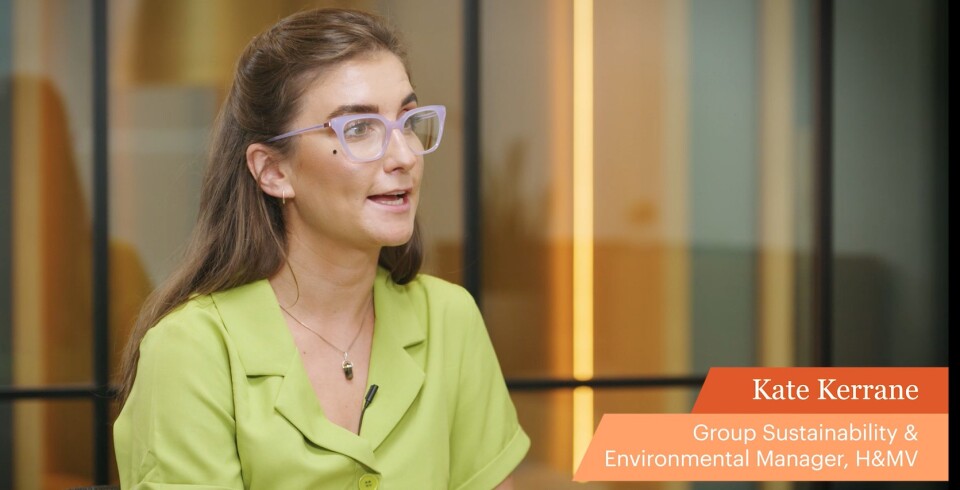
Kate Kerrane | Group Sustainability and Environmental Manager | H&MV Engineering
Kate Kerrane has built her career at the intersection of engineering, sustainability, and infrastructure delivery. Her journey reflects a clear and consistent purpose – to create meaningful impact through systems that support the energy transition and long-term environmental responsibility. Today, as Group Sustainability and Environmental Manager at H&MV Engineering, she plays a central role in shaping how large-scale infrastructure can be delivered with intelligence, efficiency, and measurable environmental performance. At EliteX, we are proud to have Kate Kerrane as Cover Story of the edition: Visionary Women in Construction, 2026.
Her professional path began at the University of Galway, formerly known as the National University of Ireland Galway, where she studied Energy Systems Engineering with Electrical Engineering. She was drawn to the discipline because she understood that infrastructure underpins everything – from energy security to climate action and economic development. She wanted to work in a field where technical knowledge translated directly into real-world outcomes. The complexity of energy systems and the urgency of global decarbonisation shaped her early ambition.
The future of construction is not about building more – it is about building better.
Before moving fully into infrastructure delivery, she gained international exposure through her work with Student Energy, a global non-profit that empowers young leaders in the energy and climate sector. As Community Manager, she supported a worldwide network of emerging professionals and represented the organisation at major international forums, including the United Nations COP conferences and the Web Summit. Engaging in these high-level discussions gave her a broad perspective on the scale of the global energy transition. It reinforced her belief that change must happen both globally and locally, and that engineering solutions are central to achieving climate targets.
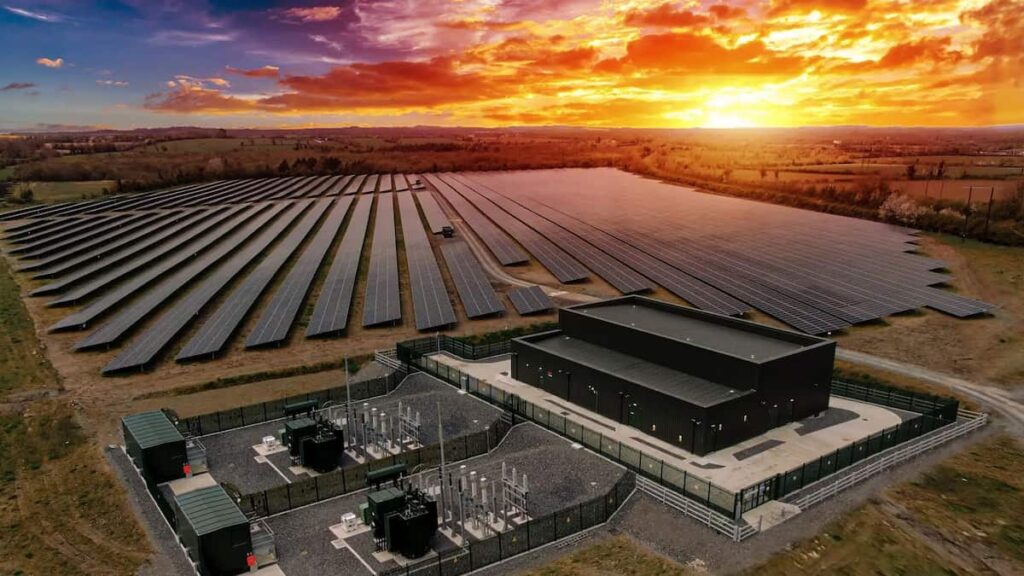
She then joined ESB, Ireland’s national electricity utility, where she spent five years designing high-voltage substations for large-scale renewable energy projects. Her work directly supported the integration of wind and solar energy into Ireland’s electricity grid. Within the Renewable and Flexibility Planning team, she focused on ensuring that higher levels of renewable energy could be safely and reliably integrated into national infrastructure. This period strengthened her technical foundation and gave her hands-on experience in delivering complex energy projects.
While at ESB, she also contributed to the Smart Metering rollout, a nationwide initiative aimed at modernising electricity consumption data and enabling more efficient energy management. She became involved in health, safety & environment initiatives as well, which deepened her understanding of operational excellence and risk management. These experiences shaped her belief that infrastructure must not only be technically robust but also efficient, safe, and future-ready.
Her career progressed into large-scale wind, solar, and battery storage projects, where she began embedding sustainability practices directly into project delivery. Rather than treating sustainability as an external reporting requirement, she focused on integrating it into engineering design, procurement, and construction processes. During this time, she completed further studies in Design Thinking for Sustainability at University College Dublin. This programme strengthened her approach to systems thinking and user-centred innovation, equipping her to address complex infrastructure challenges with structured creativity and strategic foresight.
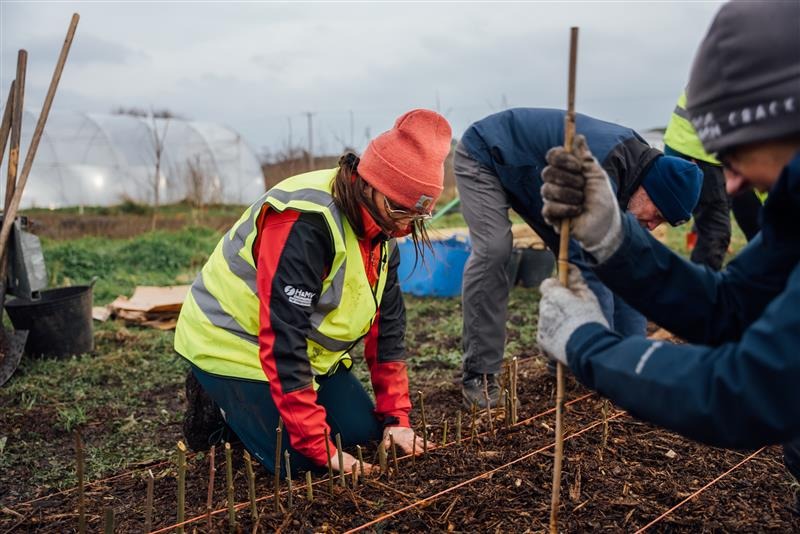
Today, at H&MV Engineering, she leads the organisation’s sustainability strategy across regions. H&MV Engineering is a global provider of high-voltage design, engineering, and construction services, supporting renewable energy infrastructure and data centres. Within this environment, her role sits at a strategic level while remaining closely connected to project delivery. She oversees ESG strategy, environmental compliance, and sustainability performance across operations.
Her responsibilities include managing Scope 1, 2, and 3 emissions reporting, collaborating with all departments, and driving initiatives such as zero waste to landfill, fleet decarbonisation, biodiversity restoration, and sustainability innovation projects. She is currently leading the implementation of Microsoft Sustainability Manager to improve data visibility and strengthen decision-making processes. By improving data integrity and traceability, she ensures that sustainability performance can be measured, analysed, and improved in real time.
One of her most significant achievements has been the development and implementation of a long-term ESG strategy for the organisation. This includes establishing a Net Zero by 2045 commitment, setting biodiversity enhancement objectives, and creating structured decarbonisation pathways for fleet and operations. She has led comprehensive Scope 3 emissions assessments across complex substation supply chains – an area often considered one of the most challenging aspects of carbon accounting due to its scale and variability.
She has also launched sustainability training programmes and structured environmental compliance frameworks across construction sites, shifting sustainability from a reporting function to a delivery function. This transition is particularly important in construction, where site-level execution determines real environmental impact. By embedding clear standards and accountability into project phases, she has strengthened both compliance and operational performance.
Her leadership is driven by impact. She believes construction is one of the most powerful levers available to influence climate outcomes, biodiversity protection, safety performance, and social value creation. Infrastructure decisions shape emissions profiles for decades. For her, leadership in construction is not about titles but about responsibility – ensuring that systems built today remain resilient for generations.
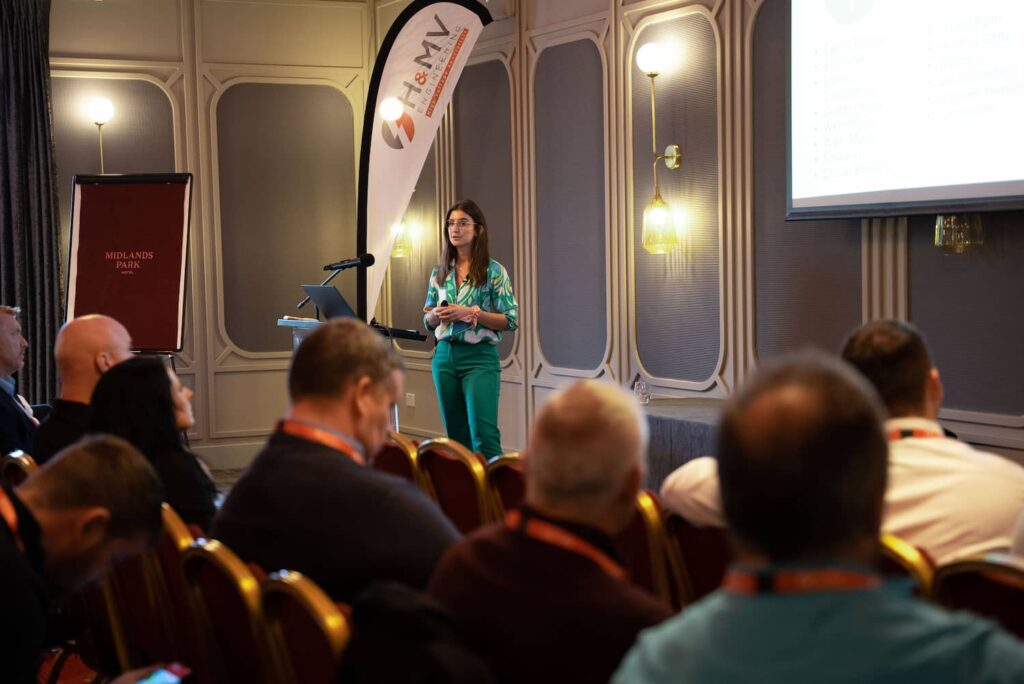
As a woman in a traditionally male-dominated industry, she has faced challenges, particularly in the early stages of her career when she was often the only woman in engineering meetings or on site. She recognised that the barrier was rarely technical capability but often visibility and confidence. She focused on preparation, clear communication, and technical excellence. Over time, credibility created its own momentum. She believes leadership does not require changing one’s identity. Empathy, strategic & critical thinking, and technical competence can coexist and strengthen each other.
She actively supports equality, diversity, and inclusion within H&MV Engineering. The company has embedded ED&I into its ESG objectives, ensuring accountability and measurable progress. She is part of the RISE Women’s H&MV Leadership Accelerator Programme, which supports female leadership development and increases senior representation. Beyond structured programmes, she advocates for transparent access to leadership opportunities, project exposure, and career progression pathways. She sees diversity not only as a cultural imperative but as an operational advantage that strengthens innovation, risk management, and safety performance.
If we want real climate impact, we must build infrastructure differently.
In terms of innovation, her focus has been on integration. She introduced a structured environmental compliance audit framework across project phases and advanced the organisation’s Green Site objective to raise sustainability standards on construction sites. She supported the development of a Carbon Calculator objective that quantifies project-level emissions and identifies reduction opportunities early in design and delivery. By moving sustainability upstream into planning and procurement, she has ensured that environmental performance enhances overall efficiency rather than competing with it.
Balancing quality, cost, and sustainability remains a central theme in her work. She approaches sustainability as a value driver rooted in efficiency and lean processes. Poor planning, waste generation, rework, and unmanaged risk are what drive unnecessary expenditure. By embedding carbon awareness, smarter material selection, and optimised logistics into early project stages, both financial and environmental performance improve. She emphasises lifecycle thinking, recognising that short-term savings that generate long-term environmental or operational risks rarely represent true value.
For future leaders in construction, she believes systems thinking, innovation capability, data literacy, and risk management are essential. Technical competence remains fundamental, but it must be complemented by strategic awareness and cross-disciplinary communication skills. As digitalisation accelerates, she encourages leaders to leverage artificial intelligence and analytics responsibly, ensuring that technology enhances judgement rather than replacing critical thinking.

She remains active in industry forums, ESG networks, innovation committees, and policy discussions to stay updated in a rapidly evolving sector. Carbon accountability frameworks, digital reporting standards, and biodiversity integration requirements continue to advance. Continuous learning is not optional but necessary.
Her advice to young women entering construction is practical and encouraging. The industry needs engineers, strategists, environmental specialists, digital experts, and leaders. It is broader and more dynamic than many perceive. She advises focusing on competence, seeking mentors, asking questions, and building confidence through action. Progress comes through engagement and persistence.
Looking ahead, her focus is on delivering measurable progress against sustainability commitments. This includes publishing clear Net Zero transition plans and establishing transparent carbon reduction roadmaps across operations and supply chains. She believes the construction industry will become increasingly data-led, transparent, and performance-focused. Carbon tracking, circularity, digital integration, and biodiversity enhancement will move from ambition to expectation.
Sustainability is not a reporting exercise – it is a delivery responsibility.
For Kate Kerrane, construction is not simply about delivering physical assets. It is about building smarter systems that last and accelerate the energy transition responsibly and at scale. By aligning engineering excellence with sustainability strategy, she continues to shape infrastructure that supports both responsible growth and climate resilience.