Aanchal Gupta – Building Secure Digital Futures Across Borders
Influential Cybersecurity Woman of the Year, 2026
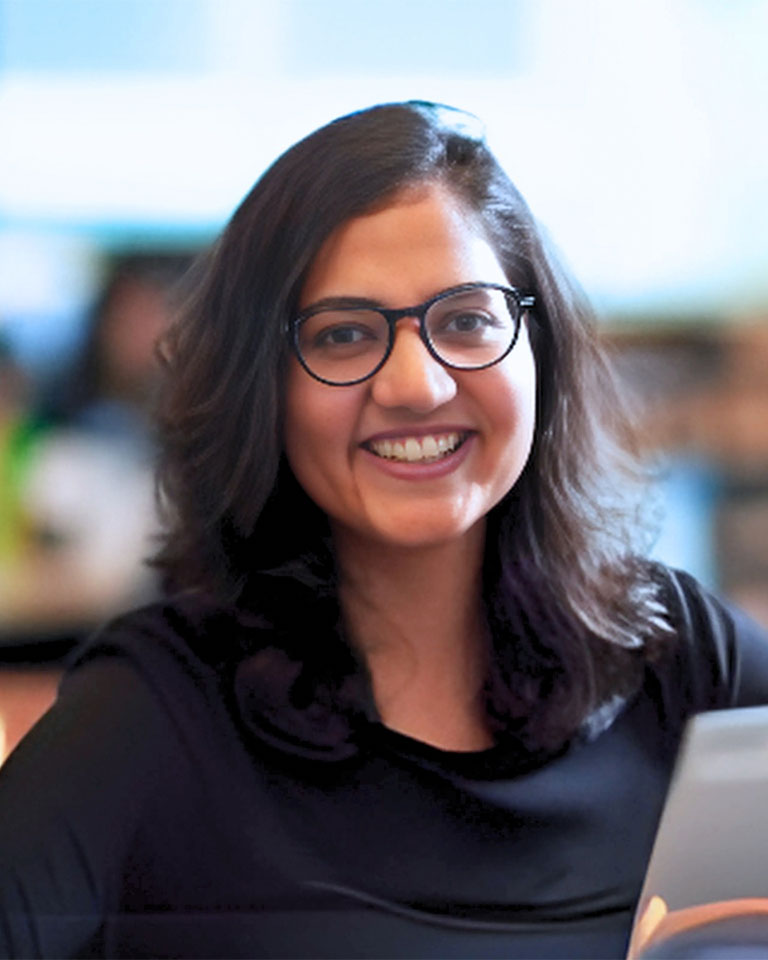
Aanchal Gupta’s journey into cybersecurity began long before the field became one of the most critical industries in the world. In 2005, during her undergraduate studies, she built a face detection algorithm at a time when visual AI was still in its early stages. What started as an academic project has today evolved into technology widely used across industries. Face detection and visual AI applications now support worker safety, education systems, and manufacturing processes by identifying defects and monitoring compliance.
That early exposure to building intelligent systems laid the foundation for her long-term engagement with digital security and advanced technologies. We, at EliteX, are proud to have Aanchal Gupta as the Influential Cybersecurity Woman of the Year, 2026.
Her formal move into cybersecurity was shaped by both timing and geography. In 2016, she relocated from Europe to Asia, drawn by the region’s rapid technological growth. Asia was experiencing explosive digital transformation, with cloud adoption accelerating and startups scaling at unprecedented rates. However, with rapid digitization came increased vulnerability. Data breaches and cyber incidents were rising in parallel with innovation. Around this time, an opportunity emerged with Cloudflare, which was looking to expand its operations across Asia. While she had been considering starting something independently, the prospect of building a regional presence from the ground up was compelling. The opportunity allowed her to launch new products in emerging markets and witness firsthand the evolution of cybersecurity in one of the world’s fastest-growing digital ecosystems.
Cybersecurity offers endless challenges because every new attack forces innovation.
Today, Aanchal works on launching new offerings and expanding markets for Agents Stack, an outcome-driven consulting platform built on governance by design. The focus areas include cyber risk, ESG risk, and AI risk. Her role centers on aligning execution with long-term strategy for customers. Rather than treating cybersecurity as a technical add-on, she approaches it as a strategic business enabler. Her work involves breaking down large transformation goals into manageable components while ensuring that governance frameworks are embedded from the beginning. By focusing on outcomes rather than isolated tools, she helps organizations design systems that are resilient, measurable, and adaptable.
Throughout her career, one of the major challenges she faced was building diverse teams in a highly specialized industry. Early in her journey, achieving diversity required significantly more effort. It often meant conducting ten times more interviews to assemble a team that reflected varied perspectives and backgrounds. However, she persisted because she believed diversity was not optional in cybersecurity. Over time, as her professional network expanded and she developed strong leadership credibility, building diverse teams became more organic. A diverse leadership structure naturally led to diversity across functions, improving problem-solving capacity and strengthening organizational culture.
Among her many accomplishments, she considers her greatest achievement to be balancing a fast-growing international career while raising two young children. For her, personal success is deeply intertwined with family. She values time spent with her children and finds the outcomes in parenting more immediate and visible than in corporate environments, where navigating organizational structures can delay results. At the same time, she remains passionate about building cybersecurity capacity in the countries she works in. Strengthening local expertise and developing long-term resilience is central to her mission.
The cybersecurity landscape changes rapidly, and Aanchal believes continuous learning is non-negotiable. She is currently pursuing a fully remote master’s degree to stay ahead of industry developments. Alongside formal education, she attends seminars and actively reads research and industry updates. In her view, there is no simple way to keep up with the pace of change. Commitment to learning is essential because emerging threats evolve faster than traditional defenses.
Success is defined by intellectual fulfillment and personal balance.
Looking ahead to 2026, she identifies attacks on critical infrastructure as one of the most pressing concerns. As global supply chains shift and countries emphasize localization and value-added manufacturing, digital systems supporting telecommunications, water supply, and energy grids become prime targets. Nation-level assets are increasingly exposed to sophisticated cyber threats. At the same time, artificial intelligence is advancing at remarkable speed. While AI enhances defense capabilities, it also empowers attackers to automate and scale their methods. This dual-use nature of AI demands vigilant governance and strong defense frameworks.
Her approach to strengthening cybersecurity practices within organizations begins with identifying gaps and building trust as an advisory partner. Rather than overwhelming teams with tools, she emphasizes risk prioritization. Data visibility is critical, but raw data alone is not sufficient. It must be actionable. AI can automate large-scale data analysis, allowing human teams to focus on high-impact risks. Operational Technology security is another major focus area. As industries digitize core processes to improve efficiency, the attack surface expands. Remote access to air-gapped systems, when designed securely, becomes part of the solution for modern industrial operations.
Leadership plays a decisive role in building a strong cybersecurity culture. Phishing remains one of the most common attack vectors. Despite working in security-focused environments, she has witnessed colleagues fall victim to simple phishing schemes. This highlights a fundamental truth: cybersecurity is primarily about awareness and governance, not just technology. Executive leadership must drive compliance frameworks and create a culture of vigilance. Education and consistent reinforcement of secure practices are more powerful than any standalone tool.
As a woman leader in cybersecurity, Aanchal does not describe facing direct obstacles specific to her gender within the field. However, she strongly advocates for increasing diversity across the industry. Understanding human behavior is essential in cybersecurity, and diverse perspectives enhance design thinking and threat modeling. The success of teams she has been part of reinforces her belief that inclusive environments lead to stronger outcomes. Cybersecurity benefits from varied viewpoints because attackers themselves are diverse and unpredictable.
For women aspiring to build careers in cybersecurity, she describes the field as both dynamic and rewarding. Cybersecurity presents endless challenges because threats continually evolve. Each new attack forces defenders to innovate. For individuals who enjoy solving complex problems, the field offers sustained intellectual stimulation and long-term career growth. There is always a new challenge waiting to be addressed, making stagnation unlikely.
Simplifying cybersecurity is the need of the hour in an AI-driven world.
Balancing innovation and risk management is another core principle in her work. Every new product introduced into a customer’s environment carries inherent risk. During her time at Cloudflare, one effective strategy was becoming the first internal customer of every new product. By adopting and stress-testing innovations internally, teams could better understand potential vulnerabilities. After building internal confidence, products were introduced to external customers through controlled pilots. Scaling occurred only after measurable trust was established. This methodical approach reduced risk while encouraging innovation.
Looking toward the future, she believes simplification is the next major trend in cybersecurity. Organizations currently face vendor sprawl, often managing dozens of overlapping tools. AI creates opportunities to consolidate solutions into a streamlined ecosystem of four to six integrated platforms that offer comprehensive visibility and actionable insights. However, supply chain and IoT attacks remain significant risks. As AI becomes embedded in hardware and software, consistent patching and proactive defense across the supply chain become mandatory rather than optional.
Success, for Aanchal, is defined by intellectual fulfillment and personal balance. Professionally, it means solving challenging problems and contributing to resilient digital ecosystems. Personally, it means spending meaningful time with her children, helping them learn new things, and traveling across the world. Titles and financial rewards are secondary outcomes. When intellectual curiosity and personal passion are aligned, external recognition naturally follows.
Her message to the next generation of cybersecurity leaders is clear. The field should embrace as much diversity as possible and position itself as an exciting, problem-solving domain comparable to gaming or entertainment in its dynamism. Cybersecurity is the foundational layer of future infrastructure, especially in an AI-driven world. It touches every industry, from healthcare to manufacturing to finance. For those willing to continuously learn and adapt, it offers not just a career but a long-term opportunity to shape the digital future.
Cybersecurity is primarily about awareness and governance, not just technology.