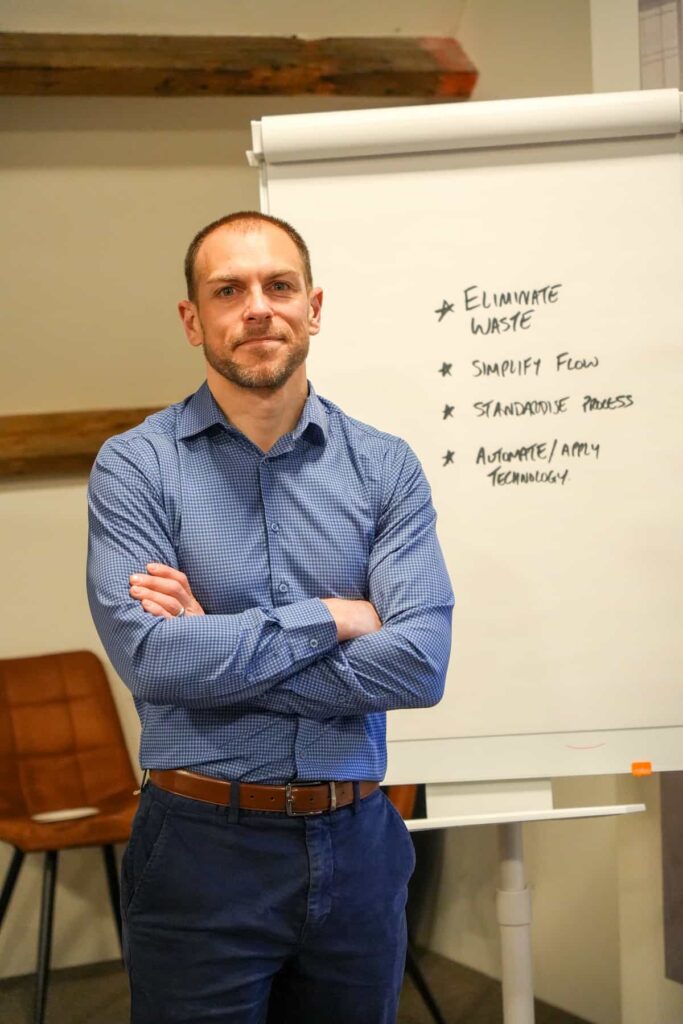
James Cuthbert, Managing Director of Henkan, has spent more than two decades helping organizations improve performance through operational excellence, leadership development, and digital transformation. Throughout his career, he has worked across multiple industries, including aerospace, defense, healthcare, utilities, telecommunications, and nuclear sectors.
James Cuthbert | Managing Director | Henkan
His experience has given him a deep understanding of how organizations operate and what it takes to create lasting improvements. At EliteX, we are proud to have James Cuthbert as Cover Story of the edition: 2026’s Visionary Manufacturing Leaders Driving Industry 4.0.
His professional journey began in engineering, where he worked with BAE Systems in aerospace and submarine manufacturing. He later expanded his expertise across the manufacturing and FMCG sectors, leading operational excellence and transformation initiatives for global organizations. These early experiences allowed him to gain firsthand knowledge of complex manufacturing environments and the challenges faced by operational teams. Later, he moved into consulting with KPMG, where he led operational excellence and transformation programs for major organizations. This combination of engineering expertise and strategic consulting helped shape his unique approach to organizational improvement.
Great operations are built through consistent habits and empowered teams.

Over the years, James became increasingly interested in the relationship between people, systems, and technology. While many organizations focus heavily on tools and technology when attempting transformation, he observed that sustainable success depends on much more than technical solutions. He realized that many businesses struggle because their strategy, leadership, culture, and operational systems are not properly aligned. This understanding became a defining principle throughout his career and eventually led him to his leadership role at Henkan.
At Henkan, James has focused on helping organizations achieve sustainable transformation by balancing operational excellence with human behavior. He believes that successful organizations are built not only on efficient processes but also on strong leadership habits, effective decision-making environments, and engaged teams. Under his guidance, Henkan has developed a reputation for helping organizations create meaningful and lasting improvements that extend beyond short-term performance gains.
One of the key factors that inspired James to pursue leadership in manufacturing and innovation was his fascination with complex systems and untapped organizational potential. Early in his career, he witnessed how relatively small improvements in teamwork, leadership behavior, communication, and process discipline could create significant performance improvements. These experiences reinforced his belief that true transformation comes from empowering people rather than relying solely on technology.
Throughout his professional journey, James noticed that many transformation initiatives focused heavily on technological implementation while overlooking the human side of change. Organizations often invested significant resources into automation, digital systems, and advanced tools, yet failed to achieve expected outcomes because employees did not understand the purpose behind the changes or feel ownership of the transformation process. This observation strengthened his commitment to bridging the gap between technical excellence and effective leadership.
He believes that some of the most rewarding moments in transformation occur when individuals and teams stop viewing themselves as victims of problems and begin seeing themselves as active contributors to solutions. Helping leaders and employees develop confidence, accountability, and problem-solving capabilities has become one of the most fulfilling aspects of his work.
Manufacturing remains a sector that James is particularly passionate about. He appreciates the unique combination of technical challenges, operational complexity, and human interaction that exists within manufacturing environments. He also sees manufacturing as a critical driver of economic growth and innovation, making it an industry with enormous potential for future development.
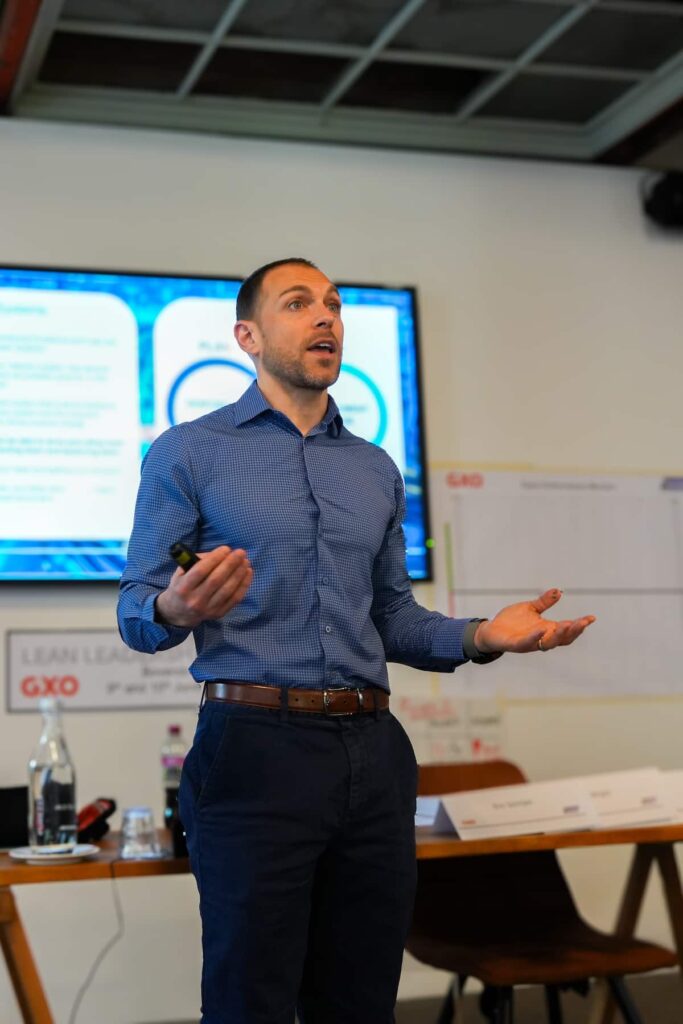
Data creates insight, but people create meaningful change.
When discussing Industry 4.0, James takes a broader view than many industry professionals. While Industry 4.0 is often associated with automation, artificial intelligence, robotics, and the Internet of Things, he believes its true value lies in creating connected operational ecosystems. In his view, successful Industry 4.0 implementation occurs when people, processes, assets, and data work together seamlessly to support better decision-making and faster organizational learning.
James often emphasizes that technology alone cannot solve operational challenges. If inefficient processes already exist, digitizing them may simply increase the speed at which problems occur. Therefore, organizations must first establish strong operational foundations before leveraging advanced technologies. The most successful companies, according to James, combine digital capability with operational discipline, workforce engagement, leadership routines, and strong problem-solving cultures.
His perspective is heavily influenced by systems thinking. He believes that the vast amounts of data generated by modern technologies are only valuable if organizations use them to make better decisions. Technology should strengthen effective leadership and operational systems rather than compensate for weaknesses within them. This balanced approach allows organizations to maximize the benefits of innovation while maintaining stability and accountability.
Data creates insight, but people create meaningful change.
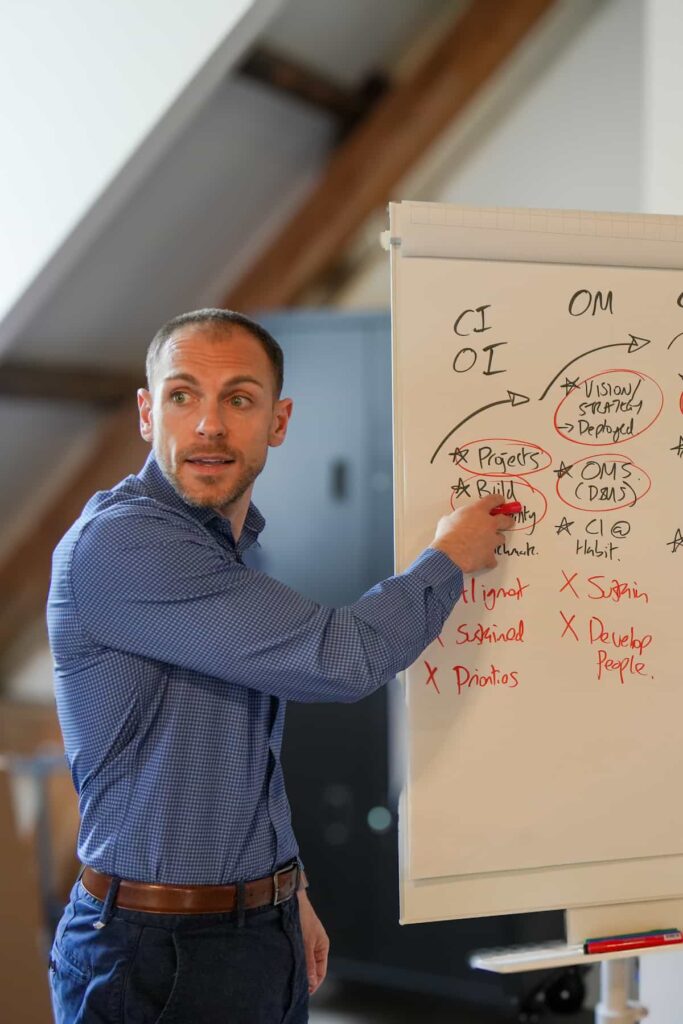
At Henkan, James has led significant transformations that blend traditional operational excellence methodologies with modern digital capabilities. The company has evolved from focusing primarily on Lean and Total Productive Maintenance programs to supporting organizations in building digitally enabled operational excellence systems. These systems integrate technology into daily management routines while maintaining a strong emphasis on leadership and human performance.
One area of focus has been helping organizations connect enterprise systems, operational management frameworks, and decision-making processes. James has observed that many digital initiatives fail because technology is implemented separately from operational behaviors. This disconnect often creates confusion regarding ownership, accountability, and expected outcomes. By integrating technology with established operational practices, organizations can achieve greater clarity and long-term success.
More recently, Henkan has expanded its work in artificial intelligence by developing AI-enabled operational excellence workshops and frameworks. These initiatives help organizations identify practical applications for AI in areas such as maintenance, planning, cost management, root cause analysis, and continuous improvement. James believes that the key to successful digital transformation is making technology practical, operational, and relevant to everyday business challenges.
The future of manufacturing belongs to organizations that combine innovation with discipline.
The influence of automation, artificial intelligence, and connected technologies continues to grow across manufacturing and operations. James sees these technologies fundamentally changing the speed and quality of decision-making. Organizations now have access to data and insights that enable them to identify risks, inefficiencies, and performance issues before they become major problems.
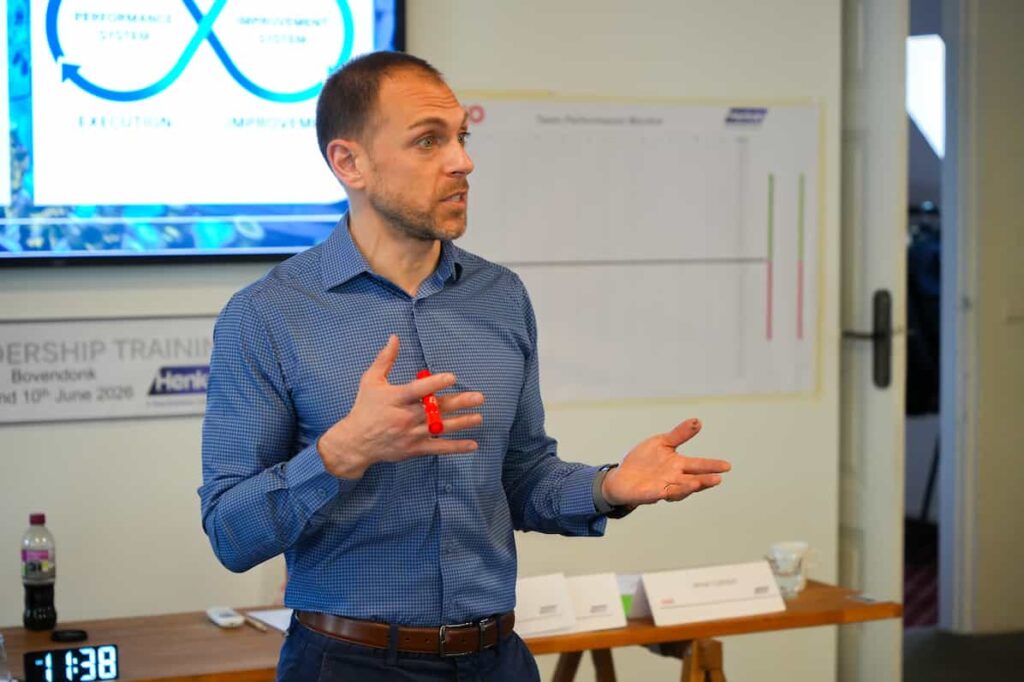
Artificial intelligence and advanced analytics are helping organizations transition from reactive management to predictive operations. Instead of simply analyzing historical data, leaders can anticipate future challenges and take proactive action. However, James also cautions against overreliance on poor-quality data. He has witnessed situations where organizations invest heavily in business intelligence systems that generate misleading insights due to inaccurate or incomplete data. In such cases, technology may create a false sense of confidence rather than genuine improvement.
Internet of Things technologies and condition-monitoring systems have also transformed asset management. Operators and engineers can now monitor equipment performance, downtime patterns, process variations, and energy consumption with greater accuracy than ever before. These capabilities allow organizations to optimize performance while reducing waste and operational risks.
Despite these technological advancements, James remains convinced that the greatest opportunity lies in enhancing human capability rather than replacing people. He envisions a future where technology simplifies decision-making, supports innovation, and enables employees to focus on higher-value activities such as coaching, problem-solving, and strategic thinking. In his view, the future is not about humans competing with machines but about humans and technology working together effectively.
Throughout his career, James has been involved in numerous successful transformation projects. One notable example involved a defense manufacturing organization where his team identified £1.4 million in savings within ten weeks through workforce redesign and improved utilization strategies. The broader initiative generated an overall savings opportunity of £11.7 million for the organization.
Henkan has also supported major operational excellence deployments for organizations such as Heineken, Philips, and GKN Aerospace. These projects focused not only on efficiency improvements but also on building sustainable organizational capability. The results included substantial improvements in equipment reliability, reductions in machine breakdowns, and significant increases in operational performance. For James, these achievements demonstrate that sustainable success is driven by leadership engagement, ownership, discipline, and belief rather than tools alone.
Workforce adaptation remains another critical area of focus. James understands that introducing new technologies can create uncertainty and resistance if employees do not understand their purpose. To address this challenge, he emphasizes the importance of connecting technology to real-world operational problems. When employees can see how digital tools reduce frustration, improve performance, and support better decision-making, adoption becomes much more successful.
Sustainable transformation begins with leadership, not just tools.
At Henkan, learning and development are approached through practical experience, coaching, and reflection. James believes that mindset, skillset, and toolset must evolve together. Organizations cannot simply provide new technology and expect transformation to occur automatically. Confidence, ownership, and capability must be developed alongside technological implementation.
Data plays an essential role in James’s decision-making philosophy. However, he stresses that context is just as important as information. Modern organizations often collect enormous amounts of data, yet many still struggle to make confident decisions. The goal should not be to generate more dashboards but to create meaningful insights that drive action.
His approach combines quantitative analysis with operational observation and human understanding. Some of the most valuable insights come from leaders spending time on the shop floor, observing processes, speaking with employees, and understanding operational realities firsthand. Data should support curiosity and learning while complementing, rather than replacing, leadership judgment.
Sustainability has become increasingly important within manufacturing, and James views it as an integral part of operational excellence. Reducing waste, improving energy efficiency, extending asset life, and optimizing resource utilization all contribute to both environmental responsibility and financial performance. In many cases, the most sustainable organizations are also the most operationally disciplined.
He believes emerging technologies such as AI and predictive analytics will play a major role in helping manufacturers reduce environmental impact. These tools can optimize energy consumption, minimize material losses, improve supply chain sustainability, and support smarter long-term decision-making.
As organizations grow, maintaining consistency and quality becomes increasingly challenging. James believes that successful scaling requires strong systems, clear standards, effective governance, and disciplined leadership. Without these elements, different teams and locations often develop their own interpretations of best practices, leading to inconsistency and inefficiency.
At the same time, he recognizes the importance of balancing standardization with flexibility. Organizations must create systems that provide consistency while allowing local teams to adapt to operational realities. Leadership coaching and capability development are therefore essential components of sustainable growth.
To remain competitive in an increasingly complex manufacturing landscape, James emphasizes the importance of curiosity and adaptability. The industry is evolving rapidly due to advances in AI, automation, sustainability requirements, workforce changes, and geopolitical factors. Organizations that succeed will be those that continuously learn, experiment, and challenge existing assumptions.
While staying informed about emerging technologies is important, James remains committed to the fundamentals of leadership, accountability, communication, and disciplined execution. He believes organizations can sometimes become overly focused on trends and tools while neglecting the foundational principles that drive long-term success.
Innovation, in James’s view, begins with psychological safety. Employees must feel comfortable challenging assumptions, sharing ideas, and learning from mistakes. Without this environment, innovation remains superficial and disconnected from operational reality.
At Henkan, innovation is integrated into daily management and continuous improvement activities rather than treated as a separate function. James encourages frontline teams to view themselves as active contributors to business performance rather than simply operators. This mindset shift often becomes the foundation for meaningful and sustainable innovation.
For emerging manufacturing leaders, James offers straightforward advice. While technical expertise remains important, leadership is ultimately about creating environments where others can succeed. He encourages leaders to develop coaching skills, build trust, simplify complexity, and remain committed to continuous learning.
Technology delivers value when it strengthens people, processes, and purpose.
He also stresses the importance of mastering the basics. Consistency, communication, visibility, accountability, and disciplined execution often deliver better results than ambitious transformation programs that lack operational discipline. Sustainable transformation is built through daily habits and leadership behaviors rather than isolated initiatives.

Looking toward the future, James believes manufacturing will become increasingly connected, intelligent, and adaptive. Artificial intelligence, digital twins, predictive analytics, and automation will significantly improve visibility and decision-making capabilities. Factories will become more data-driven and responsive to changing conditions.
However, he also believes that these technological advancements will make leadership, culture, and workforce capability even more important. Organizations that thrive will be those that successfully combine advanced technology with empowered people, strong operational systems, and a clear sense of purpose.
The future of manufacturing, according to James Cuthbert, is not a competition between humans and technology. Instead, it is a partnership where both work together to create smarter, safer, more resilient, and more sustainable organizations. Through his leadership at Henkan, he continues to help businesses navigate this transformation by aligning people, technology, and operational excellence to unlock long-term success.