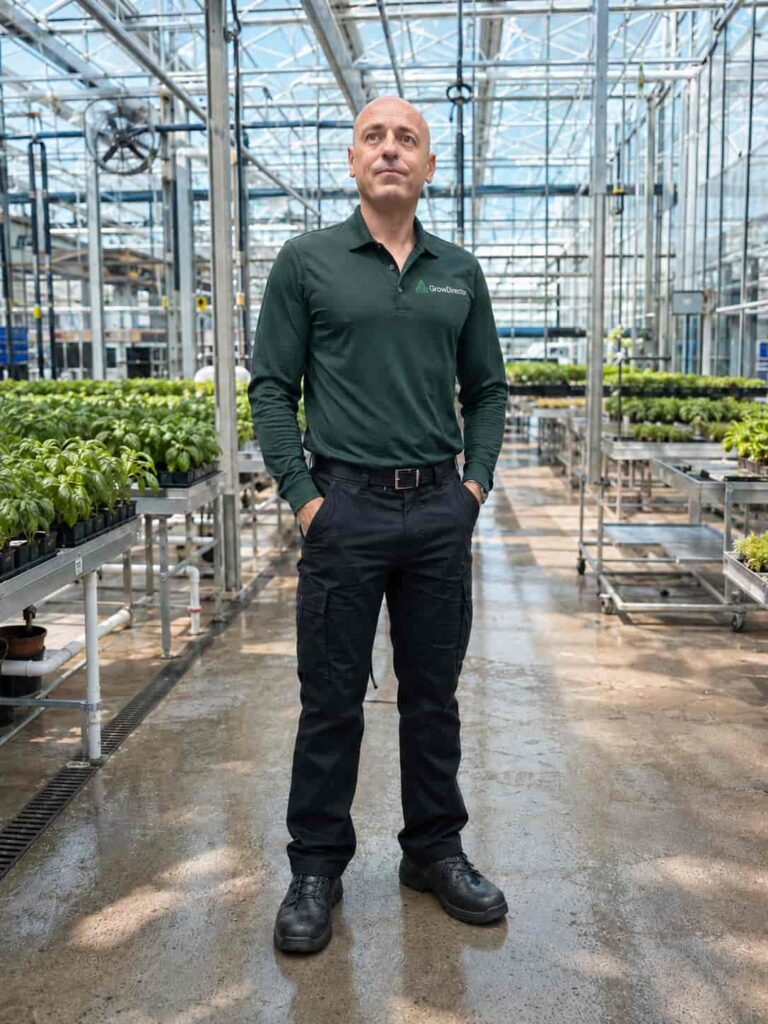
Dima Chernobilsky, co-founder and CEO of GrowDirector, represents a new kind of leader in digital agriculture – one who entered the field not through tradition, but through curiosity, failure, and a strong desire to solve real problems. His journey into agriculture did not begin in a greenhouse.
Dima Chernobilsky | Co-founder and CEO | GrowDirector
It began in finance, business development, and management, where he worked across different markets and countries. But agriculture soon captured his attention. At first, like many people outside the industry, he thought growing was simple. Seeds, water, and time seemed enough. Then he failed, and those failures became the beginning of his deeper understanding. At EliteX, we are proud to have Dima Chernobilsky as part of the edition: Visionary Leaders Transforming Digital Agriculture, 2026.
Through those early experiences, Dima realized that agriculture is one of the most complex and demanding industries in the world. A grower is not only growing plants. A grower is managing climate, irrigation, nutrition, labor, timing, equipment, mistakes, costs, and business pressure at the same time. One small error in temperature, humidity, water, or nutrients can affect the entire crop. This understanding shaped his mission. He wanted to help growers control more, guess less, and make fewer costly mistakes. That practical idea became the foundation of GrowDirector.
Smart agriculture must be practical, affordable, and useful tomorrow morning.
GrowDirector was created to make serious greenhouse automation easier, more affordable, and more useful for real growers. Dima saw that many automation systems were too expensive, too complex, or designed only for very large operations. Smaller and medium-sized growers also needed reliable technology, but they could not always afford heavy systems or depend on engineers every time they wanted to make a change. GrowDirector answers this challenge by helping growers connect sensors, irrigation, fertigation, climate equipment, fans, pumps, lights, and other devices into one system. Through this, growers can monitor and control their operations from one place, including from a phone or computer.
For Dima, technology is valuable only when it helps the grower in daily work. He does not believe in technology that only looks impressive in a presentation. He believes in tools that reduce manual work, improve control, send faster alerts, create better data, and lower stress. This practical thinking is central to his leadership. He understands that farmers and growers do not adopt technology because it sounds modern. They adopt it when it helps them save time, reduce waste, protect crops, and improve results.
Dima believes the biggest changes in agriculture today are coming from the combination of sensors, automation, data, and artificial intelligence. Sensors show what is happening, but they are not enough by themselves. Automation can control equipment, but it must not work blindly. The real value comes when systems collect data, understand patterns, and help growers make better decisions. For him, AI is not important as a buzzword. It becomes important when it can detect a problem early, explain why humidity is unstable, suggest how to save energy, or help a less experienced grower get a clear answer.
This approach is especially important because growers today face serious challenges. Labor is harder to find and more expensive. Energy, water, fertilizer, and equipment costs continue to rise. At the same time, growers are expected to produce better and more stable quality with fewer mistakes. Dima does not believe technology should replace the grower. Instead, he believes it should make the grower stronger. A good system can take over repetitive tasks, check data continuously, send alerts, control equipment, and help prevent problems before they become expensive.
Real innovation begins when it solves a grower’s daily problem.
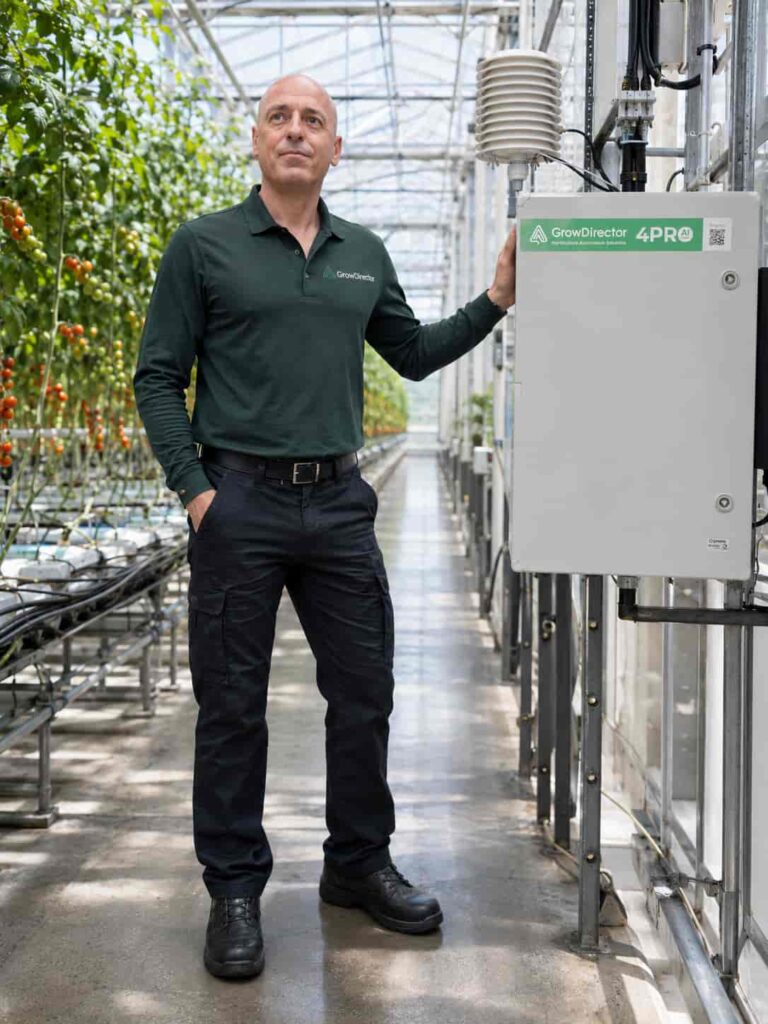
One example of GrowDirector’s impact can be seen in a hydroponic herbs and lettuce operation in New Jersey. Before using GrowDirector, the farm was handling many tasks manually, including checking pH, monitoring nutrients, adjusting conditions, and reacting to problems. The grower needed climate control, UV control, temperature control, and better monitoring in one place. After implementing GrowDirector 4 PRO, the grower was able to manage different parts of the farm more easily, receive alerts, control systems remotely, and reduce guessing. What mattered most to Dima was that the grower did not describe the system as fancy technology. He spoke about saving fertilizer, managing multiple crops, and making the farm easier to operate. For Dima, that is real impact.
Sustainability is also an important part of Dima’s vision, but he believes it must make business sense. He understands that growers cannot adopt sustainable solutions if those solutions are too expensive or make their work harder. Good automation can reduce water waste, fertilizer waste, energy waste, and crop losses. At the same time, it can help growers reduce costs and improve consistency. For Dima, true sustainability is not only about environmental responsibility. It is also about helping growers build stronger and more profitable businesses.
Climate change has made this mission even more urgent. Unstable weather, extreme heat, water problems, and pressure for consistent production are pushing agriculture toward better control and smarter systems. Greenhouses and controlled environment agriculture are becoming more important, but even inside a greenhouse, growers need reliable control. Dima believes climate change will continue to push the industry toward better data, stronger automation, and faster decision-making.
As a leader, Dima values vision, patience, honesty, and practical thinking. He believes agriculture is not a place for fantasy. Growers have real bills, real crop problems, and real market pressure. Innovation must be connected to these realities. He encourages his team to listen to growers, learn from support conversations, test ideas, and stay open to change. At the same time, he pushes them to remain practical. For him, innovation is not about looking smart. It is about solving something that matters.
Dima also advises young entrepreneurs entering agri-tech to be careful with hype. Agriculture is a large market, but it is not an easy one. Not every impressive technology is something a farmer will pay for. His advice is to spend time with growers, understand their daily problems, study their economics, and build for the person who needs the farm to work every morning. Looking ahead, he sees AI, automation for existing greenhouses, and better integration between agronomy and business decisions as major trends in the next five years.
Being recognized in Visionary Leaders Transforming Digital Agriculture, 2026 is meaningful for Dima because it reflects a journey filled with mistakes, learning, rebuilding, and persistence. But he remains grounded. Recognition is valuable, yet the real work continues every morning when growers need fewer problems, better control, and stronger results. Through GrowDirector, Dima Chernobilsky is helping shape a future where digital agriculture is not complicated or distant, but practical, accessible, and built around the real needs of growers.
Technology should make the grower stronger, not replace the grower.