Dr. Chet Nicklas: Leading STEM Excellence Across the Alabama Black Belt
Impactful Leader in Education, 2025

Dr. Chet Nicklas is known as an educator who brings energy, commitment, and heart into every role he takes. He currently serves as the Director of the Black Belt STEM Education Institute at the University of West Alabama, a position he began in October 2022. His journey into education started long before this role, shaped by his love for science, his passion for working with young people, and his belief that real change begins with relationships. We, at The EliteX, are proud to have Dr. Chet Nicklas as the Impactful Leader in Education, 2025
Chet Nicklas | Black Belt STEM Institute Director
Before joining the university, he worked as a chemistry teacher, football coach, and bus driver at Clarkdale High School near Meridian, Mississippi. He also spent two years at Meridian High School before moving to Clarkdale in 2013. His early years in the classroom and on the field shaped his leadership style, his understanding of student needs, and his commitment to excellence. His personal life is a strong foundation for everything he does. He met his wife, Janna, while working at DirecTV during his college years, and today they share two sons, Bearon and Colston, both of whom attend Clarkdale. His sons play sports year-round and have grown up around athletics and teamwork.
“Say yes more than you say no. Every meeting, every conversation, and every opportunity might open a door you never expected.”
One of his most meaningful memories was coaching his junior high football team during his last season, with his son Bearon playing as the quarterback. For him, family and professional joy often connect, and he considers himself blessed in both areas. His work at the University of West Alabama continues a long relationship with leaders who have guided him since childhood. The Black Belt STEM Institute was established in 2022 through the vision of Dr. Jan Miller and Dr. Reenay Rogers, who recognized the need for stronger STEM education in the Alabama Black Belt. Dr. Miller, who was once his elementary and high school principal and later the chair of his dissertation committee, hired him to lead the new institute. This long history of mentorship and support has shaped the direction of his career.
Although STEM is now a defining part of his identity, his journey began differently. He first entered college with the intention of pursuing a career in the medical field, majoring in Biology. As he progressed, he realized the financial and time commitment required for medical school did not match what he wanted for his future. However, his passion for science remained strong, especially after taking several courses at the University of West Alabama. Unsure of his next step, he applied for a teaching job at Meridian High School despite having no classroom management experience. His first day in the classroom, which happened to be his birthday, felt overwhelming, and he doubted if he would last in the profession.
Over time, supportive mentor teachers guided him, and he discovered how rewarding teaching could be. After more than a decade working in STEM classrooms and conducting research, STEM education became central to his purpose. He found joy in seeing students fully engaged in hands-on learning and recognized that STEM opens doors for critical thinking, exploration, and real-world problem-solving. In recent years, he has especially enjoyed watching students think about future careers and discover their strengths. He believes that education in Alabama is moving in the right direction by putting more focus on career preparation and recognizing that each student has different talents. He hopes to see STEM methods used across many subjects to help students reach their full potential.
His leadership style is rooted in action and example. Whether in the classroom, on the football field, or in his current role, he believes in being the hardest working person in the room. He ran sprints with his players, completed workouts before practices, and showed his teams what commitment truly looked like. This same dedication guides his leadership at the Institute. He takes on new tasks with enthusiasm, rarely turns down an opportunity, and works side-by-side with teachers and students. His approach shows others that leadership is not about giving instructions from a distance but about sharing the work and modeling excellence.
“My goal is to make sure every student in the Alabama Black Belt has access to modern opportunities, no matter where they come from.”

Relationships sit at the center of everything he does. He believes that trust and consistency are the foundation of meaningful work in education. During his early months as director, he spent days traveling across the Black Belt region, meeting teachers, administrators, and community members. He visited school after school, introducing the mission of the Institute and offering support. At times the work seemed tiring and uncertain, but his persistence paid off. Today, the Black Belt STEM Education Institute is one of the leading providers of professional development and STEM support in Alabama. Schools know that when he shows up, the work will be high quality, reliable, and beneficial. These relationships have become the backbone of the Institute’s success.
Every career comes with challenges, and he has faced many across his journey. The largest obstacles in his work include time, resources, and consistency. Schools often struggle with limited budgets, changing leadership, and shifting curricula. He and his team work hard to address these issues by purchasing equipment for schools, supporting robotics teams, offering virtual training, and creating opportunities that fit within teachers’ schedules. While consistency remains an issue in some districts, he believes that continued support, workforce development, and new grants will help strengthen schools in the long term.
Under his leadership, the Institute has launched several important initiatives across Alabama. The team is working with EdFarm to host a Computer Science Day, supporting and presenting at the ASTA Conference, participating in the first annual STEM Summit, and hosting the second Mini Mega professional development rotation event. Ongoing robotics training, the inaugural ACTE Fair at UWA, and seasonal sessions at the Cahaba Biodiversity Center are part of a long list of efforts he oversees. These initiatives reflect a growing network of partnerships and a commitment to innovation.

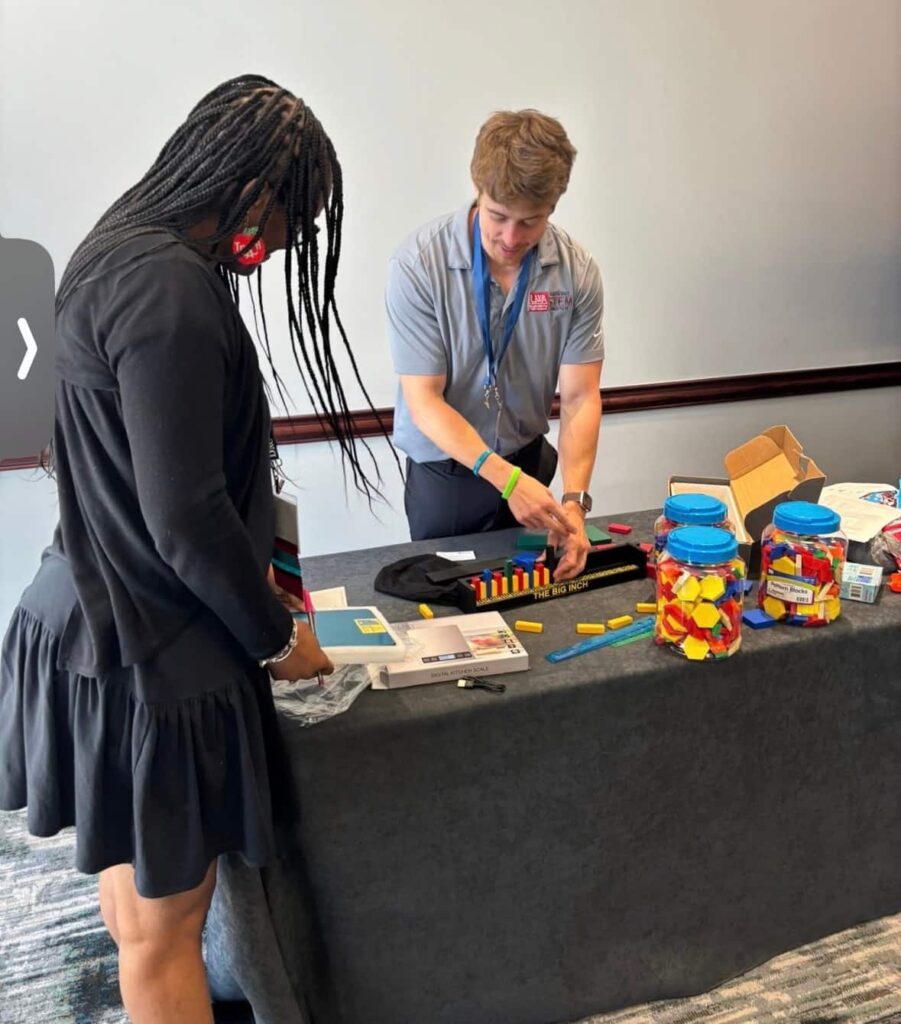
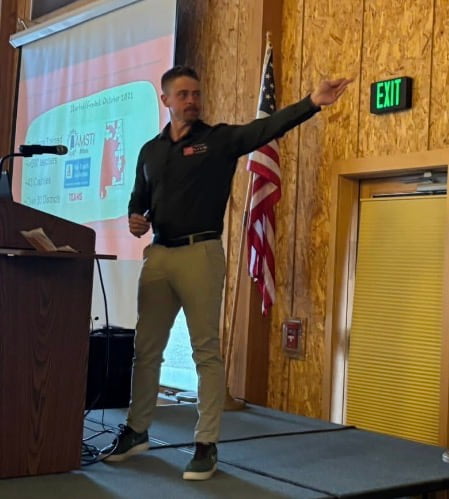
The Institute’s work has already created visible impact across communities. Through their affiliation with AMSTI, they deliver high-quality professional development that supports teachers across the region. Their robotics initiative alone has helped start more than twenty robotics teams throughout the Black Belt. The team has visited almost twenty schools in a single school year, helping teachers organize equipment, review coding strategies, and prepare for competitions. Sustainability continues to grow as the Institute becomes a trusted source for STEM resources, professional development, student programming, and community engagement. It is common for him to walk into a school and be greeted with immediate recognition and appreciation, which reflects years of meaningful work.
Technology plays an important role in his vision for education. He believes in staying ahead of trends to ensure students are exposed to the tools and experiences that will shape their futures. The Institute has purchased robotics equipment and virtual reality devices and is working to integrate artificial intelligence into upcoming professional development sessions and student activities. His goal is to ensure students in every part of Alabama, including rural and underserved areas, have access to modern learning opportunities.

“Relationships are everything in education. Trust is built over time, and it becomes the foundation for real change.”
Supporting teachers is another priority. He offers help through professional development, on-site visits, mentoring, equipment purchases, stipends, and special programs. He believes that when teachers feel equipped and supported, students benefit the most.
In his view, education needs major changes to ensure fairness and equality. He advocates for equal opportunities and more funding for smaller, rural schools that often struggle to keep up with larger districts. Many students in smaller schools cannot dedicate time to robotics teams because of after-school responsibilities or limited transportation. Meanwhile, larger schools often have dedicated robotics classes with daily work time. He hopes to see more technology standards, robotics programs, and AI-related pathways available across all districts. He also recognizes the progress Alabama has made in upgrading career technical education but believes more can be done to balance the playing field.
Across his career, he has celebrated several meaningful achievements. The AMSTI Affiliation was a major milestone, allowing the Institute to deliver training that is automatically recognized and valued by teachers across Alabama. He also helped bring back the Science Olympiad to the University of West Alabama and contributed to the success of the first AL-YASS Sustainability Symposium. Personally, he was honored as a Top Ten STEM Leader by Education Technology Insights, a recognition that reflects his influence and commitment.
“STEM education allows students to explore, think critically, and discover their strengths in a way no other subject can.”
He stays motivated through competition and drive, qualities shaped by his childhood experiences in sports. Sports provided structure, focus, and an outlet for his energy. His competitive nature continues to push him to be the best in his field, and those who know him understand how seriously he approaches any challenge. Whether coaching athletes or leading educational programs, he brings the same intensity and determination to succeed.
For future educators and emerging leaders, he believes that relationships are the key to success. He often shares how his connection with Dr. Jan Miller, which began when he was a child, eventually led to his current role. He encourages young professionals to build strong, positive relationships with students, teachers, parents, and administrators. These connections can open doors they never expect and offer support when they need it most.
Looking ahead, he sees education moving toward more robotics, greater AI integration, and stronger college and career readiness. He hopes for a future where students have more time to develop skills needed for real-world careers rather than being overwhelmed by standardized testing. He imagines students choosing career pathways earlier, celebrating trade careers, and even participating in signing-day events that highlight their professional journeys after high school.
His message for readers of Impactful Leader in Education, 2025 is simple and meaningful. He encourages people to say yes more often, to seize opportunities, and to never turn down a meeting. In his experience, every conversation has the potential to spark change, build relationships, and open new doors. His journey is an example of what happens when passion, hard work, and genuine care for people come together to shape a career dedicated to impact.
“I never expect anyone to do anything I’m not willing to do myself. Leadership starts with showing up and working hard.”