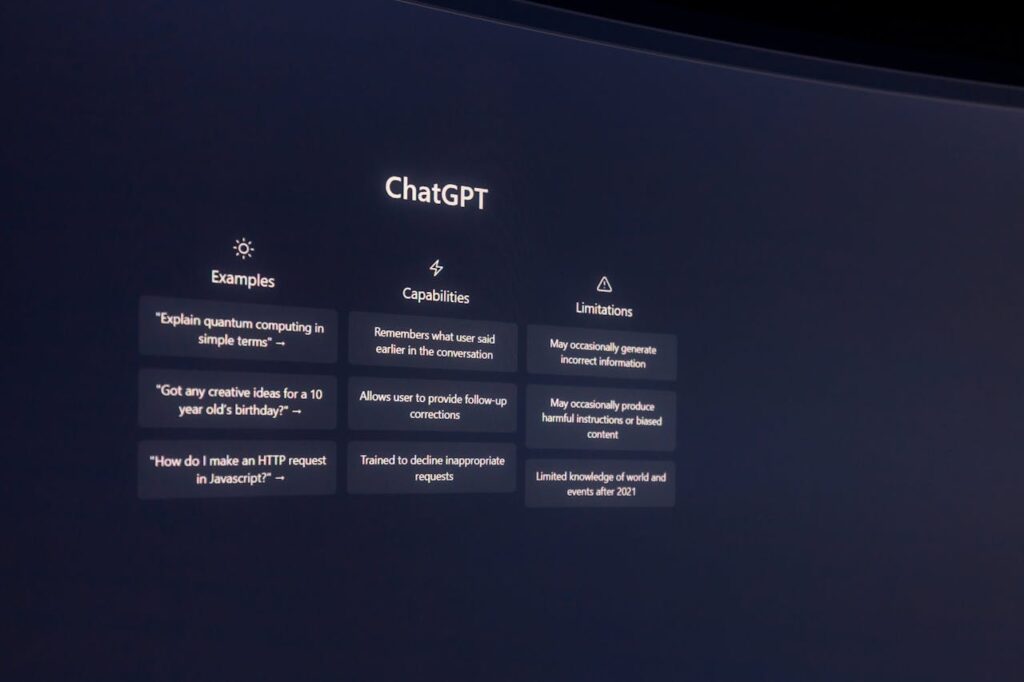
The integration of Artificial Intelligence (AI) into the creative process marks a seismic shift in how content is conceived, produced, and consumed. What began as a technological curiosity has rapidly evolved into a powerful, accessible tool, fundamentally redefining the role of the creator and the nature of digital output. AI-generated content—encompassing everything from text and code to stunning visual art and complex musical scores—is no longer a futuristic concept; it is an omnipresent force that is reshaping industries, raising ethical questions, and unlocking unprecedented levels of productivity.
This article explores the mechanics, impact, and critical considerations surrounding the accelerating proliferation of content created by algorithms.
The Mechanics: How Machines Become Muses
At the heart of AI-generated content are large, complex models—such as Large Language Models (LLMs) like GPT-4, and text-to-image generators like Midjourney or DALL-E. These systems do not “think” or “feel” in the human sense; rather, they are trained on truly colossal datasets scraped from the internet, comprising billions of data points (text, images, code).
The Two Core Processes
- Pattern Recognition and Prediction (Generative AI): The models learn the statistical relationships and patterns within the training data. For example, an LLM learns which words are most likely to follow a given sequence, allowing it to “predict” and generate coherent, contextually relevant sentences. Image generators learn the visual and semantic correlations between text prompts (e.g., “a cat in space”) and the corresponding pixel arrangements.
- The Prompt-Driven Output: The human element enters through the prompt, a specific instruction or query provided to the AI. The quality of the final content is critically dependent on the prompt’s clarity, detail, and nuance—a skill now often referred to as “prompt engineering.” The AI acts as a sophisticated engine, transforming the human intent (the prompt) into a polished piece of content (the output).
This combination of massive data, sophisticated algorithms, and targeted human instruction allows AI to generate content with incredible speed and scale, often matching or exceeding human-level quality in specific tasks.
The Impact: A Revolution in Productivity and Scale
The immediate and most tangible impact of AI-generated content lies in its capacity for massive acceleration and democratization of creation.
🚀 Productivity and Efficiency
For businesses and content marketers, AI is a powerful multiplier. Tasks that once took hours—such as drafting email newsletters, summarizing long documents, translating text, or generating multiple variations of ad copy—can now be executed in minutes. This frees up human professionals to focus on higher-level strategic thinking, creative direction, and complex problem-solving. AI is not eliminating jobs, but rather redefining them by automating the tedious, repetitive elements of the work.
🎨 Democratization of Creation
AI lowers the barrier to entry for creative fields. An individual without coding skills can rapidly generate Python scripts, and someone with no formal art training can produce high-quality illustrations for their blog or personal project. This democratization allows small businesses, independent creators, and non-profits to produce professional-grade content that was previously financially or logistically out of reach.
📈 Hyper-Personalization
AI excels at data analysis and segmentation, allowing for the creation of content that is hyper-personalized to the individual consumer. Instead of a single email newsletter, an LLM can generate hundreds of unique versions tailored to different segments, optimizing messaging based on demographics, purchase history, and real-time behavior.
The Critical Considerations: Ethical and Quality Challenges
While the benefits are clear, the rapid ascent of AI-generated content brings a set of profound challenges that society, industries, and individuals must address.
❓ Bias, Accuracy, and Hallucination
AI models are only as good as the data they are trained on. If the training data contains societal or historical biases (e.g., racial, gender, or cultural), the AI will inevitably perpetuate and even amplify those biases in its output. Furthermore, LLMs are known to “hallucinate”—generating highly confident, fluent, but factually incorrect information. Vetting and fact-checking AI output remains a non-negotiable step in any professional workflow.
⚖️ Copyright and Intellectual Property
One of the most contentious issues is the source of the training data. If an AI is trained on copyrighted images or text without the original creators’ permission, does the content it generates infringe on those rights? The legal framework for AI-generated output is still evolving, leading to debates over ownership, fair use, and compensation for the human artists and authors whose work built the foundational models.
📉 The Risk of Dilution and Mediocrity
The ease of generation carries the risk of content dilution. If everyone can instantly generate “good enough” content, the digital ecosystem may become oversaturated with generic, statistically average material. The true competitive advantage will shift from sheer quantity to quality, originality, and the unique human perspective—the elements AI still struggles to replicate.
The Future: From Generation to Partnership
The trajectory of AI suggests that its ultimate role is not to replace human creativity, but to serve as a co-pilot and an accelerator. The most successful creators and businesses are already adopting a human-in-the-loop approach, leveraging AI for drafting, ideation, and scaling, while reserving the human touch for essential tasks:
- Vetting and Fact-Checking: Ensuring accuracy and compliance.
- Injecting Unique Voice and Empathy: AI can mimic style, but true emotional resonance requires human experience.
- Strategic Direction: Defining the “why” and “what” behind the content that aligns with core business goals and ethics.
AI-generated content is fundamentally changing the definition of expertise. The skill of the future may not be the ability to write 1,000 words from scratch, but the ability to write a powerful, concise prompt that guides the AI toward a brilliant, original result, and then to critically edit and elevate that result with unique human insight.
The content landscape is being reshaped by the algorithm. Those who embrace AI as a powerful tool—while critically navigating its ethical and quality constraints—will be the ones to define the next era of digital creation.